Author: dmayert

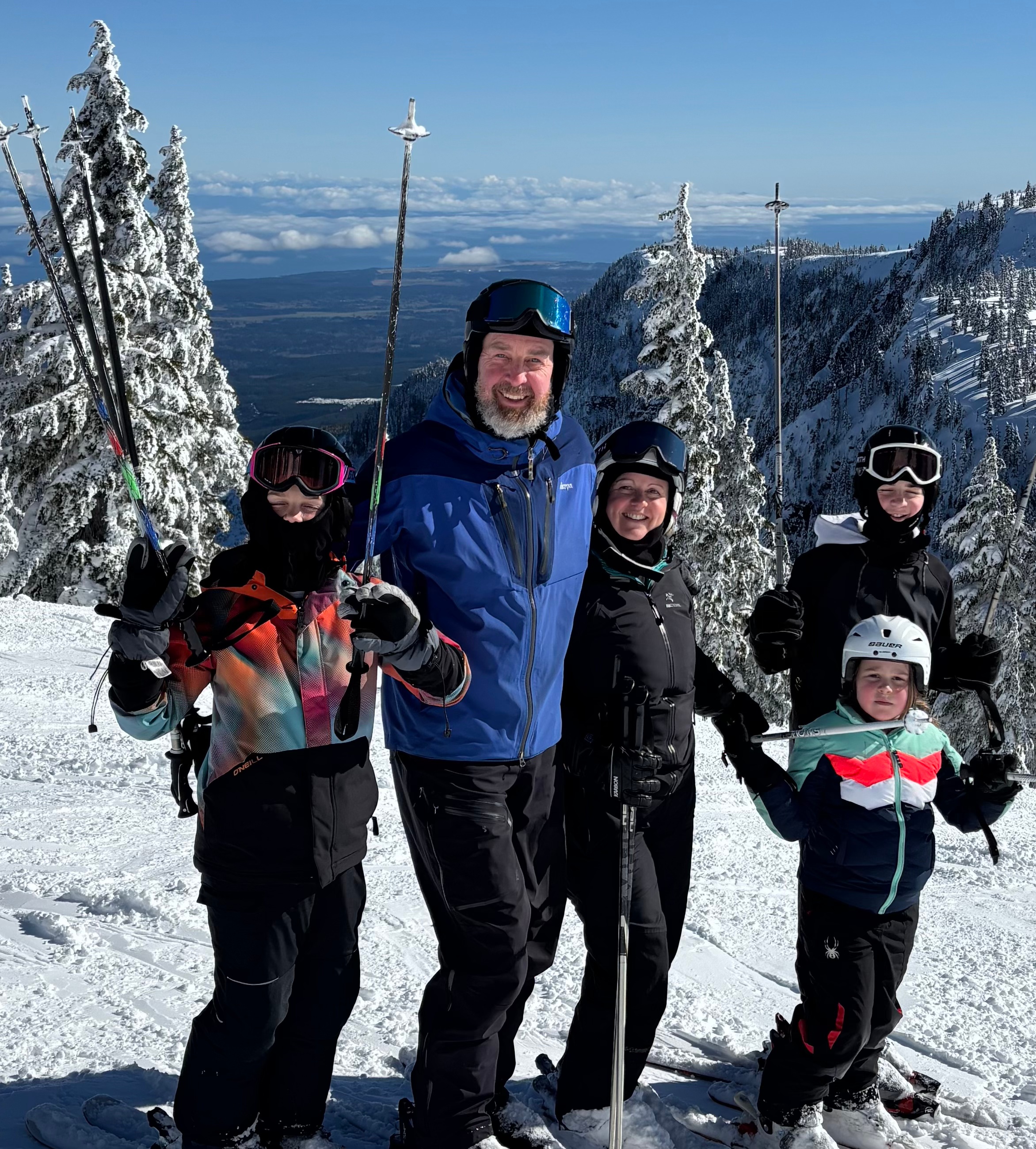
David Mayert BSc, BEd, MEd has recently returned from a sabbatical during which he lived and travelled through Europe with his family. He is currently the Vice-Principal and Athletic Director at George P. Vanier Secondary School. Previously he was the Co-Principal of Cumberland Community School (K-9) in SD71 Comox Valley, during which time he worked actively to add Inquiry and nature-based options for students. He brings 20 years of K-12 experience as a teacher and administrator in multiple districts in Alberta and British Columbia. An advocate of Inquiry, Experiential and Nature-Based learning. He was a part of the Ministry of Education’s Communication Competency writing team as part of the new provincial curriculum. David has been actively engaged in the SD71 21st Century Learning, Resiliency, and District Professional Learning Communities Committees. He also sits as a board member on the Tribune Bay Outdoor Education Society. David is the proud father of two young boys, Nicholas (age 8) and Matthew (age 6), and daughter, Olivia (age 3), he is raising with his wife of ten years Katy Bowen-Roberts. They are an active family who focus their time on the outdoors, travel, sporting activities and the arts. They have chosen to call the Comox Valley on beautiful Vancouver Island home because of the rich cultural and recreational opportunities it affords in a small town setting. David also helps Katy operate her theatre and event production company Razzle Dazzle Productions. David’s main responsibilities with Razzle Dazzle Productions include online communications and marketing, set design and travel coordination. He also acts in an advisory role for the business and logistic operations of the company. For the last fourteen years Razzle Dazzle Productions has produced the Annual Yellowpoint Christmas Spectacular on Vancouver Island. Be sure to check it out if you are on the island this Christmas season!

Three Generations, 264km: Brennero to Verona by Bike

Blog post by Katy

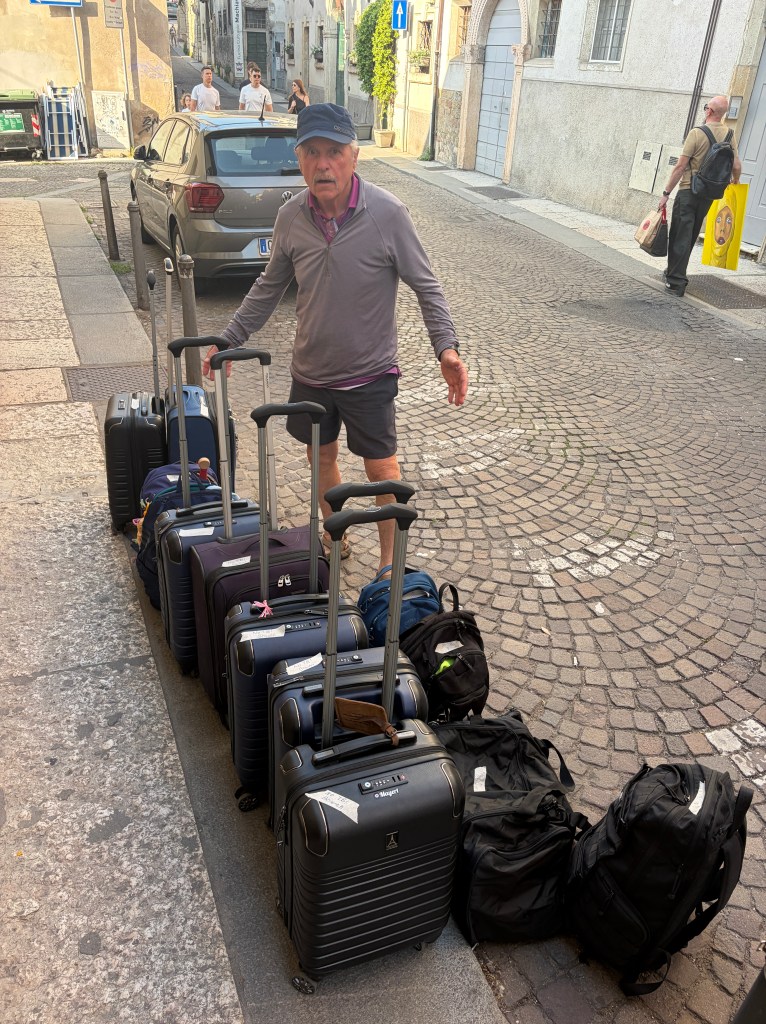
We pulled our bags off the train in Verona and made our way to the bus station. Just a quick 10-minute ride and a short walk to meet Nonna and Papa at our Verona apartment. And what a place it was.

High wood-beamed ceilings, spacious rooms, beds for everyone, two bathrooms (a luxury!), a balcony, Nespresso, laundry – everything we needed and more. Just like that, our next adventure began.

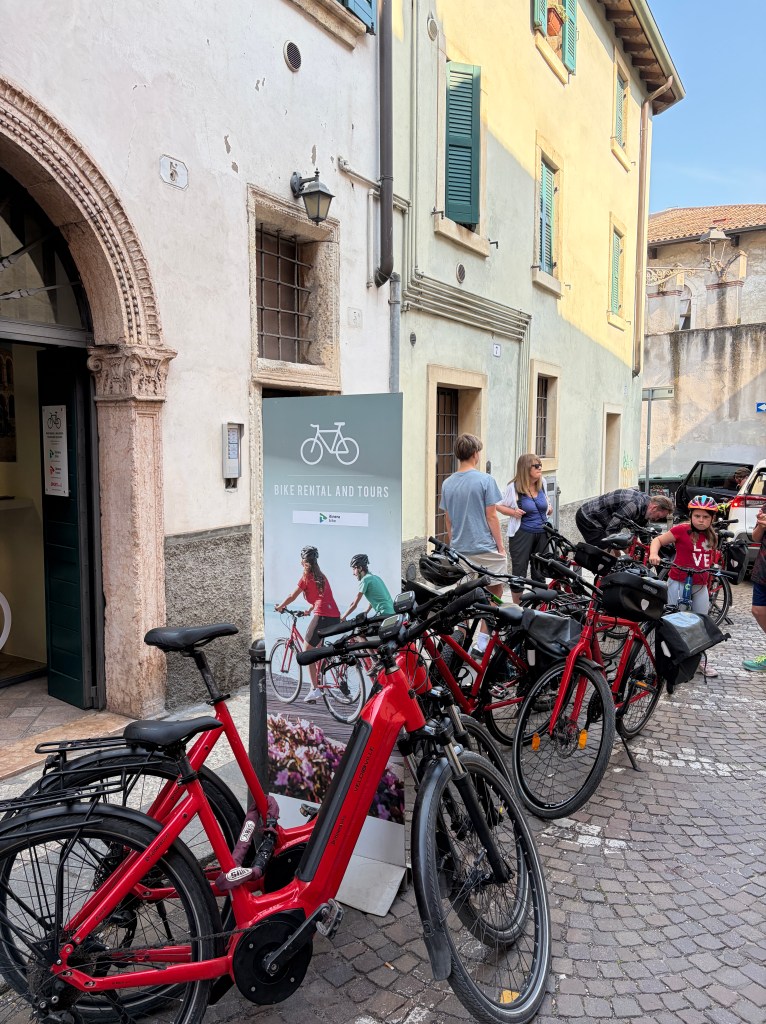
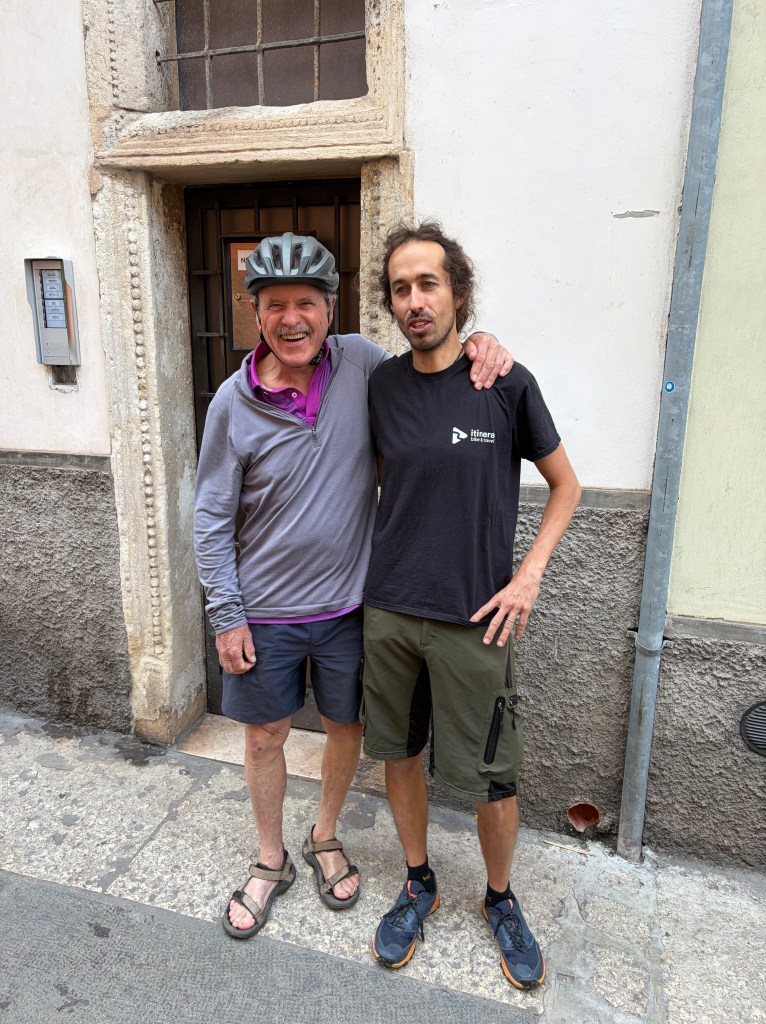
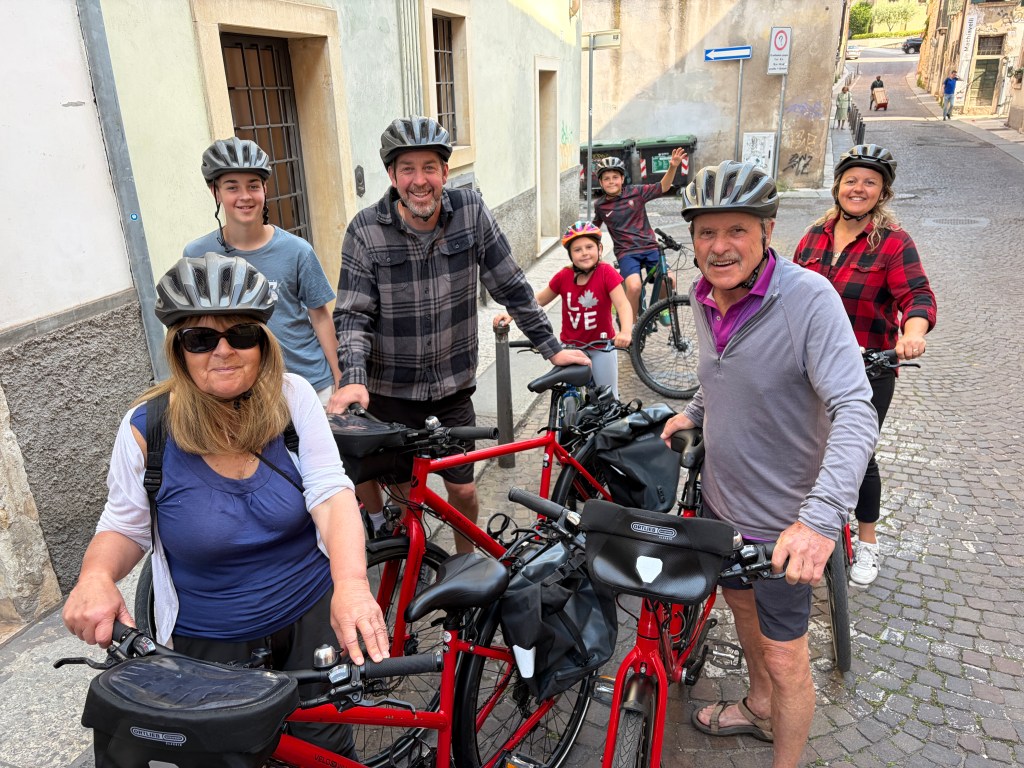
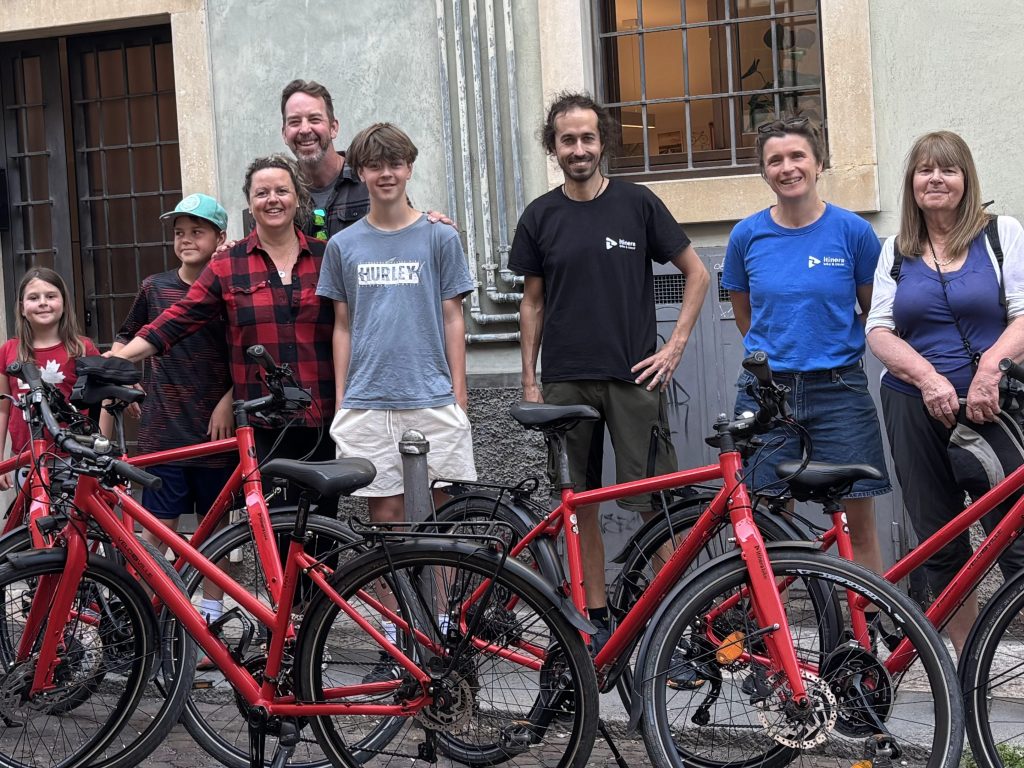
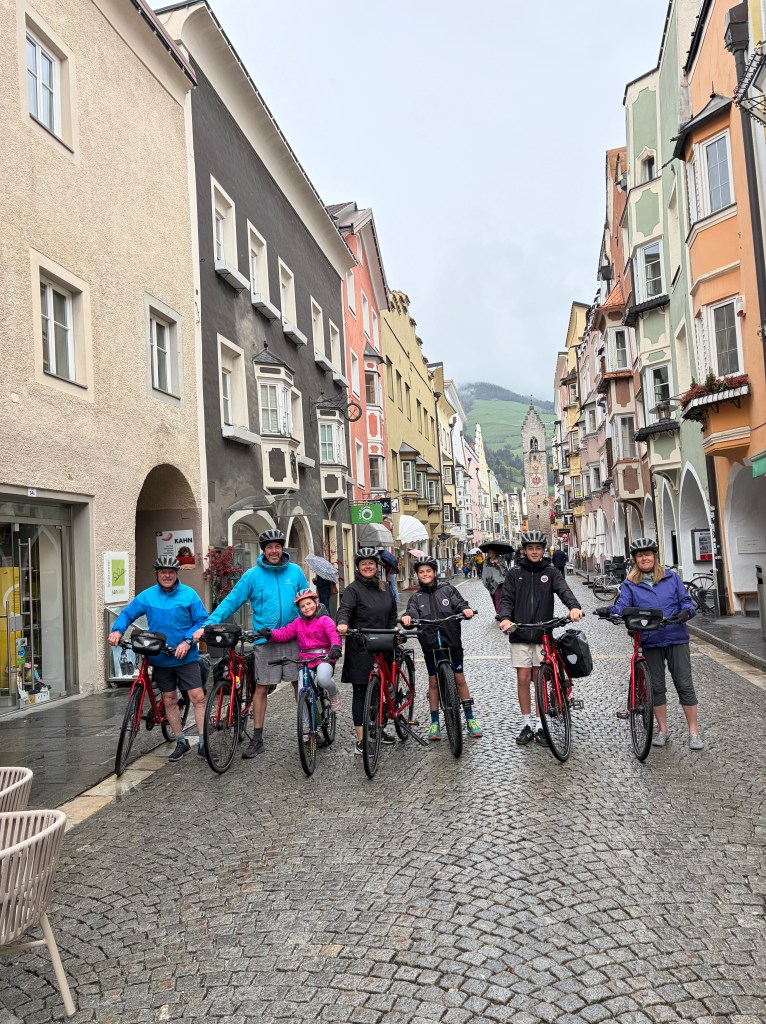
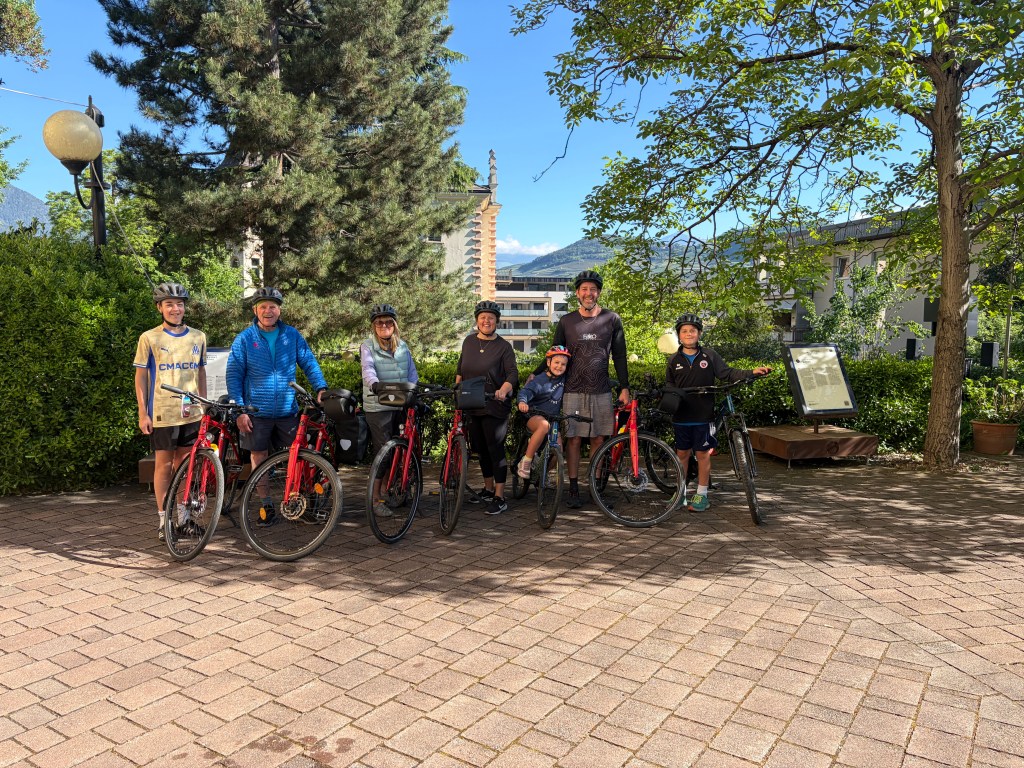
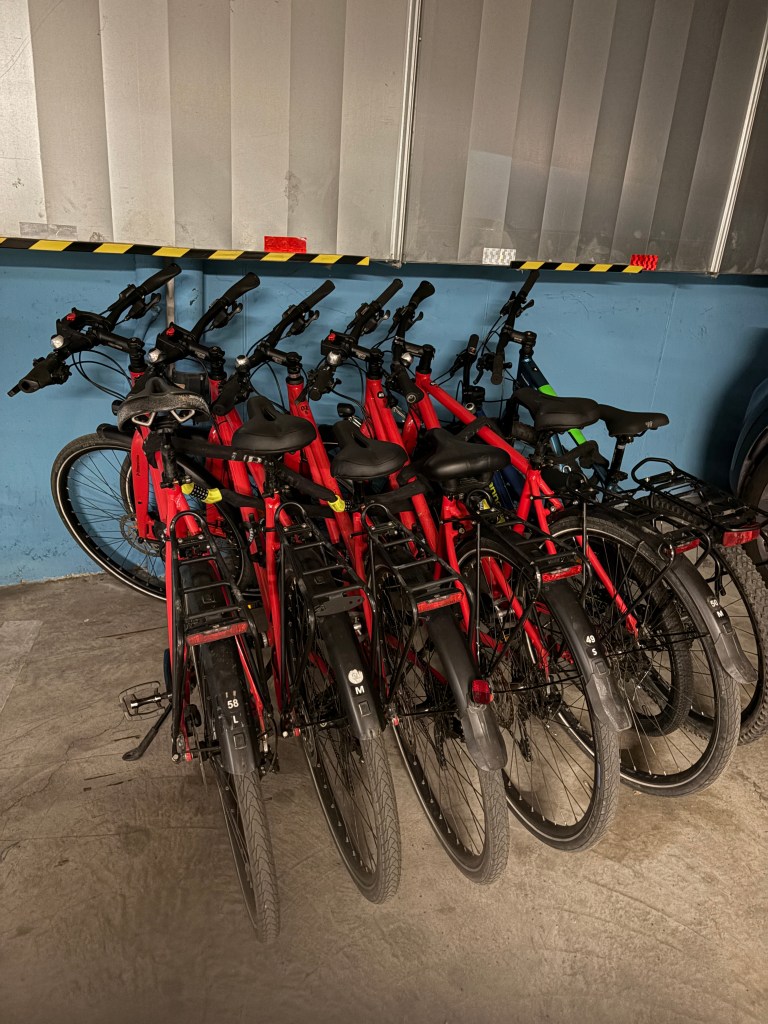
Monday morning arrived with fresh energy. Coffee, conversation, and a buzz of excitement. We headed to Itinera Bike & Travel to collect our seven bikes, along with panniers, repair kits, lights, and helmets. Francisco and his partner patiently fitted each of us before sending us on our way.
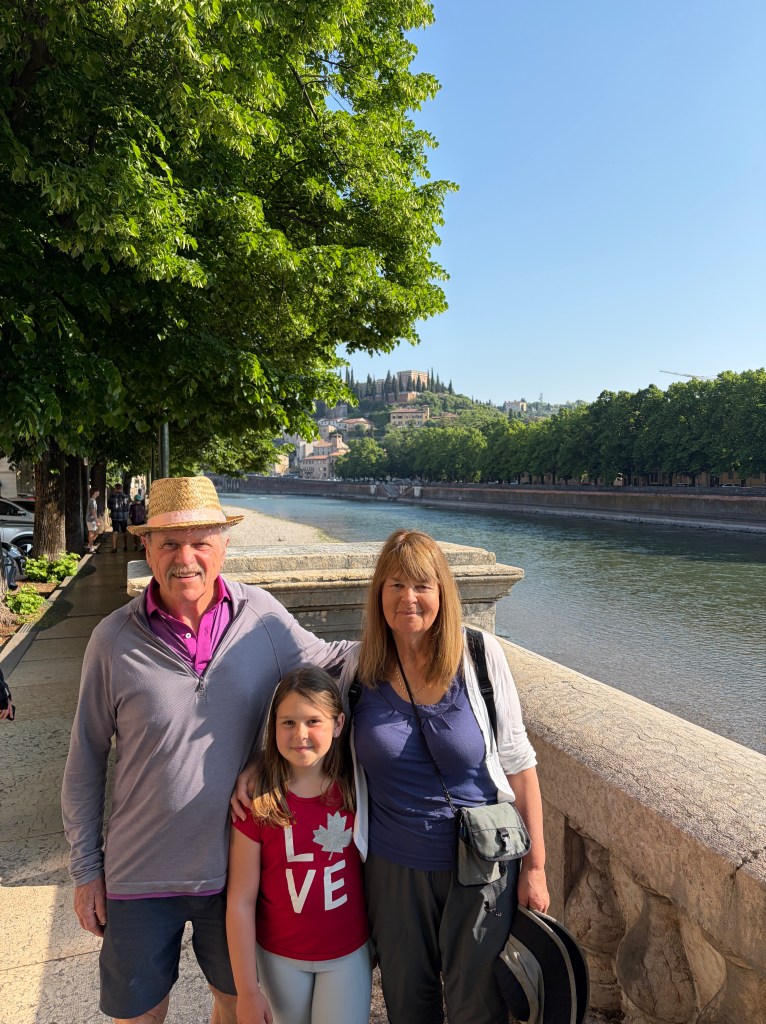
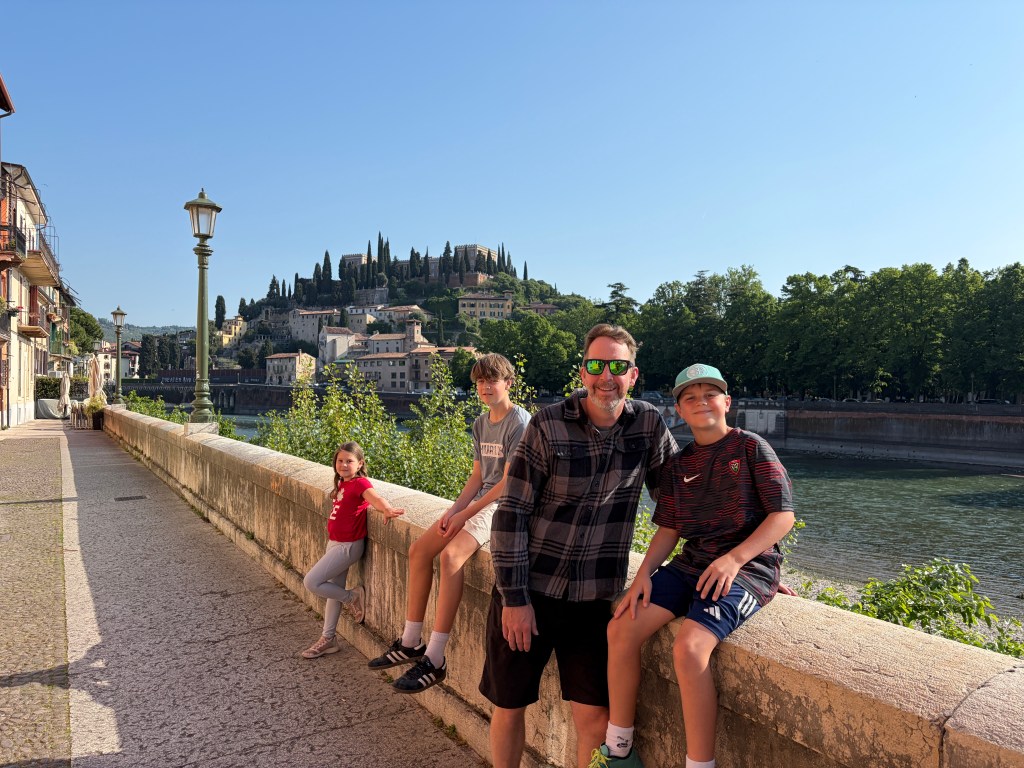
Back at the apartment, we packed our gear and spent the rest of the day exploring Verona. Juliet’s balcony, the Roman amphitheatre, winding cobblestone streets, a bit of souvenir shopping, and of course, a classic Italian dinner of pizza, caprese salad and pasta. A perfect start. Early to bed, knowing what lay ahead.

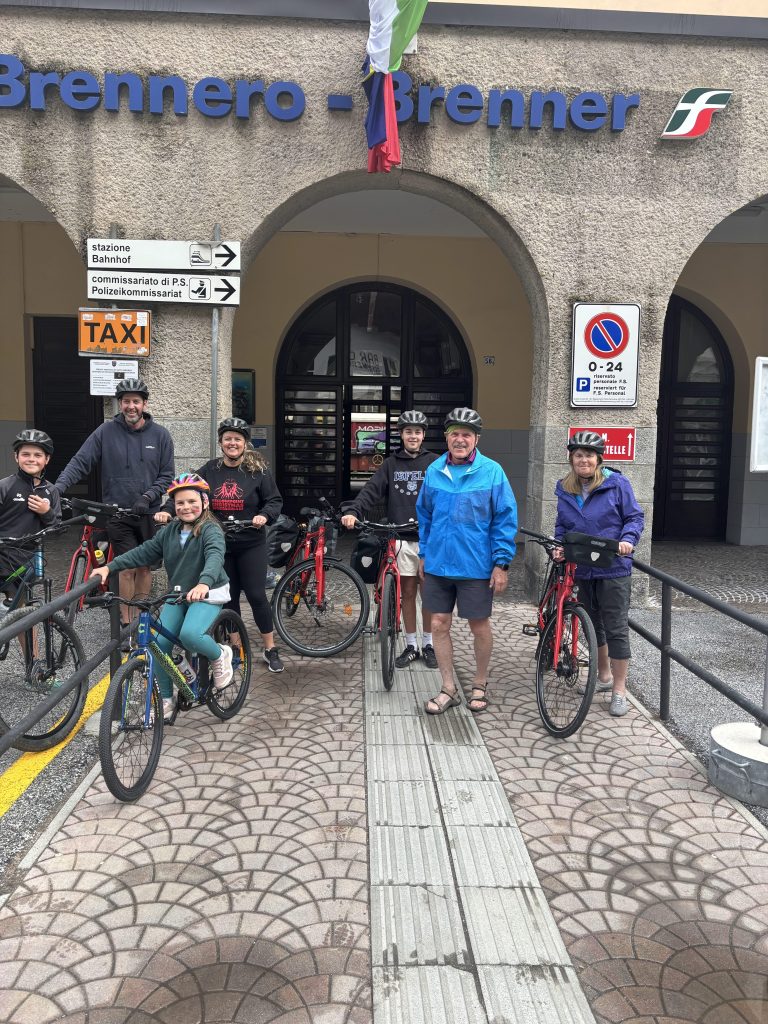
Tuesday morning, we boarded the 11:50 train bound for the top of the Brenner Pass, right on the Austrian border. The ride itself felt like part of the adventure. Winding through mountains, past castles, church steeples, vineyards, and orchards. After three hours, we arrived at the top, ready to ride.

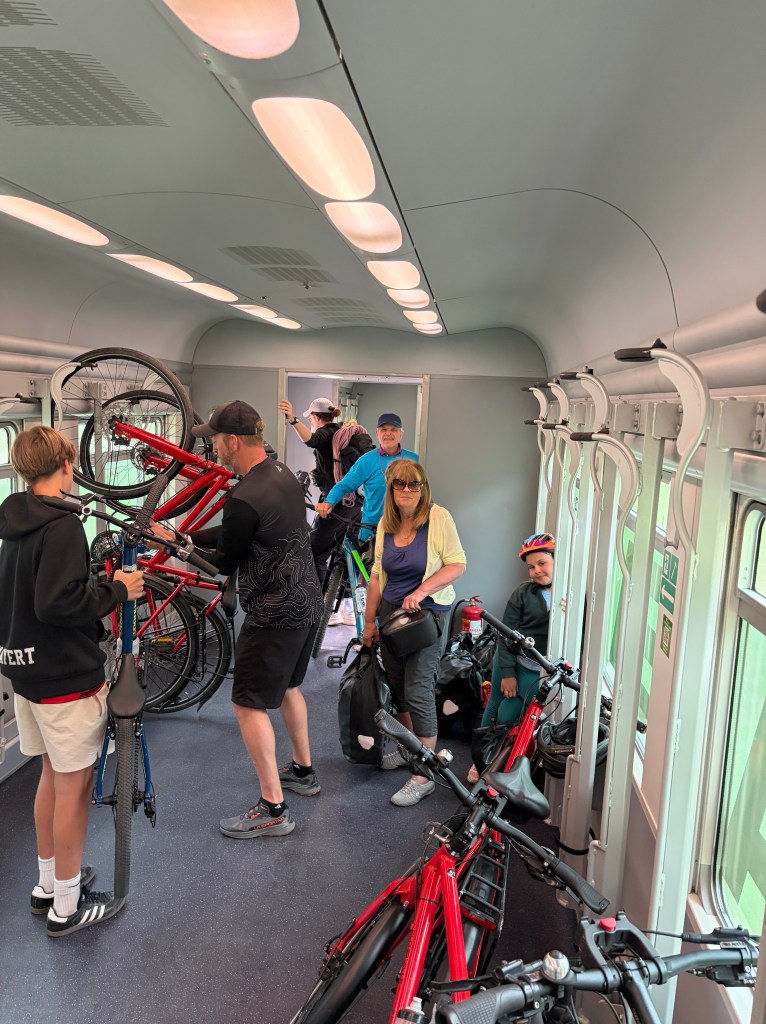
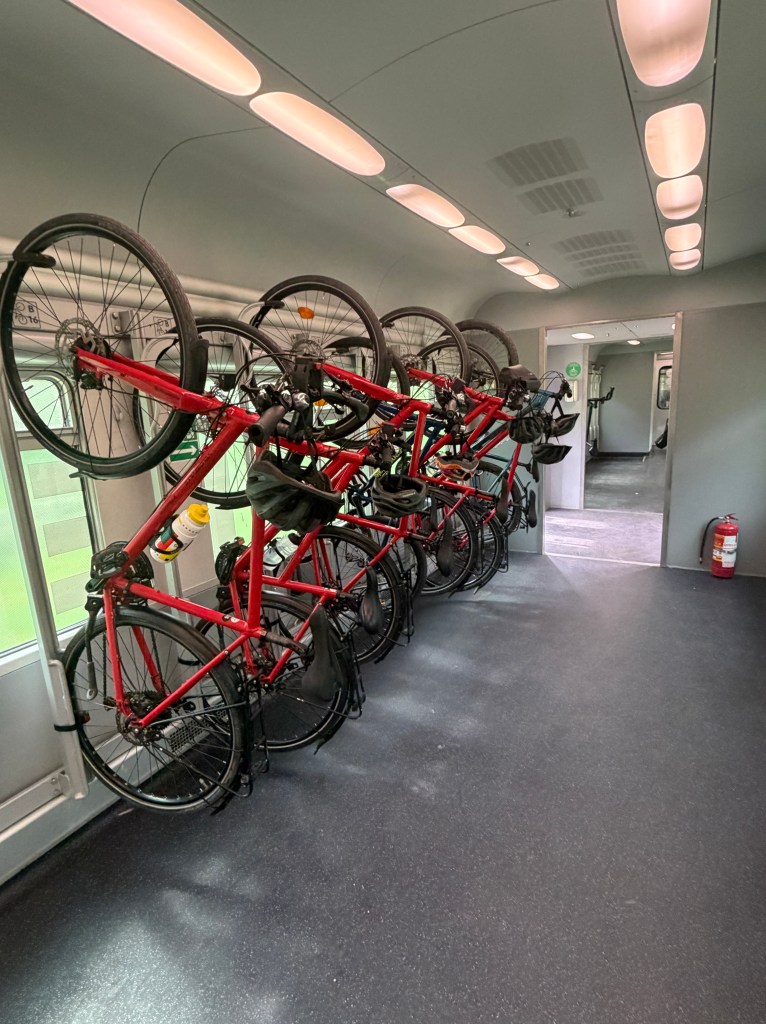
The train, amazingly, held space for 78 bikes, all efficiently loaded and unloaded. Once off, we layered up (gloves, rain jackets, everything we had) and climbed onto our bikes.

And then… we were off. Downhill.

Brennero to Vipiteno – 22.62 km

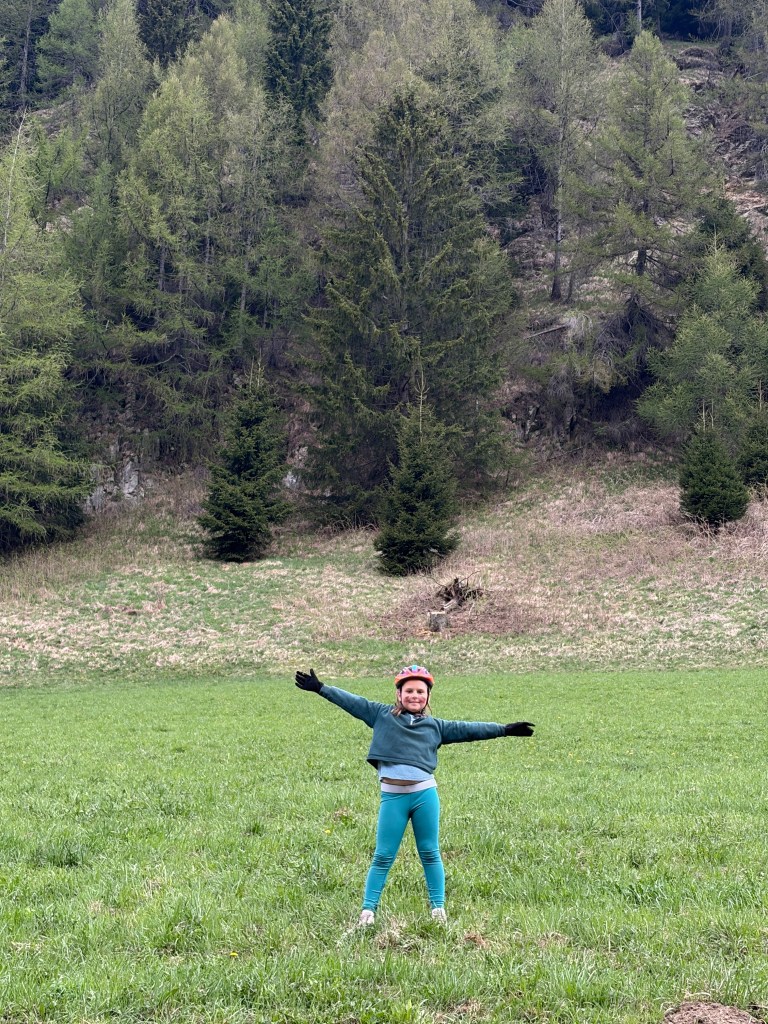
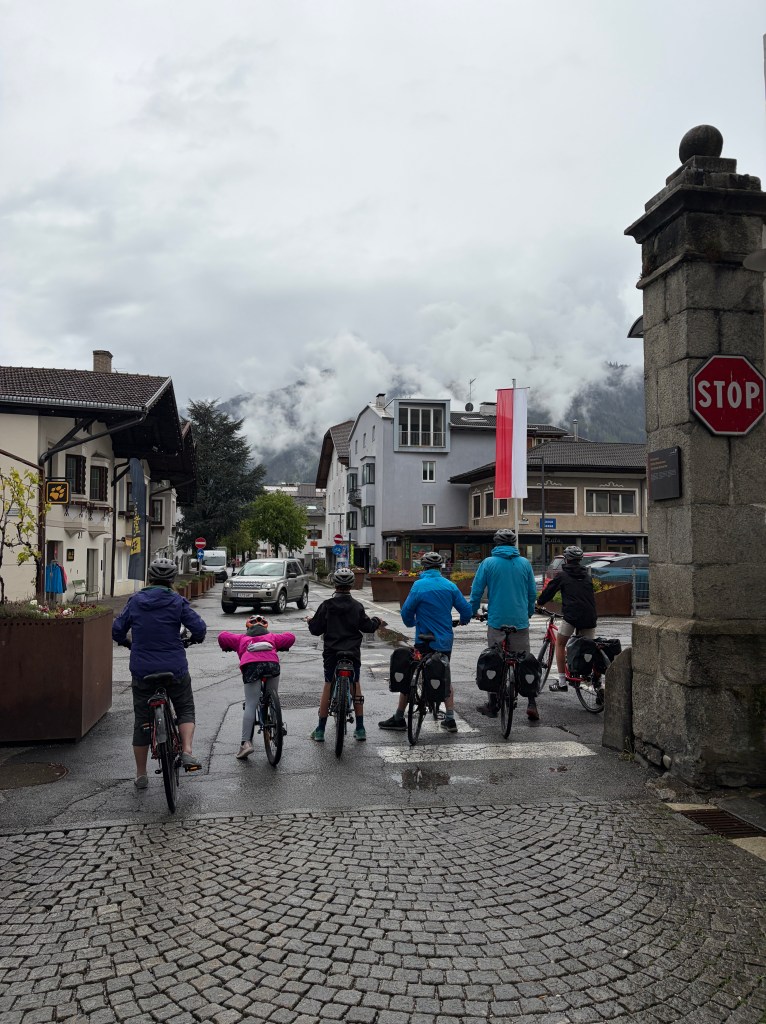
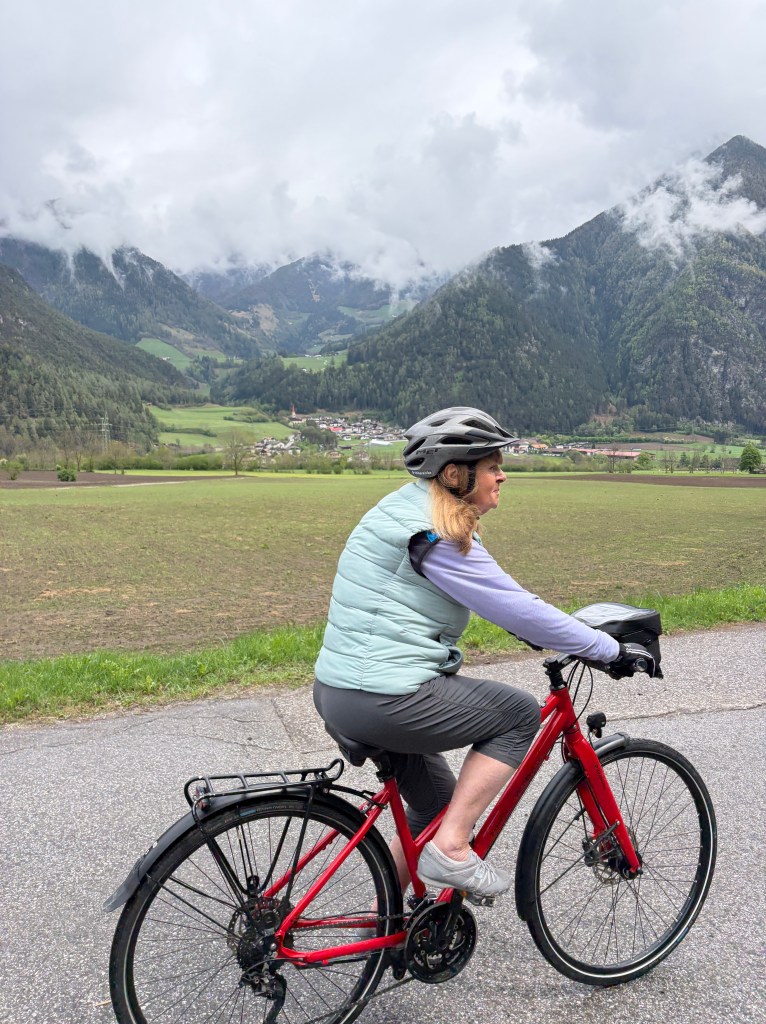
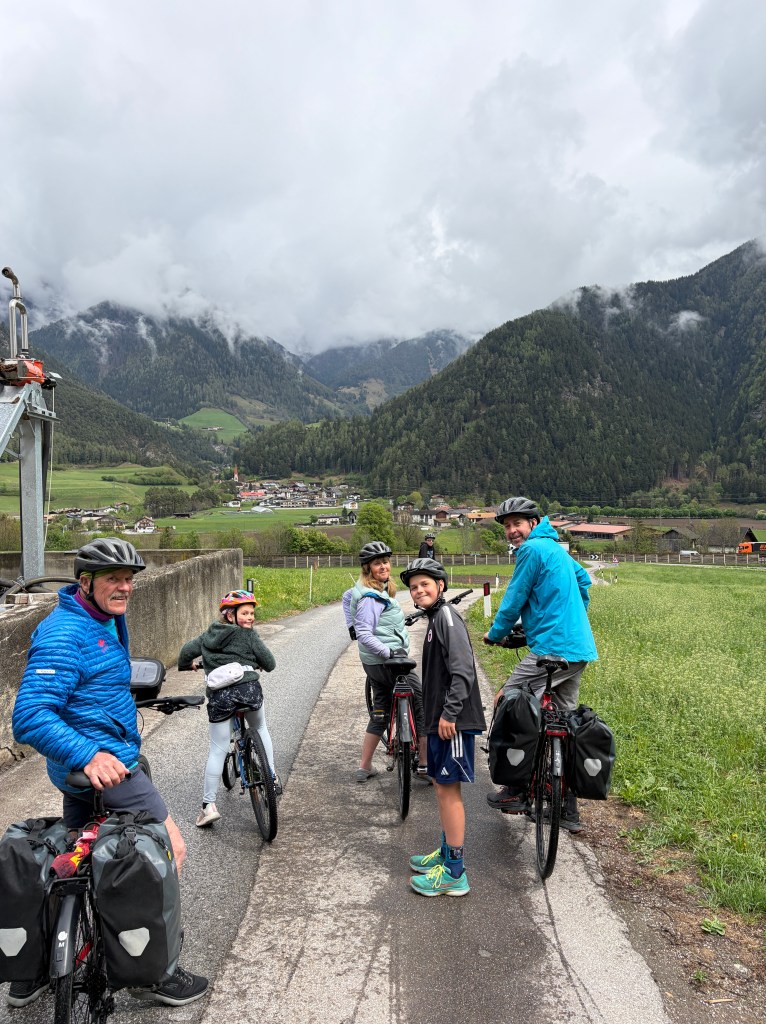
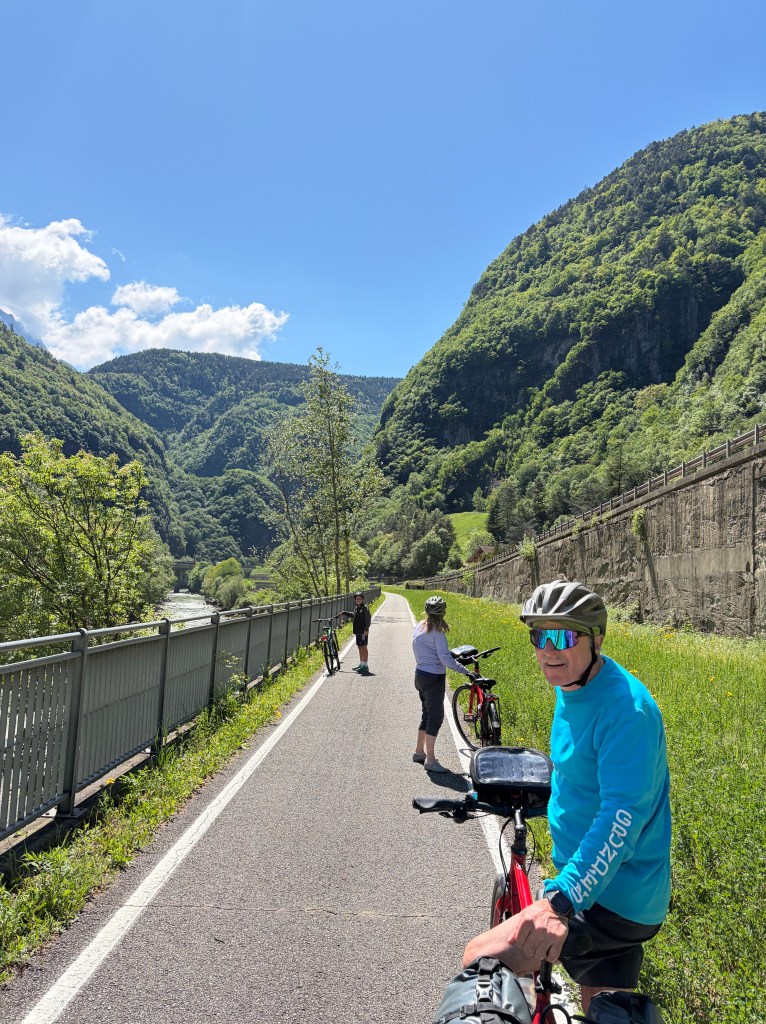
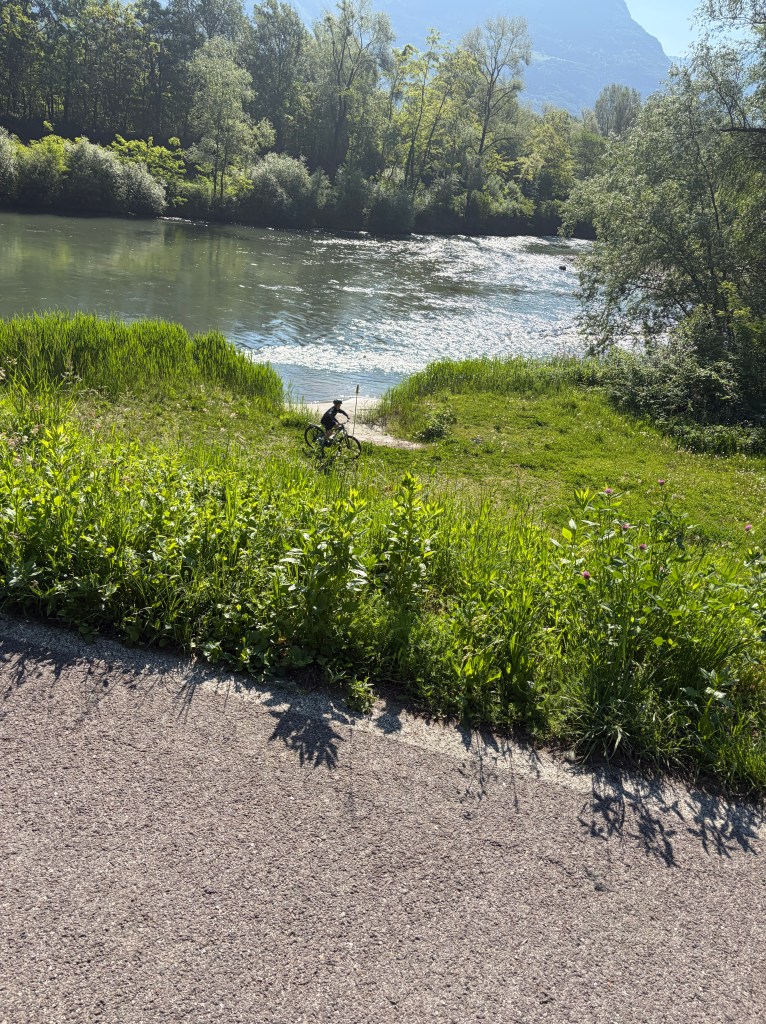
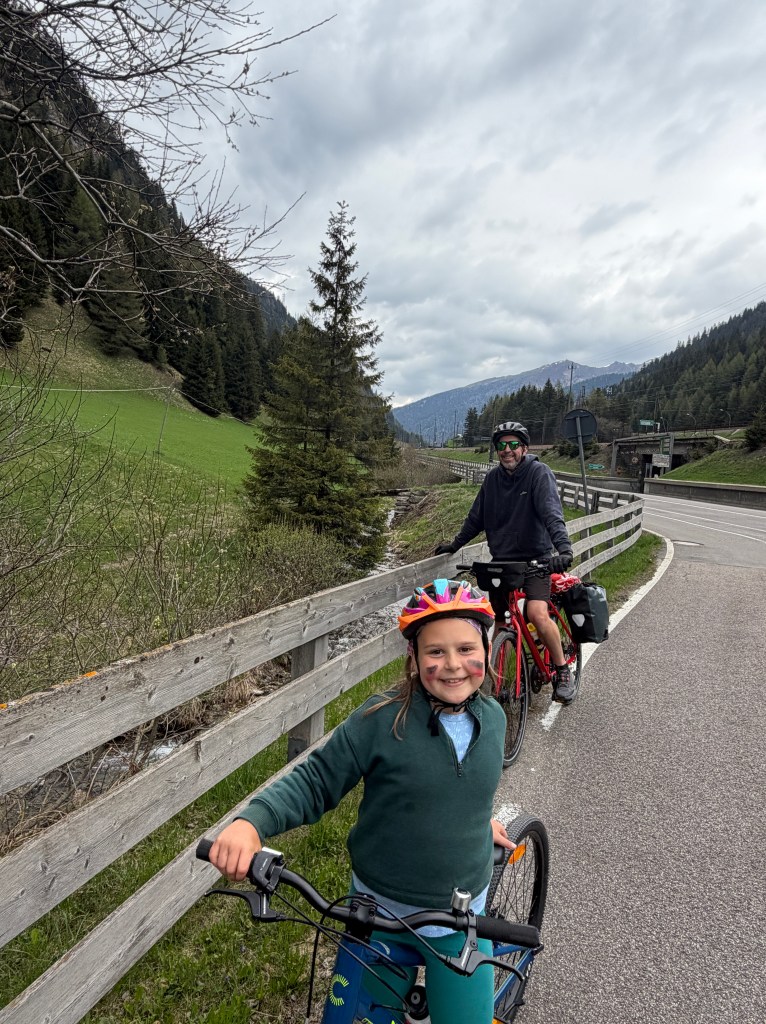
The landscape was stunning. Snow-dusted mountains, green fields, wildflowers, farm animals, and charming alpine architecture. We followed the “bicicletta” signs along a dedicated bike path that carried us safely all the way to Vipiteno.

Mostly downhill. A dream start for a slightly nervous group of touring novices.  Only two small crashes fortunately with no injuries. But the weather had other plans.

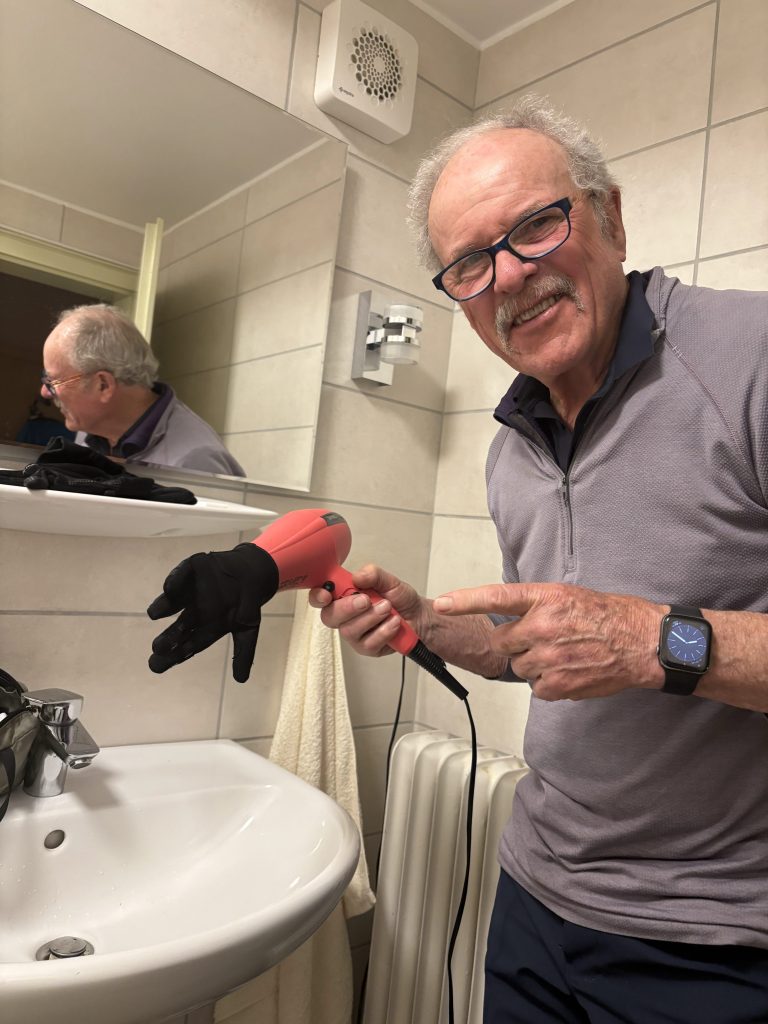
The air grew colder, the clouds heavier, and by late afternoon we found ourselves riding straight into a torrential downpour. By the time we rolled into Vipiteno around 5pm, we were soaked and shivering. Downhill may be easy but it doesn’t exactly keep you warm.

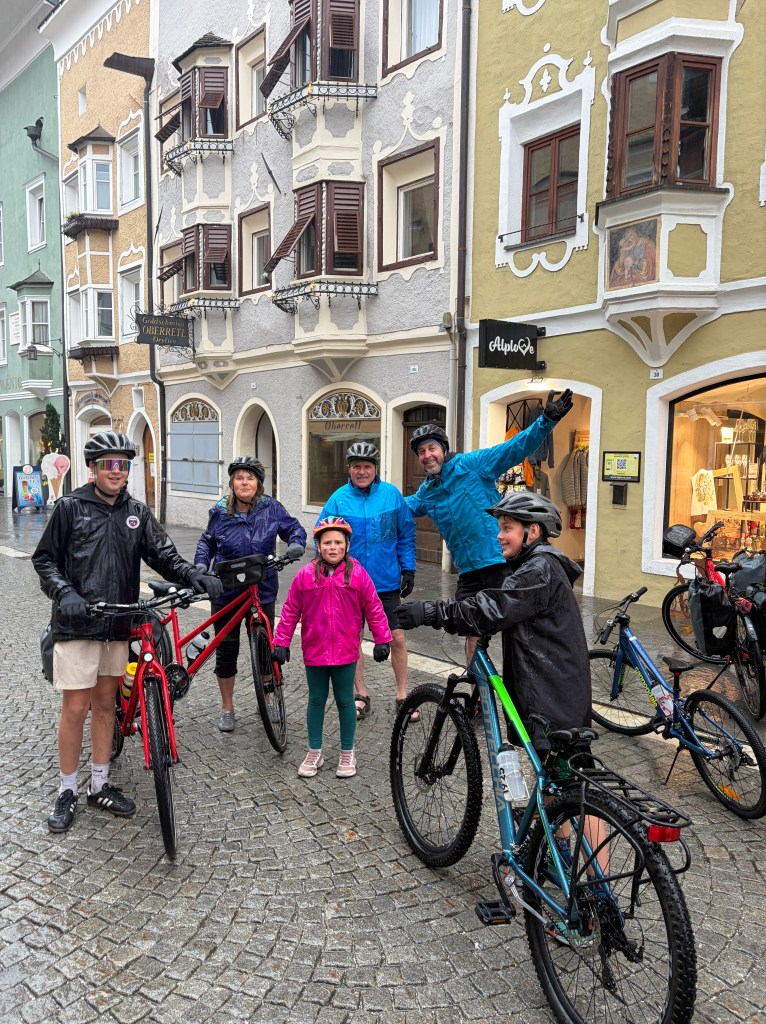
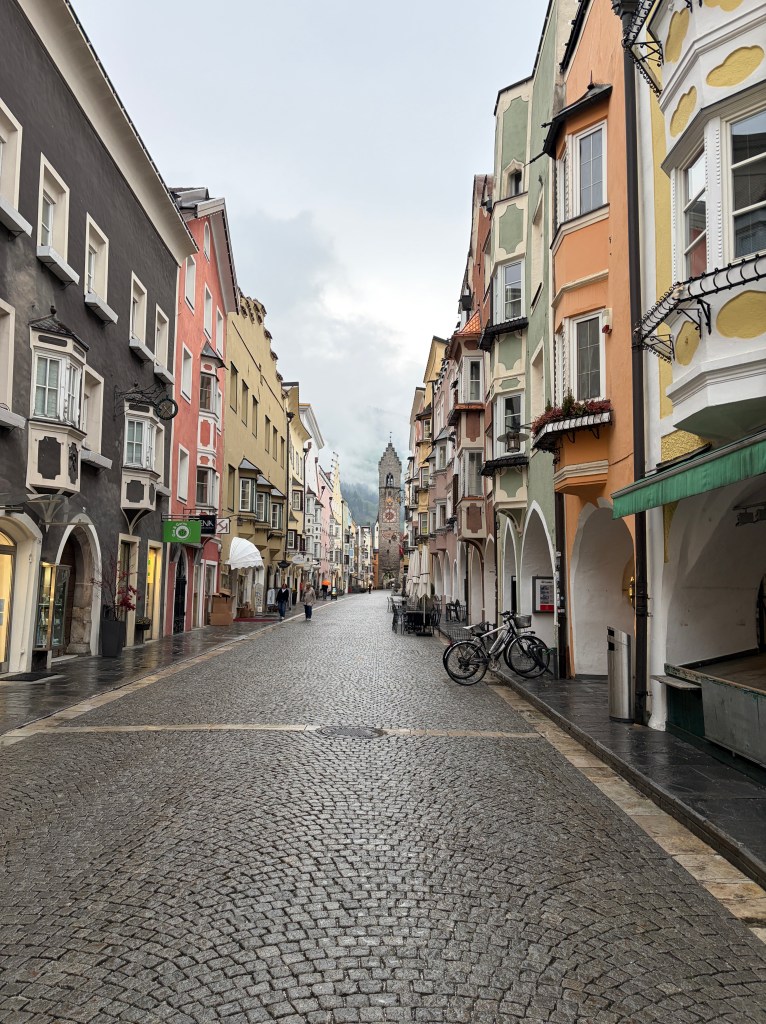
We checked into Hotel Kreuz, right in the heart of a postcard-perfect old town filled with colourful buildings, shops, and cafés. Seven of us, two rooms, and one shared goal: get dry and warm.

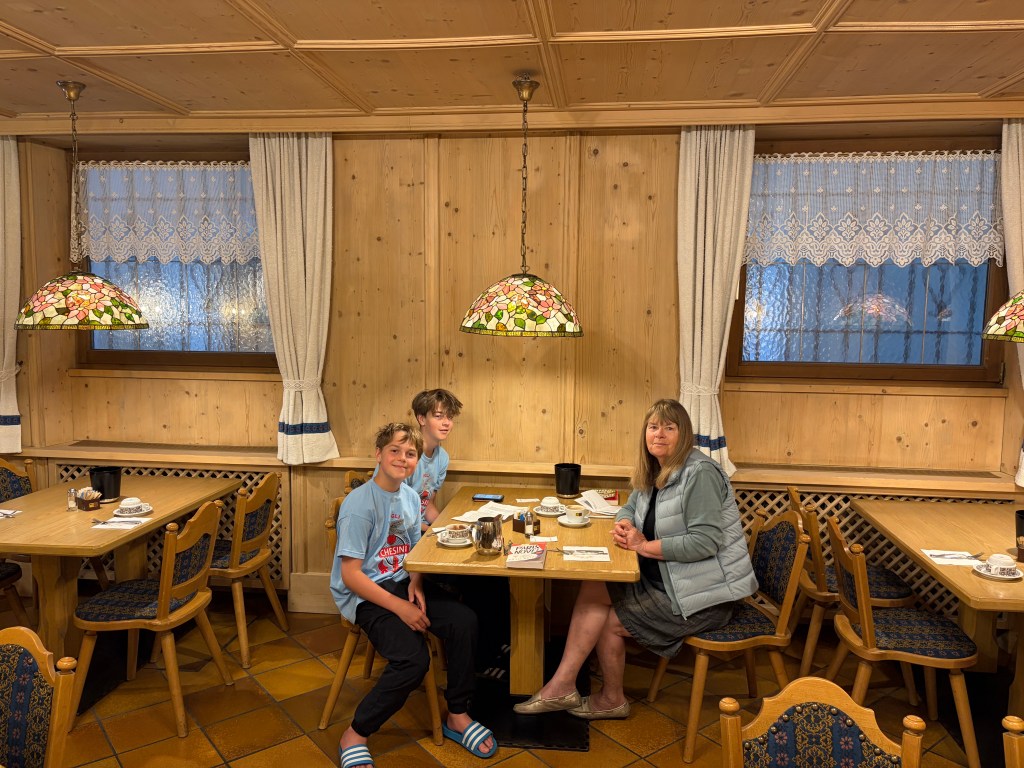
A drink at the bar helped. Dinner helped more with hearty plates of beef goulash, dumplings, schnitzel, potatoes, and of course, apple strudel and Kaiserschmarrn for dessert.

Lights out by 9pm.
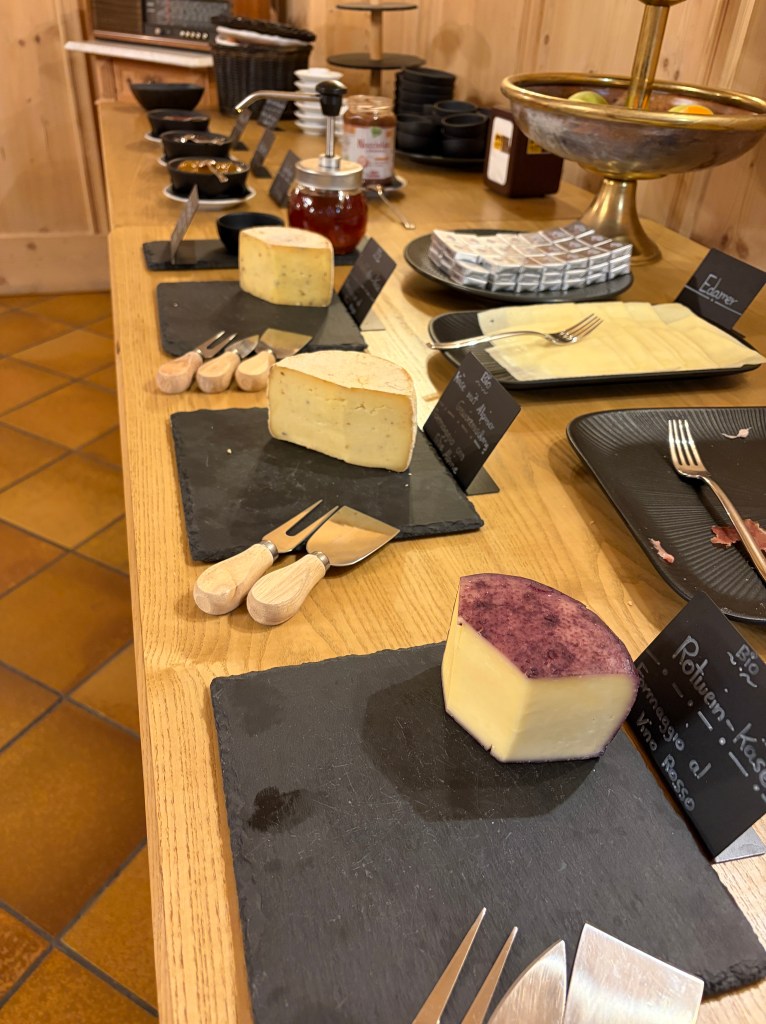
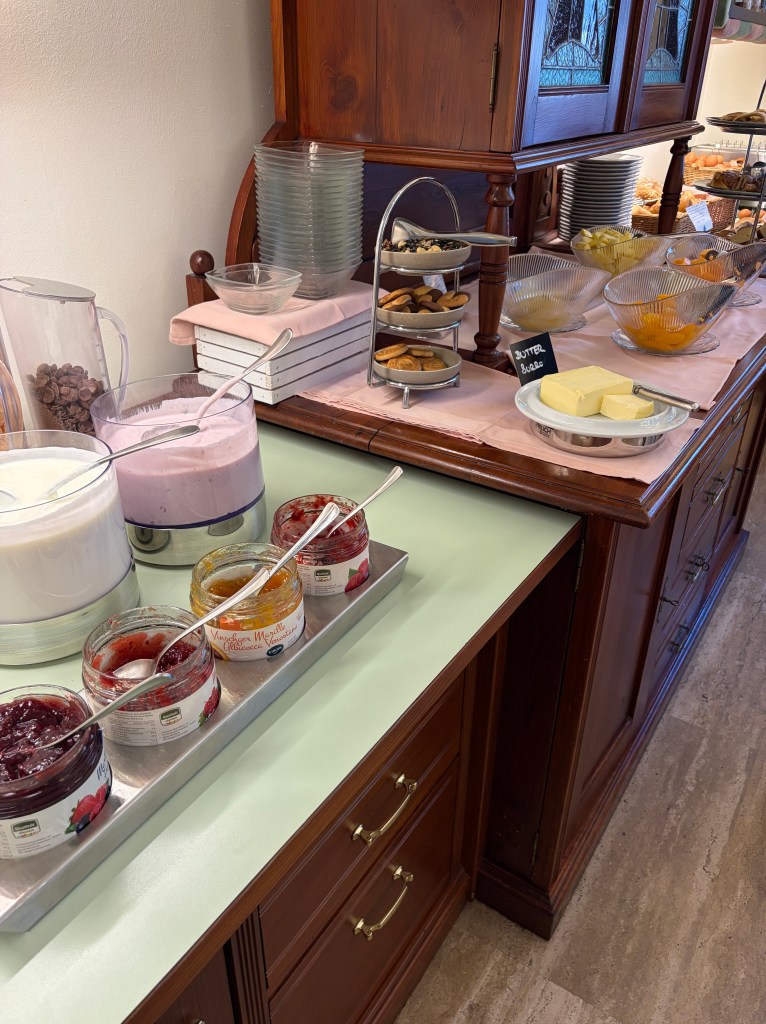
By morning, we were revived by what can only be described as a spectacular German breakfast: croissants, jams, honey, boiled eggs, cheeses, meats, fresh bread, cappuccinos, hot chocolate, fruit, cakes… everything. Exactly what we needed.
Vipiteno to Bressanone – 38.51 km

The skies were still dark, and the rain hadn’t let up. We made the call to wait until noon, wandering the charming old town under umbrellas until we couldn’t wait any longer.
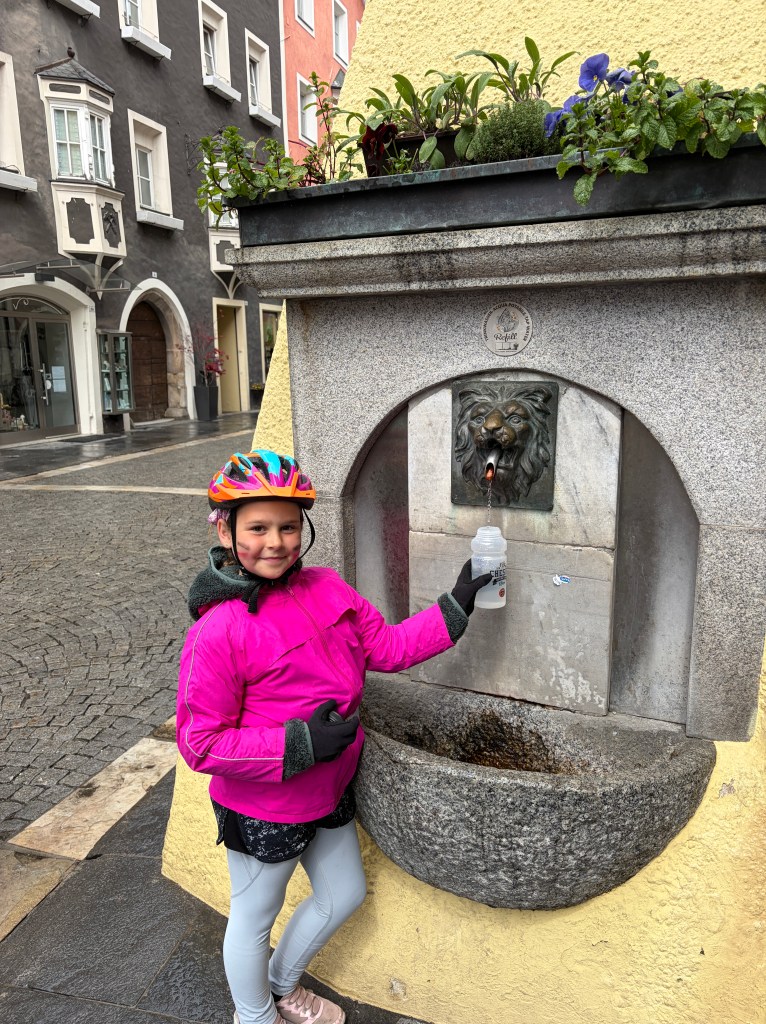
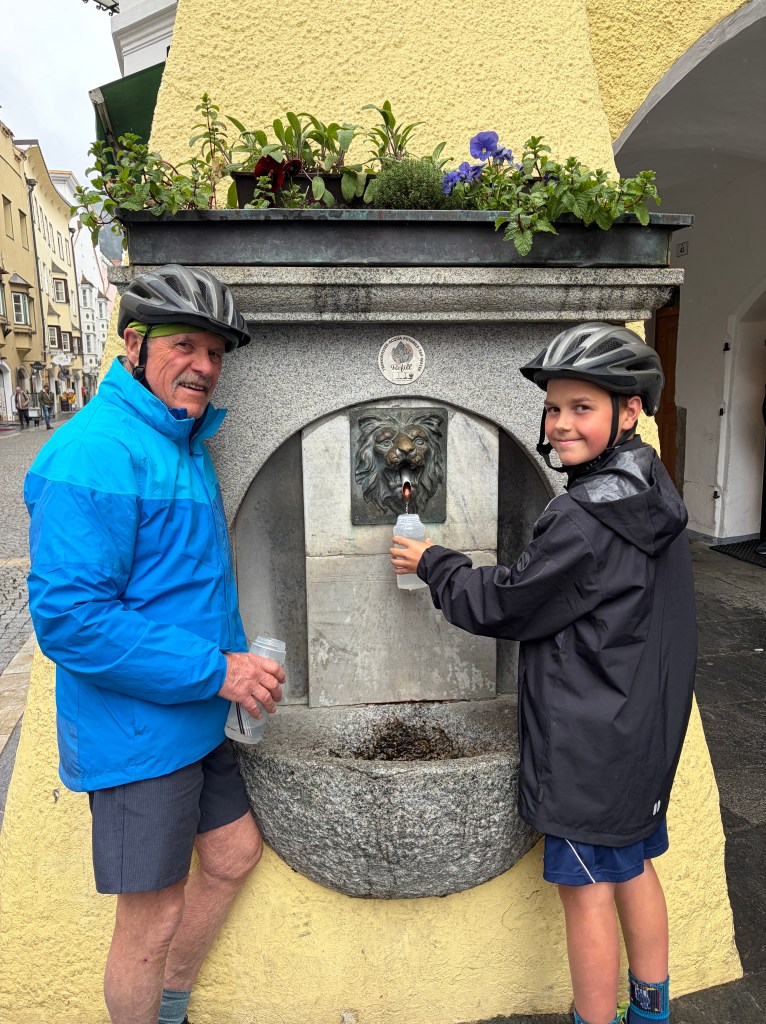
When it was finally time to ride, there were actual cheers.

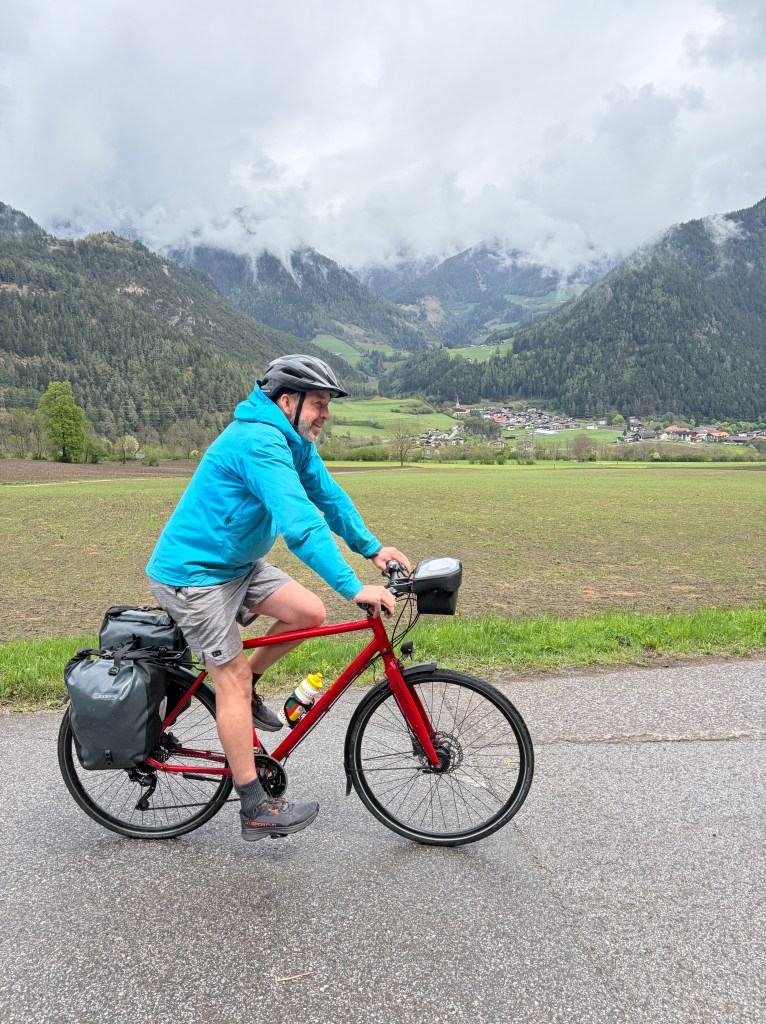
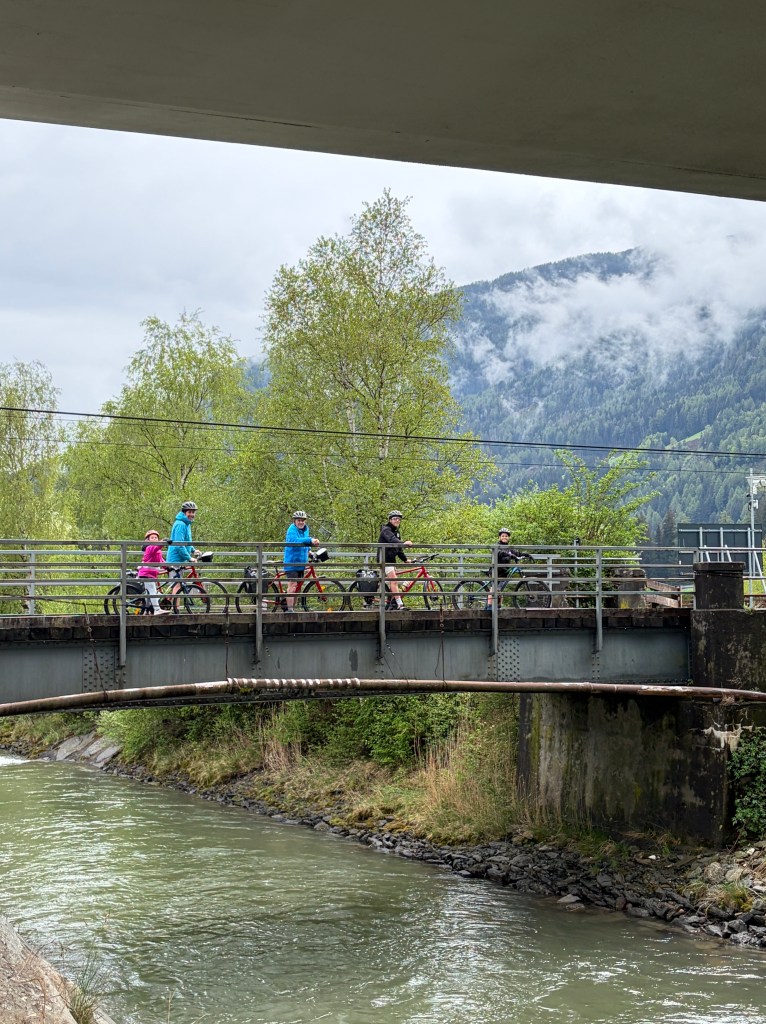
The rain lingered for a while before slowly easing, and eventually, the sun broke through. Another mostly downhill day, but with enough rolling hills to keep things interesting as we cycled through the countryside.

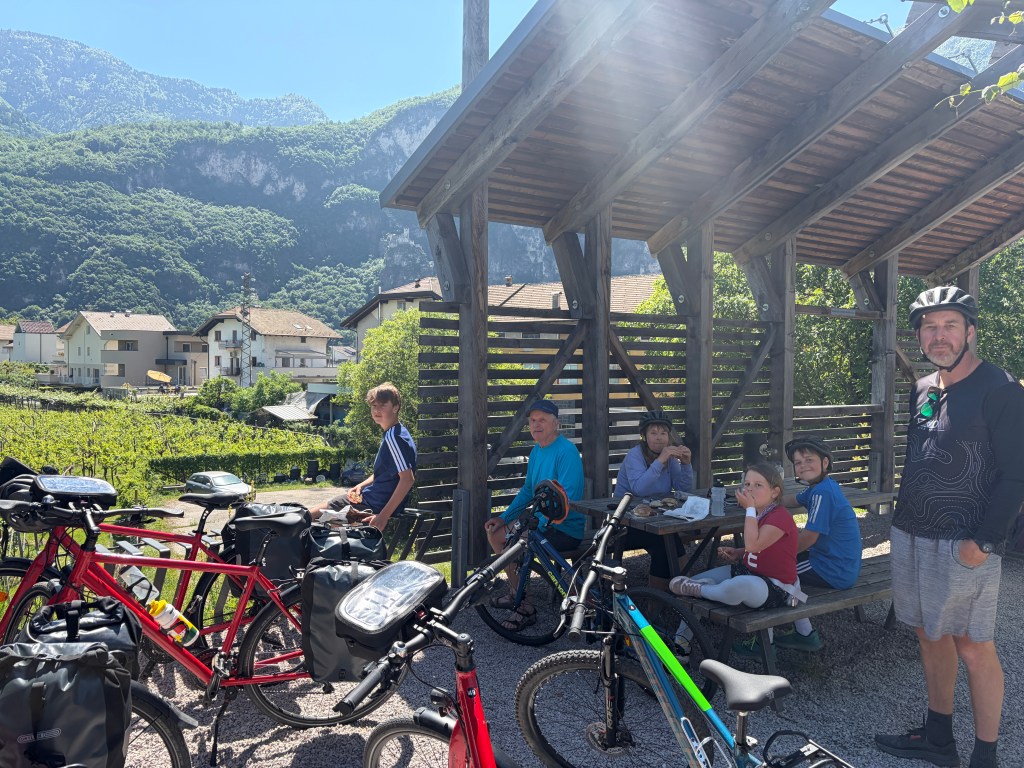
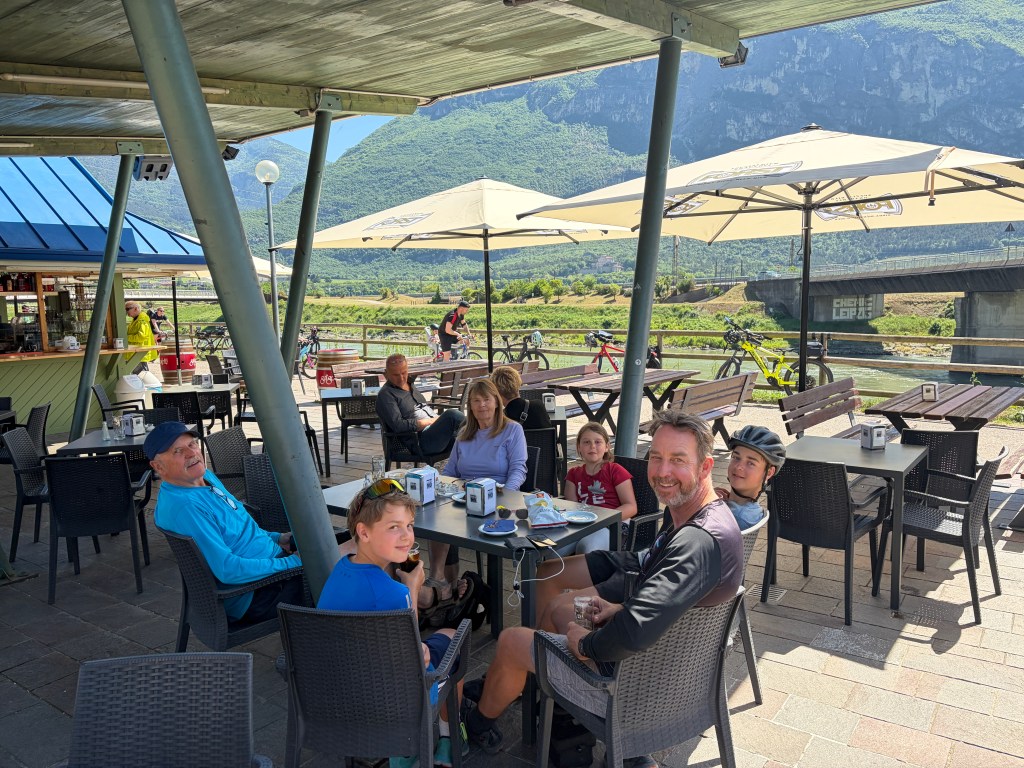
We forgot to pack lunch thanks to our late start and the only village we passed through was completely shut down for siesta time. We dug through our bags and pieced together a roadside feast of buns and a couple of hard boiled eggs rescued from breakfast, some chewy candies, a bit of chocolate and water. Not exactly gourmet, but sitting on a bench in away from the drizzle for a short rest, it somehow did the job.  We continued on into Breassanone.
By now, a rhythm had formed.

Arrive. Shower. Meet at the bar. Debrief.

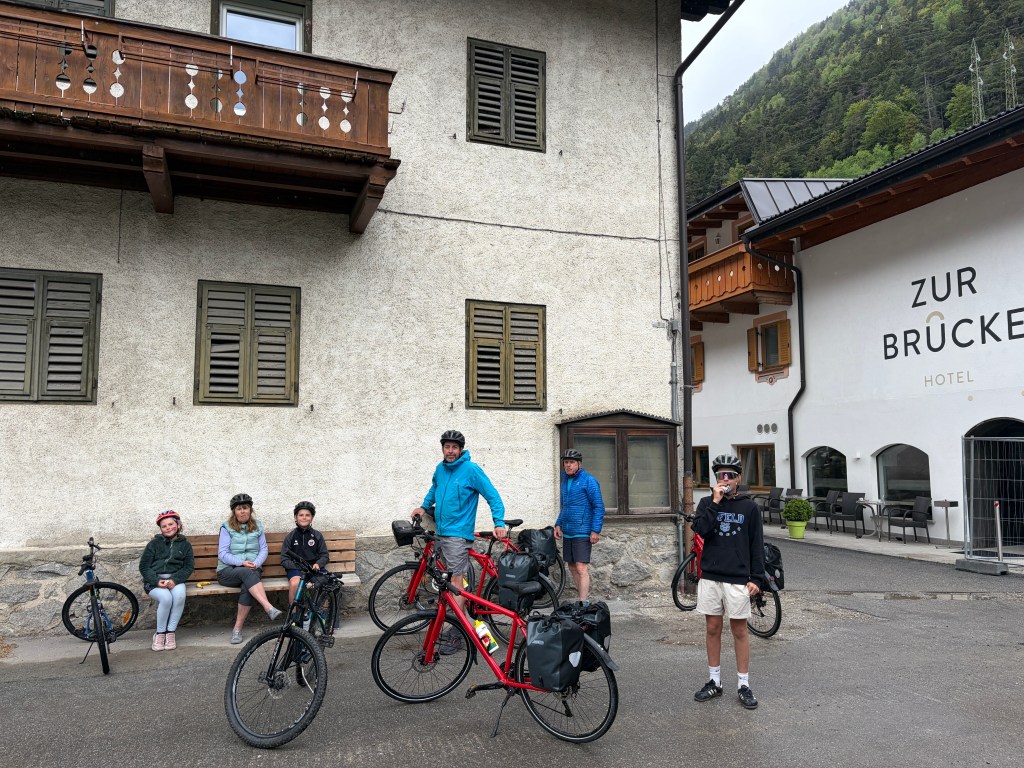
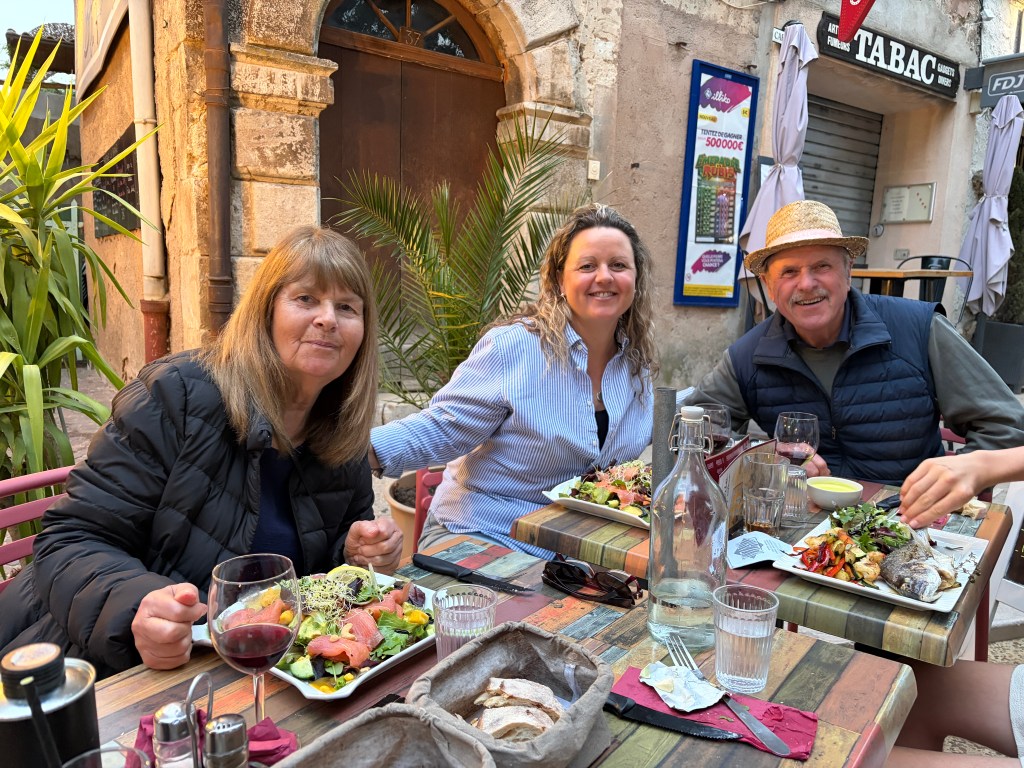
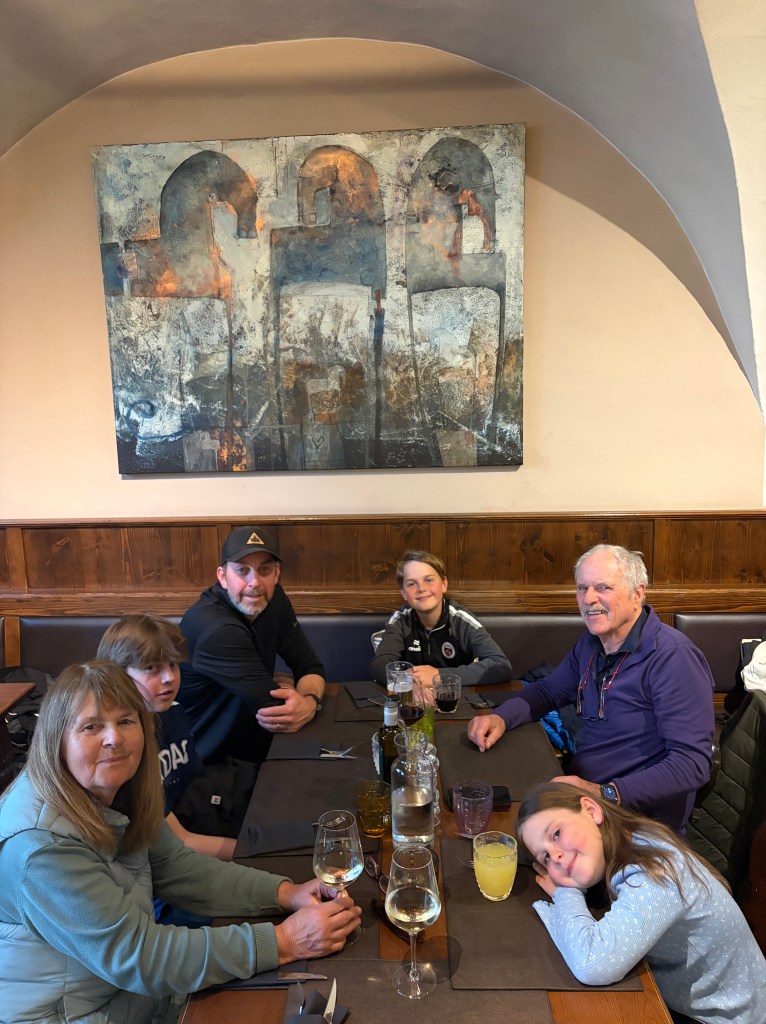
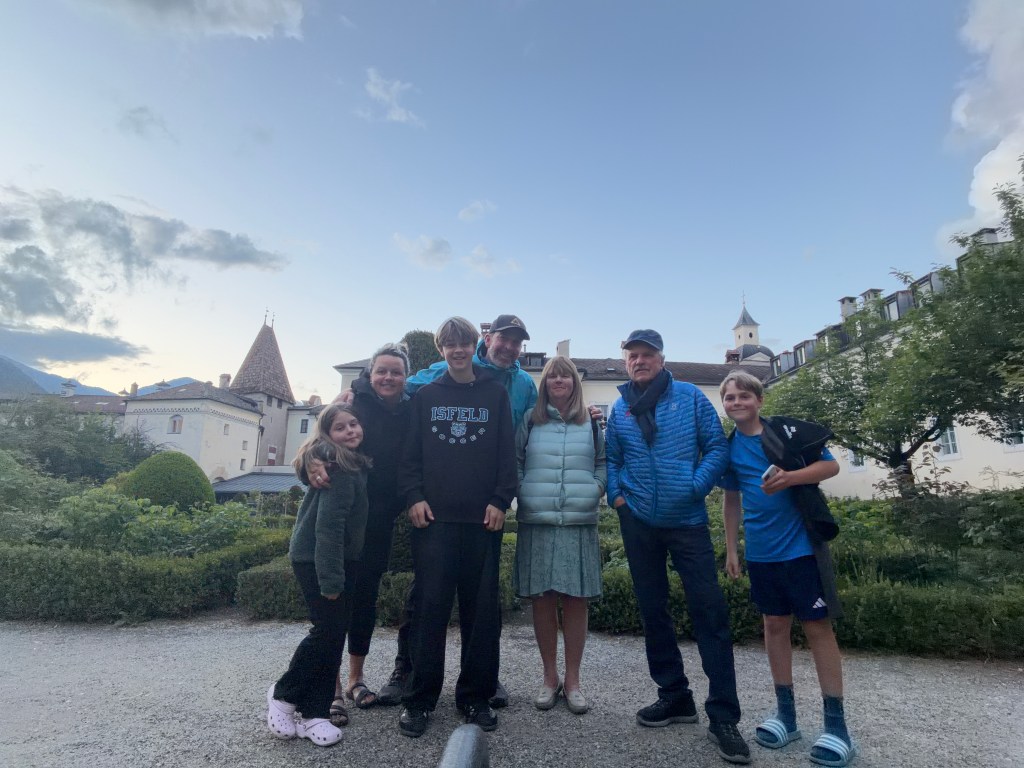
Our stop in Bressanone followed the same pattern. Hotel Jarolin welcomed us in, and after a quick refresh, we headed out again.  Tired from the day, we meandered through the old town and finally stumbled upon a bustling restaurant packed with locals, the smell of schnitzel and fresh beer. Perfect.
Bressanone to Bolzano – 45.75 km

Knowing we had a longer ride ahead, we came prepared: sandwiches filled with meat and cheese, boiled eggs, oversized slices of apple strudel, full water bottles, and plenty of chocolate and candy bribes to keep spirits high.
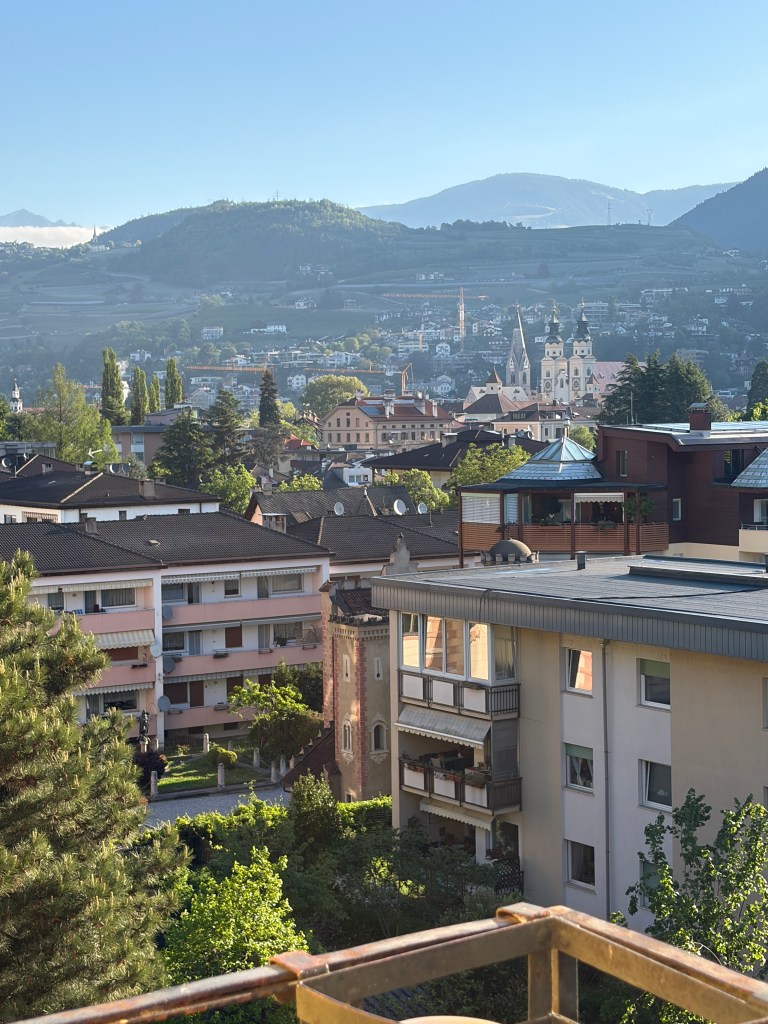
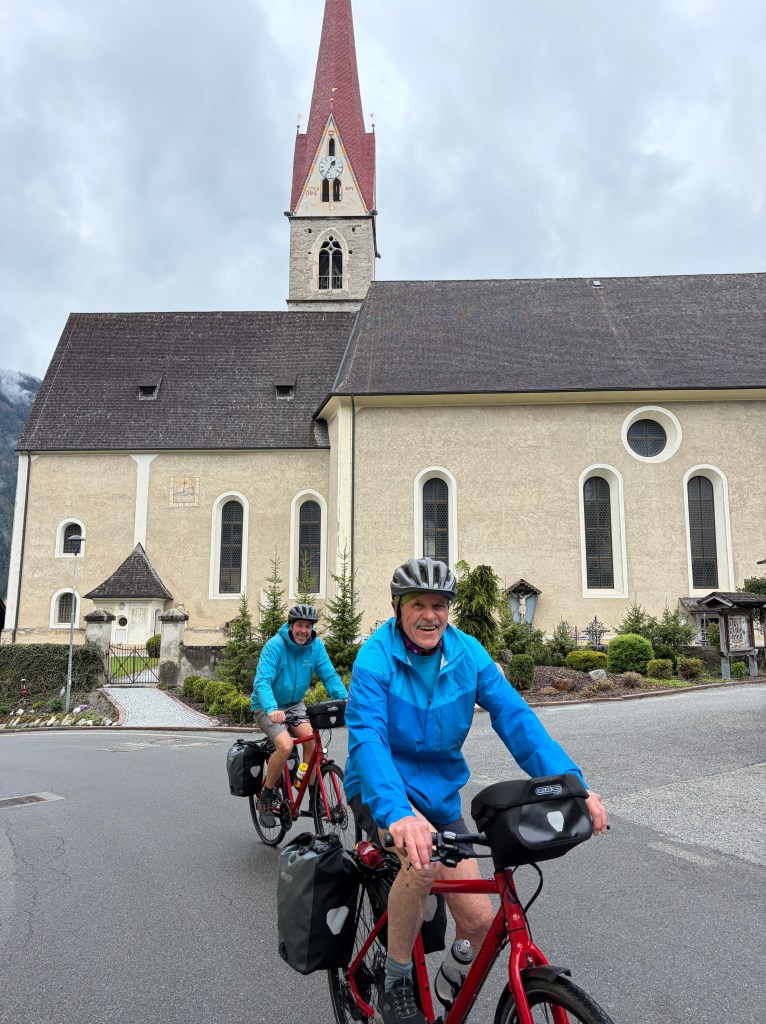
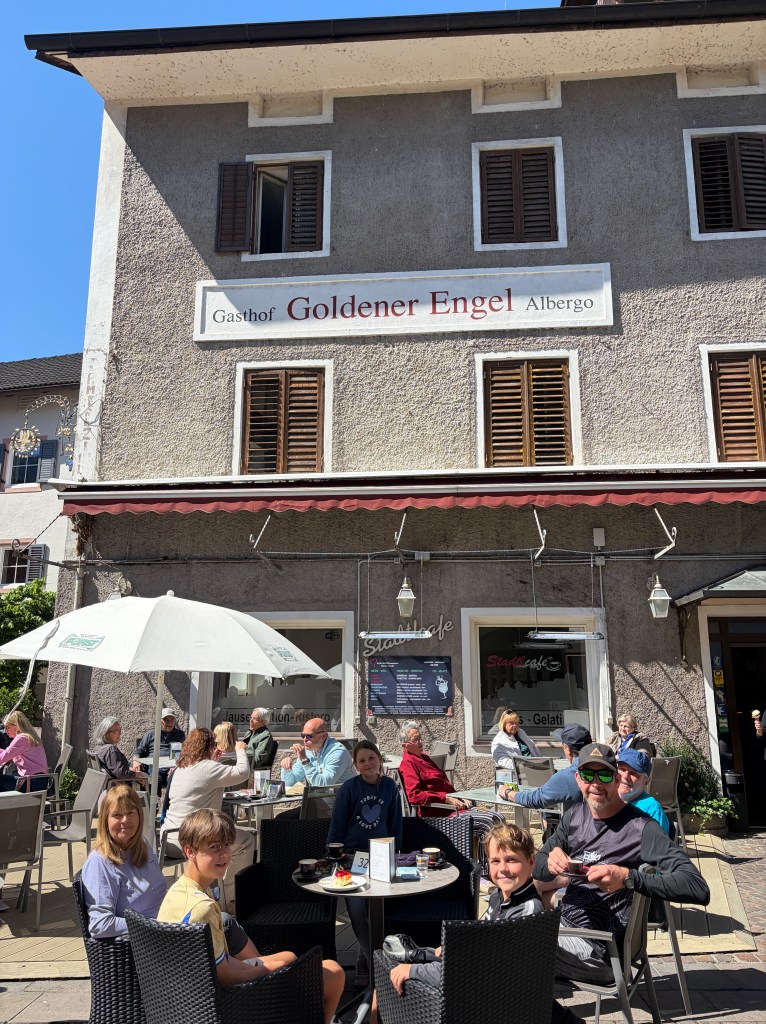
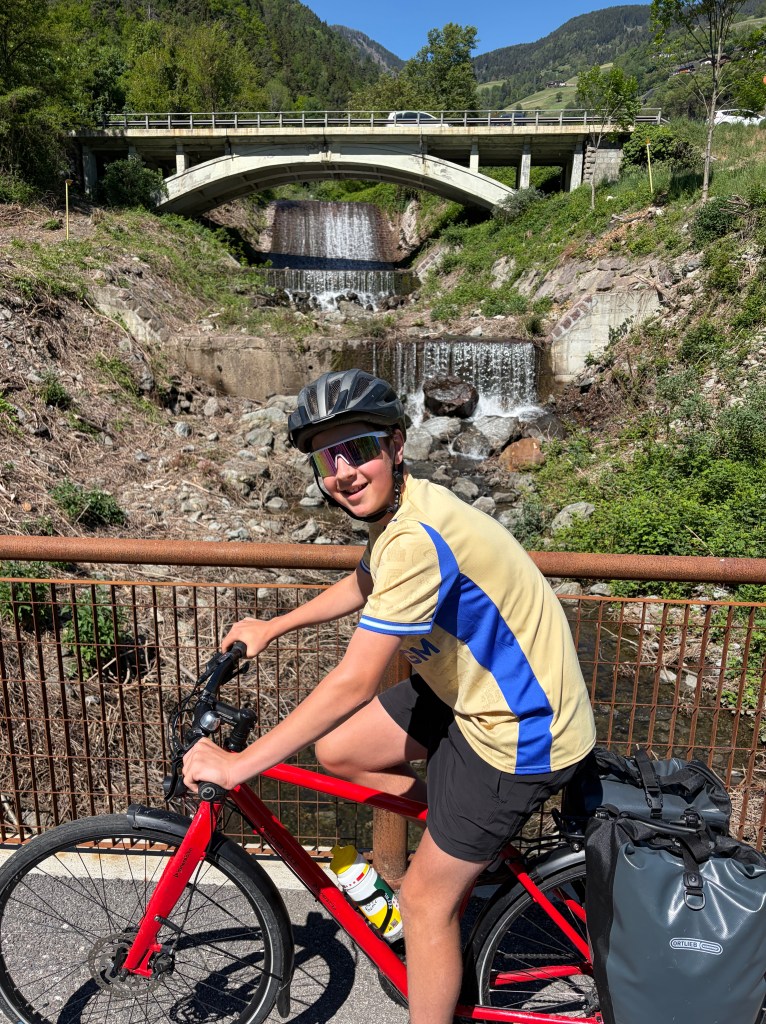
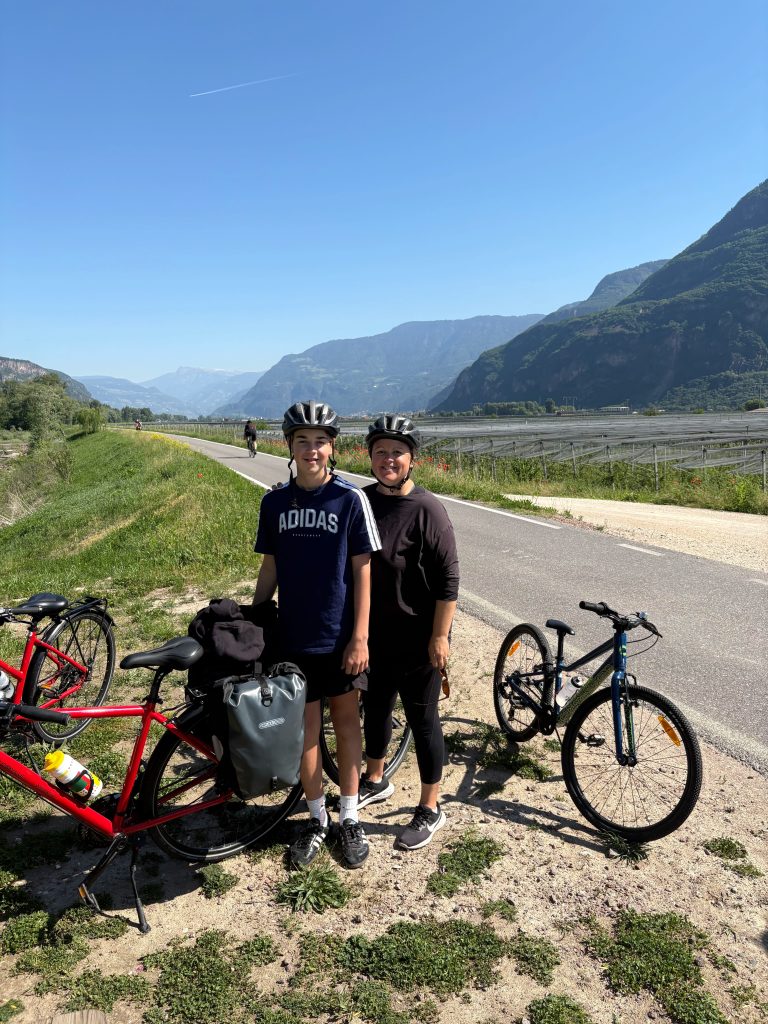
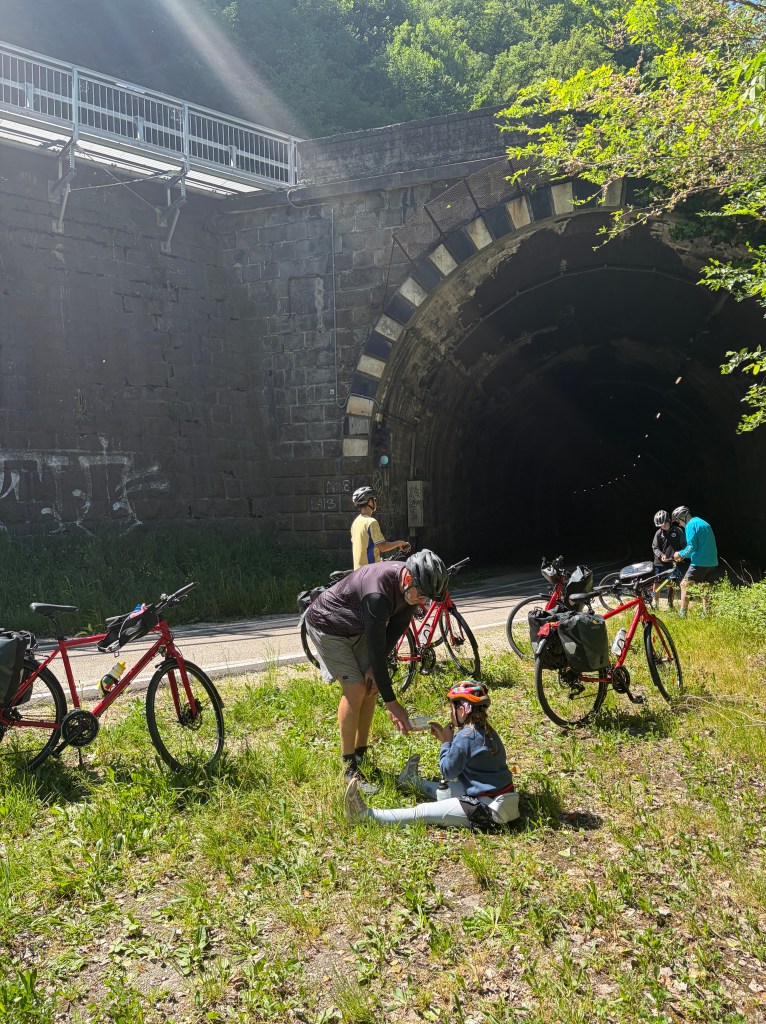
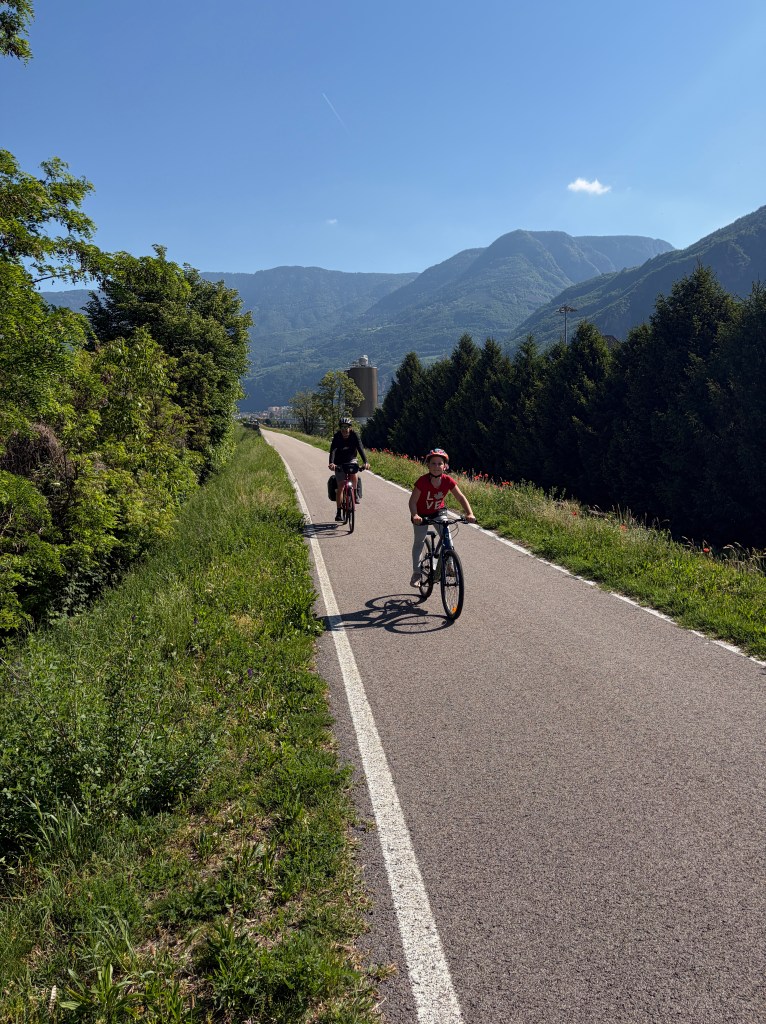
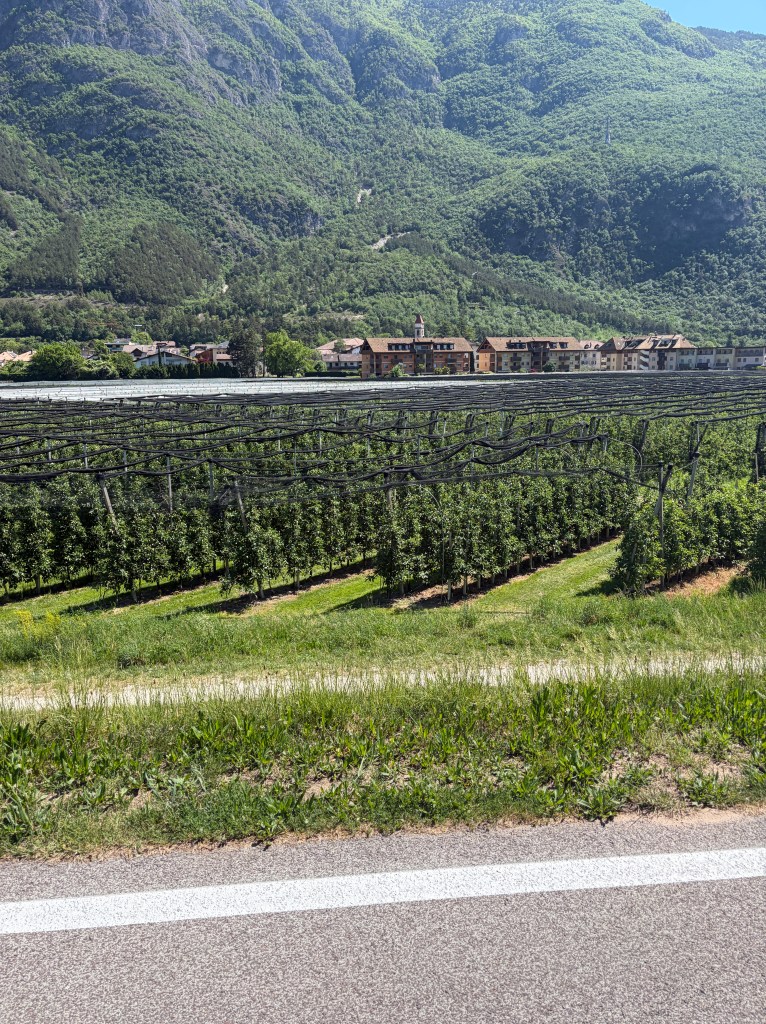
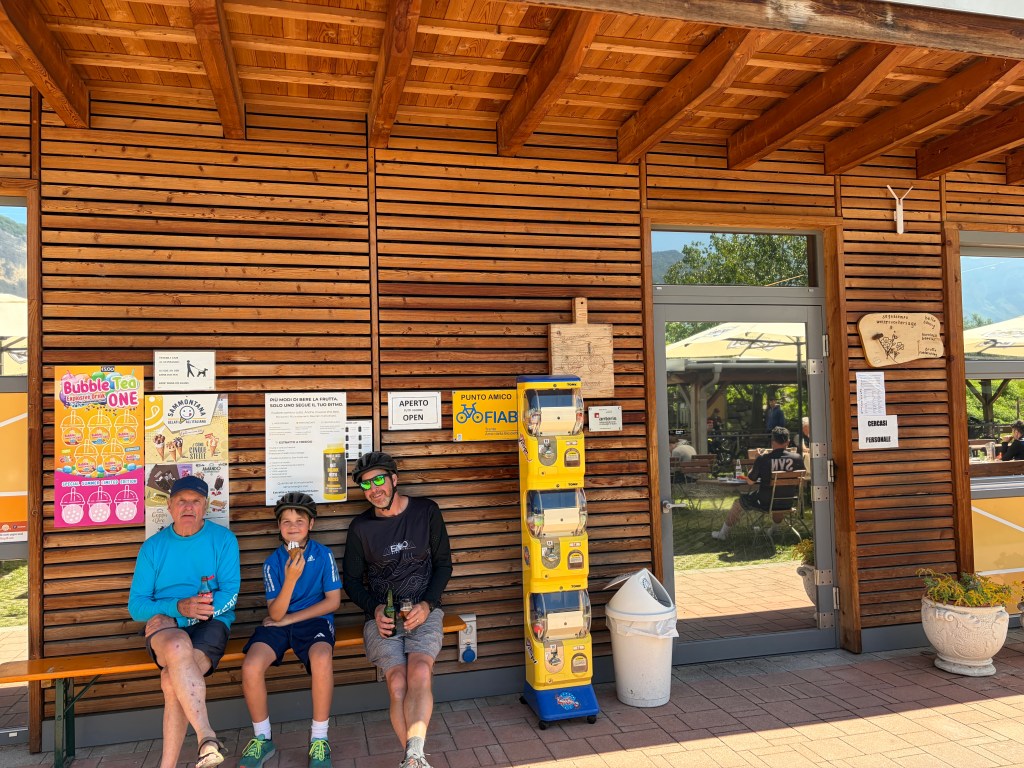
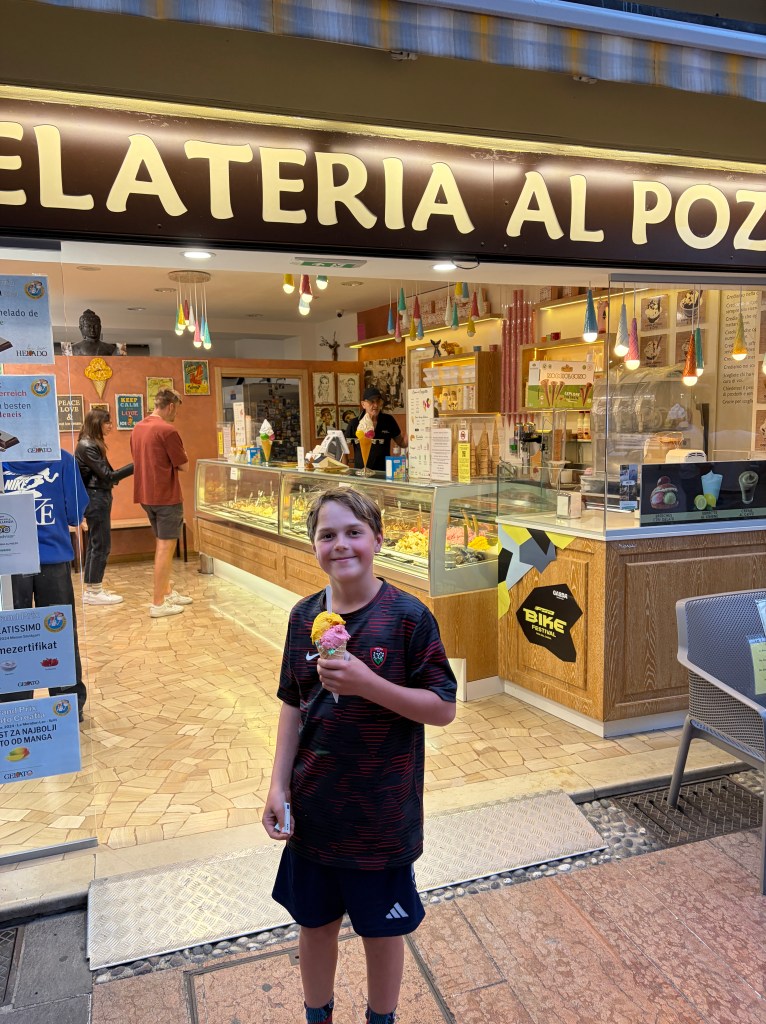
Another incredible day on the bikes, once again almost entirely on dedicated cycling paths winding through the countryside. Castles perched on hilltops, church steeples rising from every village, endless vineyards, waterfalls, bridges, and tunnels.  Every turn looked like a postcard. We stopped in Klausen for coffee and gelato at a bike café before continuing on.

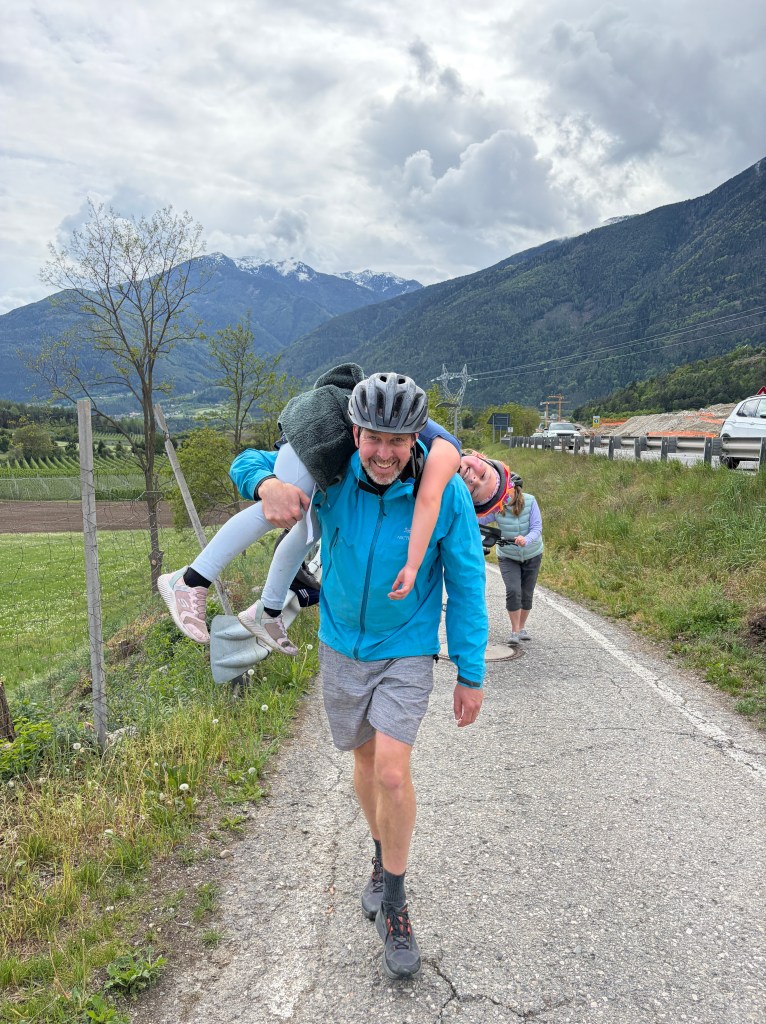
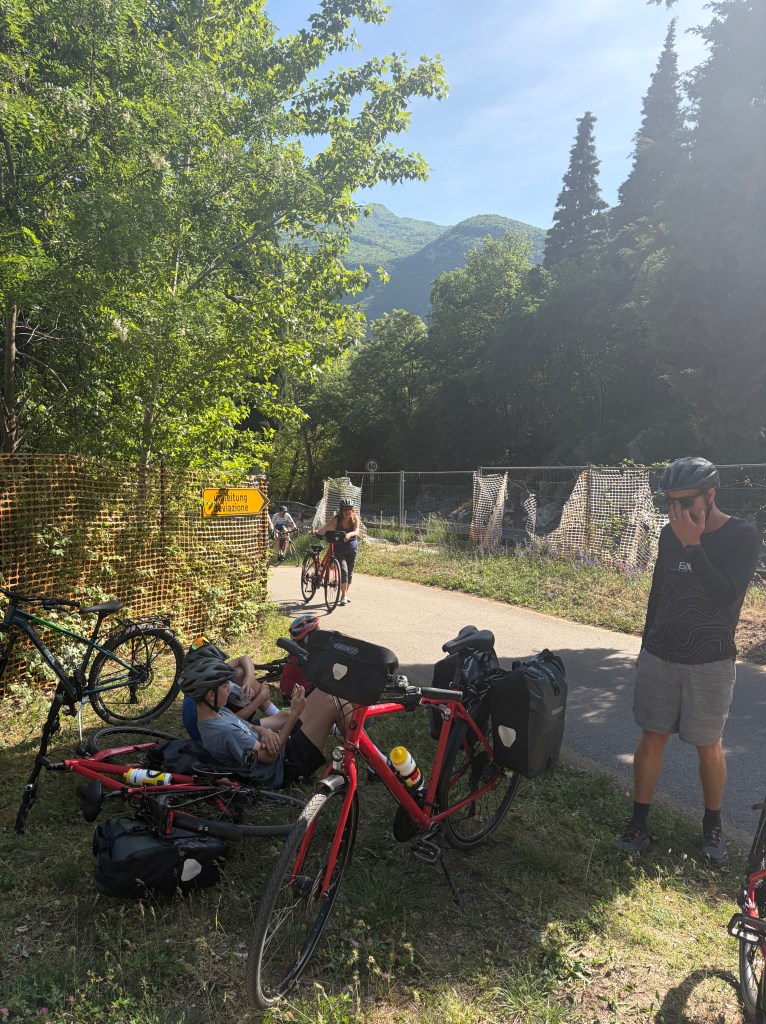
There was one dramatic crash along the way. For a moment I genuinely thought we might be heading to the hospital but after a few candies, a bouquet of wildflowers, some cuddles, and a short rest, we were back on the road.
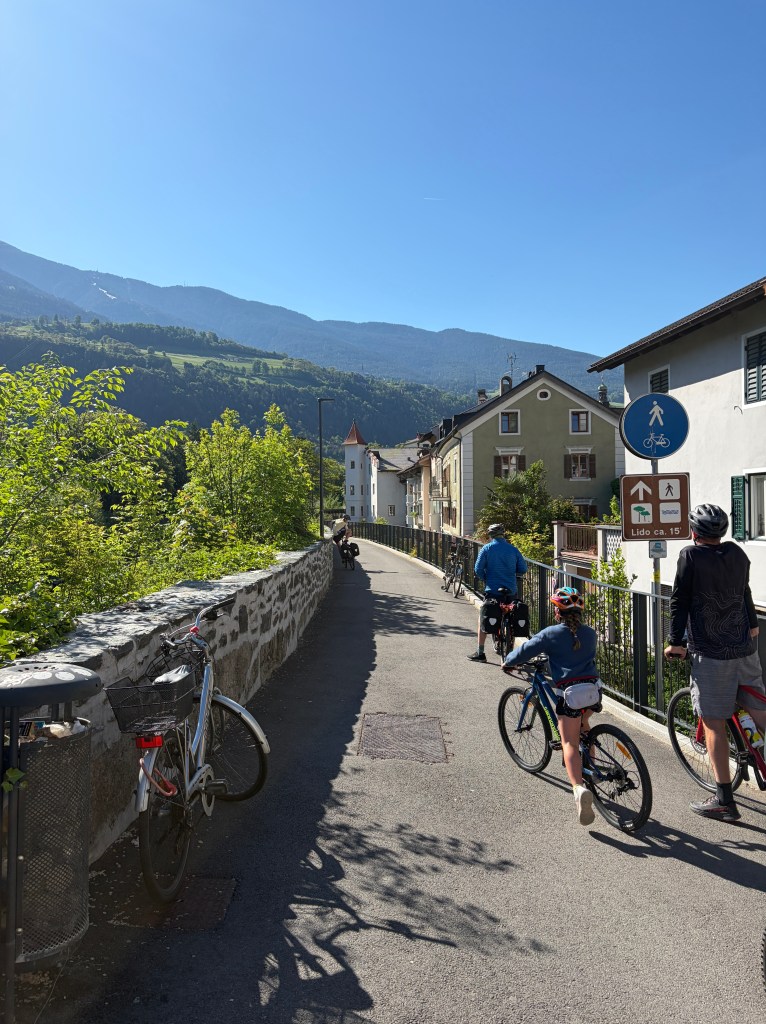
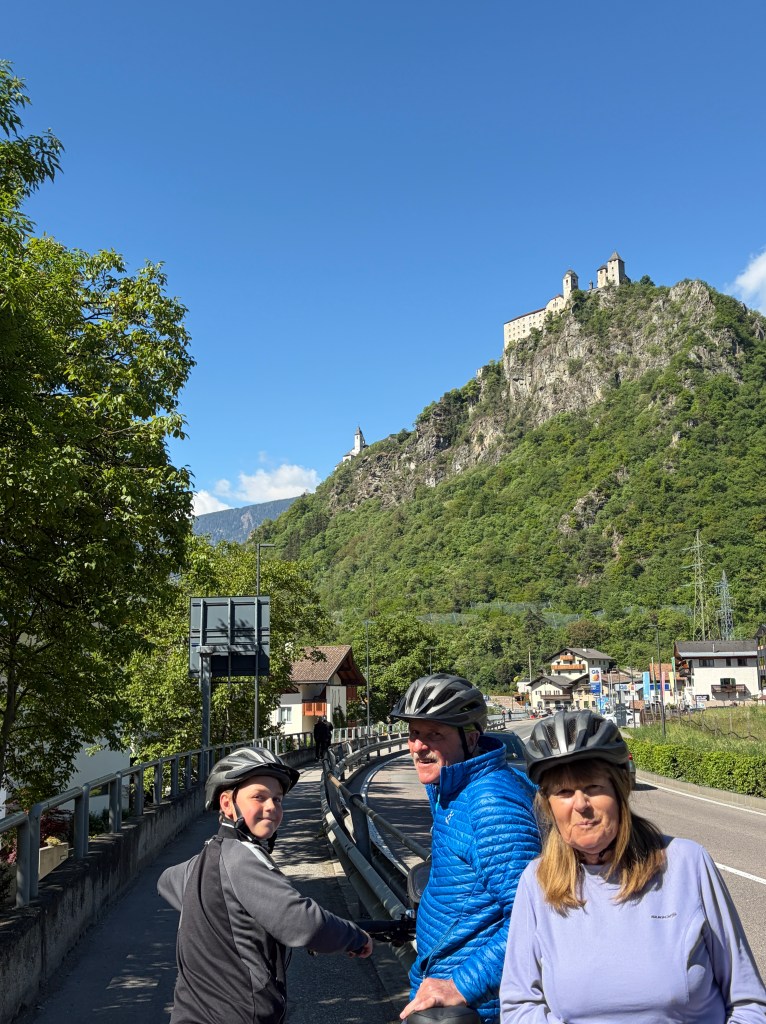
By the time we rolled into Bolzano, tired and proud, the city seemed to be celebrating our arrival with a flower festival in full bloom.  We finished the day with another delicious meal in a recommended restaurant and of course a gelato and café on the way home. 


Bolzano to Trento – 67.04 km

Our longest and most intimidating ride of the trip. We woke early, fueled up with another hearty German breakfast, and packed the bikes in the courtyard. After discovering it was yet another public holiday in Italy, Dave spent an hour hunting down lunch supplies and returned triumphantly with gourmet paninis which we later discovered, in our hunger, were all heavily flavored with fennel. Apparently, a local favorite, but definitely not ours.

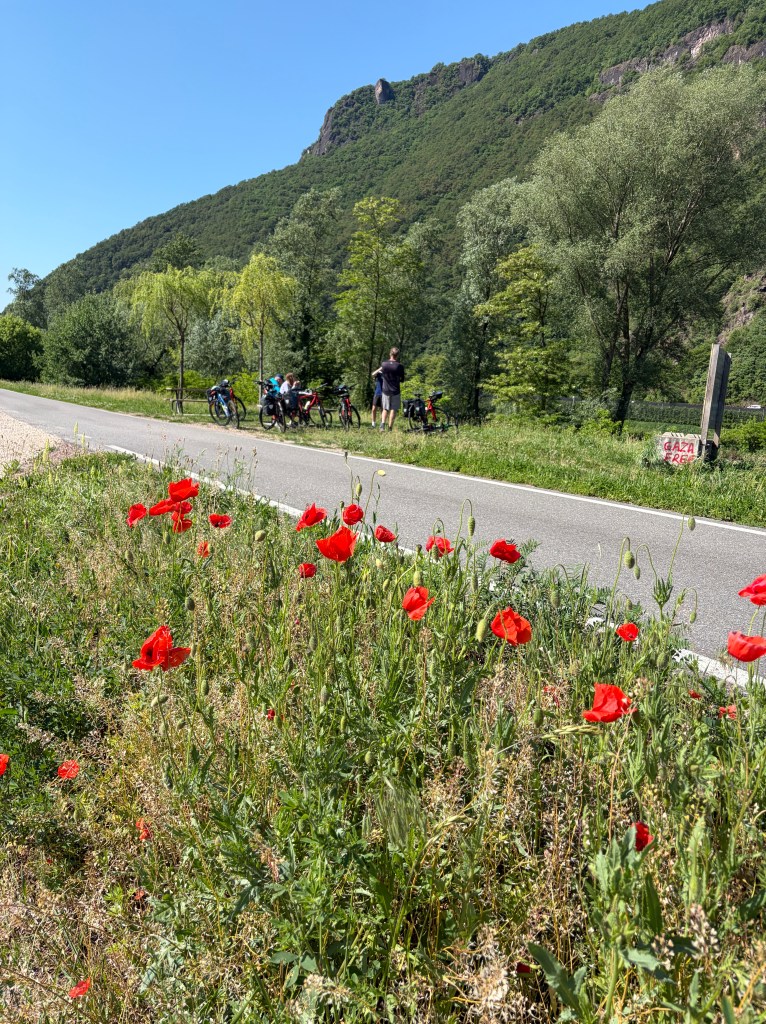
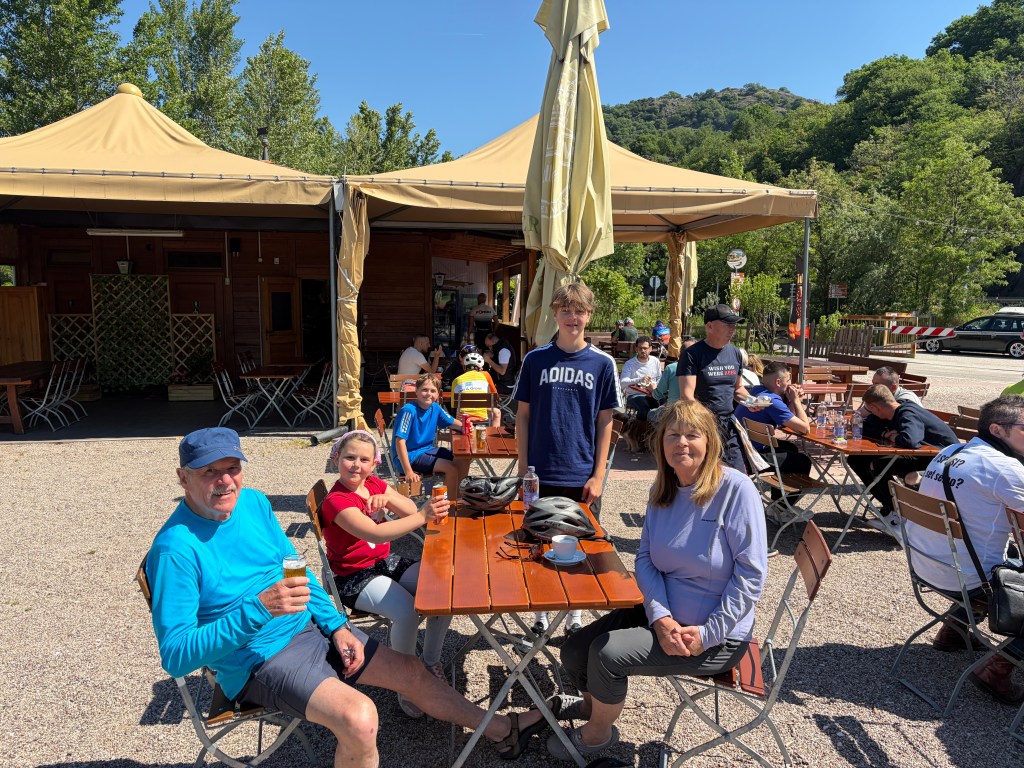
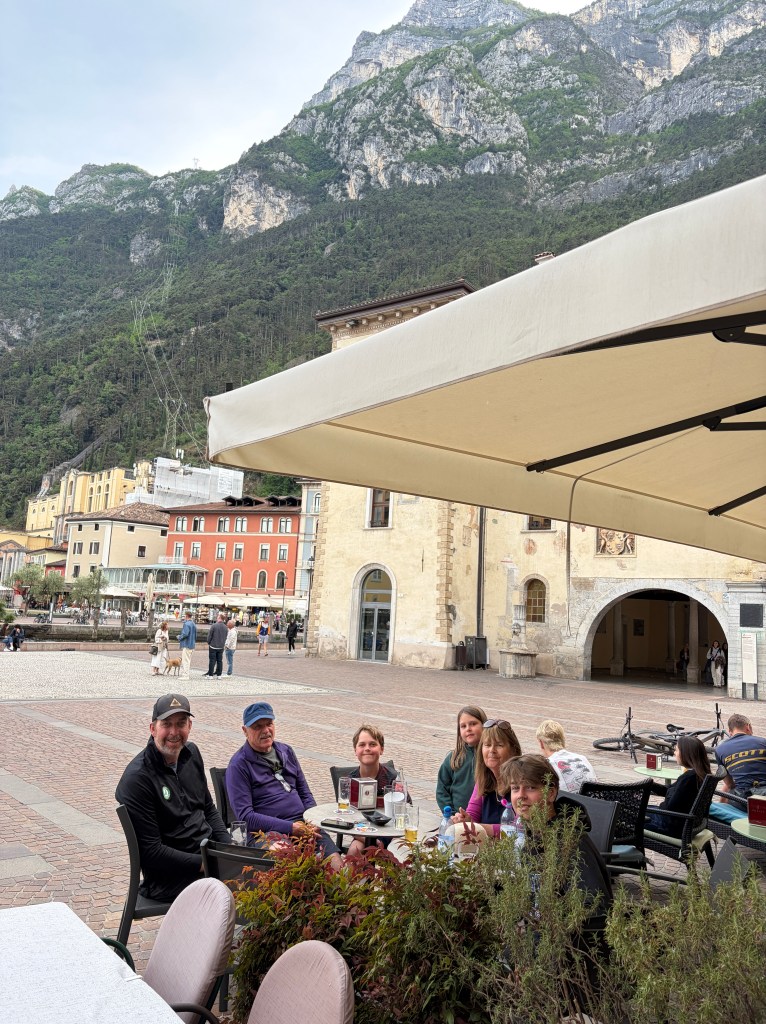
We rolled out of the old city and back onto our beloved bike path, sunshine out and spirits high. The first 15km flew by before our now-traditional stop at a bicicafé for cold beer, fries, and stories from the road.

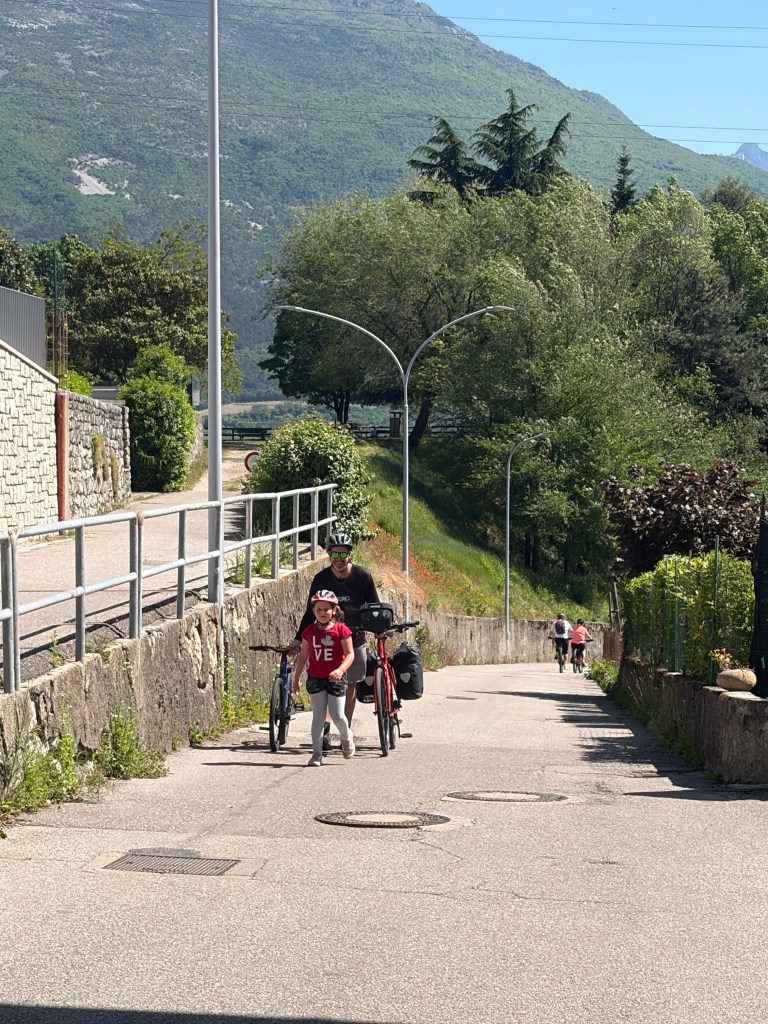
Today’s route followed an elevated bike path above endless vineyards and orchards. Beautiful at first, until the wind arrived. Then it grew. And grew. Soon we were battling relentless headwinds that made it feel like we were pedaling backwards and not ideal on the longest ride of the tour. Still, everyone kept pushing on. Olivia amazed us all, spinning her tiny wheels with barely a complaint.

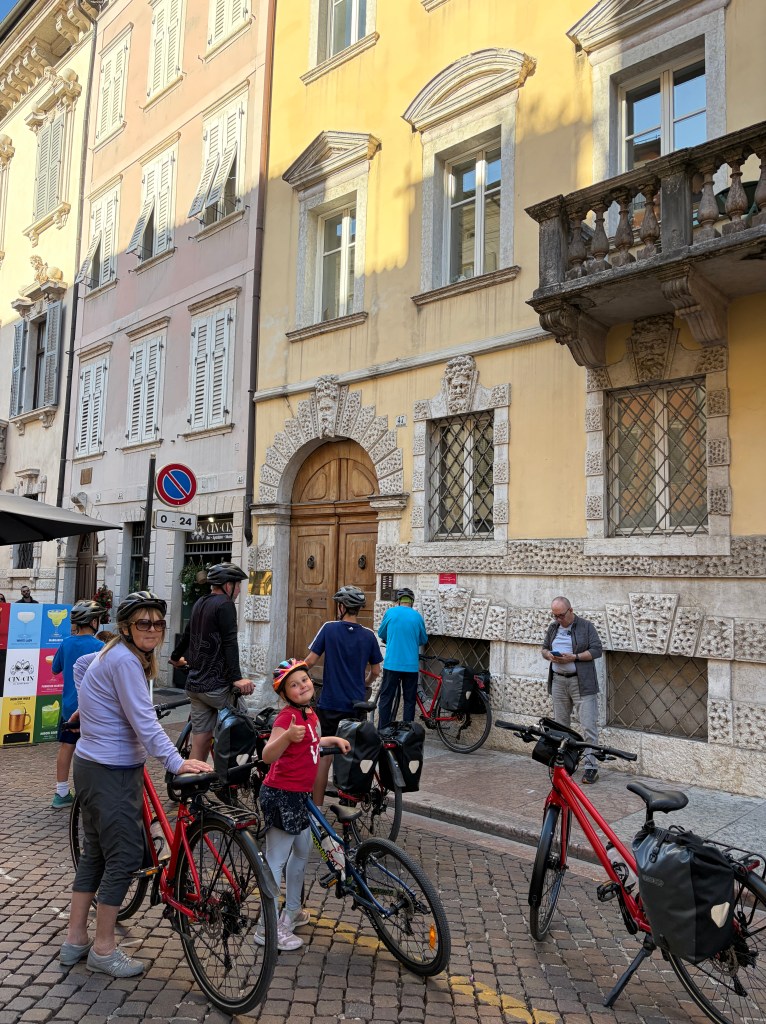
We survived a quick lunch of disappointing fennel sandwiches, rewarded ourselves with one last ice cream stop at another bicicafé, fixed one major flat tire within the last 10km and finally rolled into Trento with exhausted legs. We followed the path into the old town, excited for the much-hyped palazzo from Papa.  Alas we were greeted by our host saying there was an “issue” with our room and we’d been moved to another hotel.
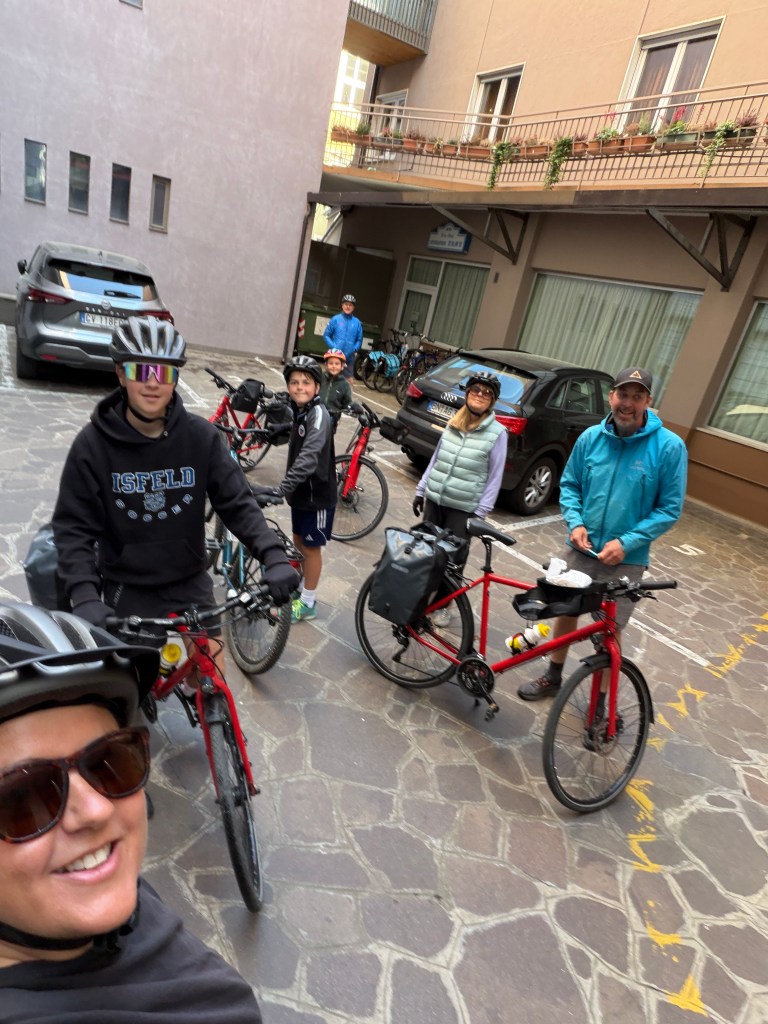
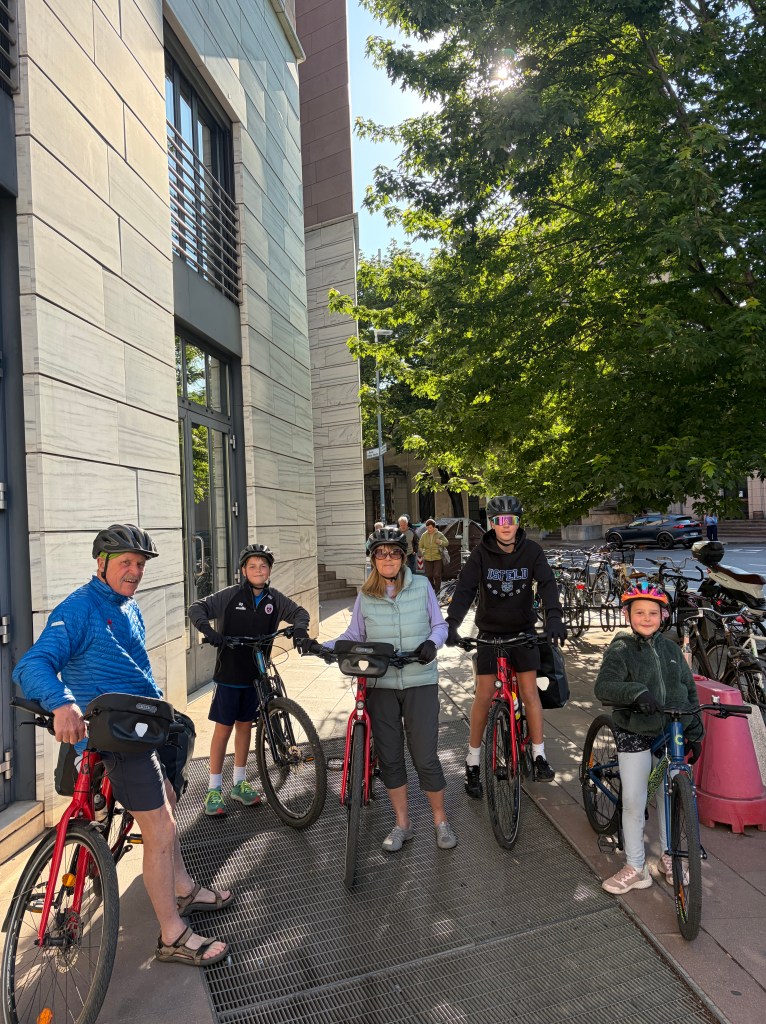
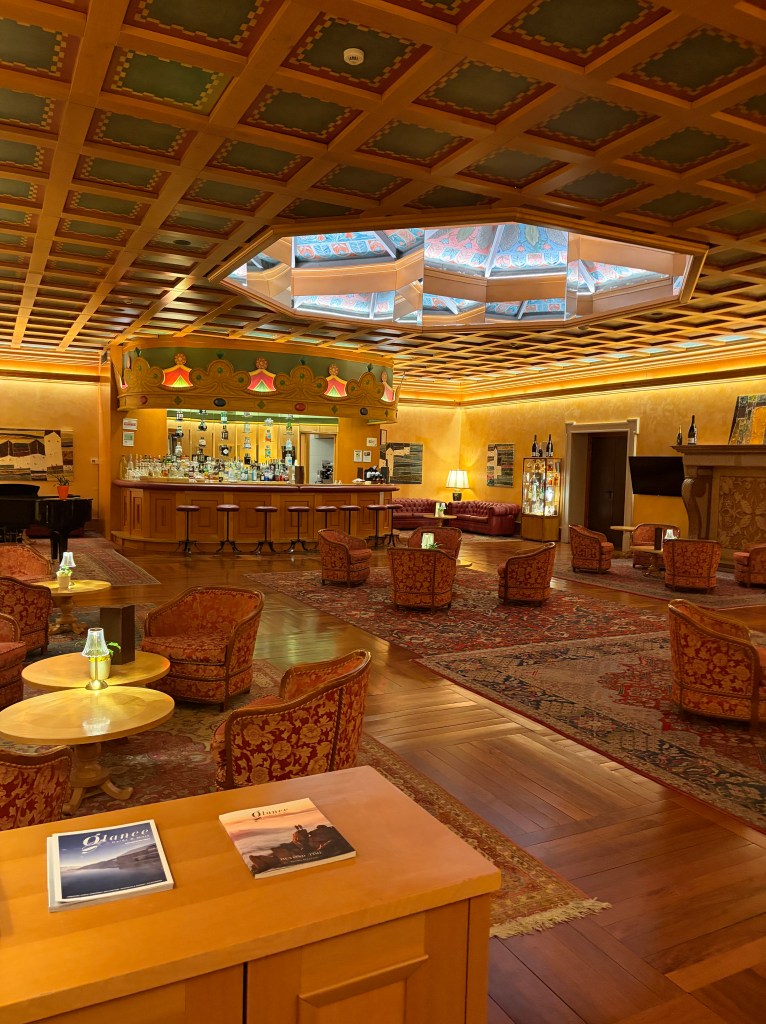
So, tired and disappointed, we climbed back on the bikes and rode to a fancy hotel where the seven of us squeezed into two small rooms with cots and pullout couches. That night we gathered in the grand hotel bar for a cold drink, a proper debrief, a little complaining, and shared pizzas before collapsing into bed to rest and recover.
Trento to Riva del Garda – 51.44 km

Yesterday may have been the longest ride but today was easily the toughest both physically and mentally. “Ride GPS” promised a mostly flat route before some intimidating hills in the final 15km. Unfortunately, it was exactly right!
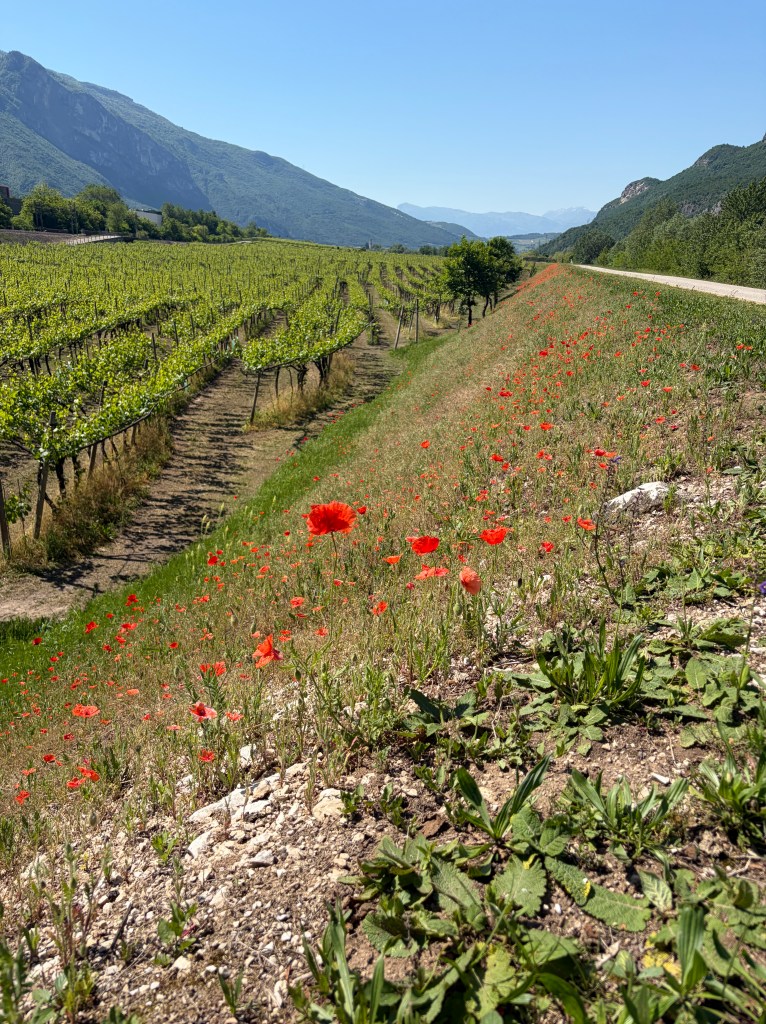
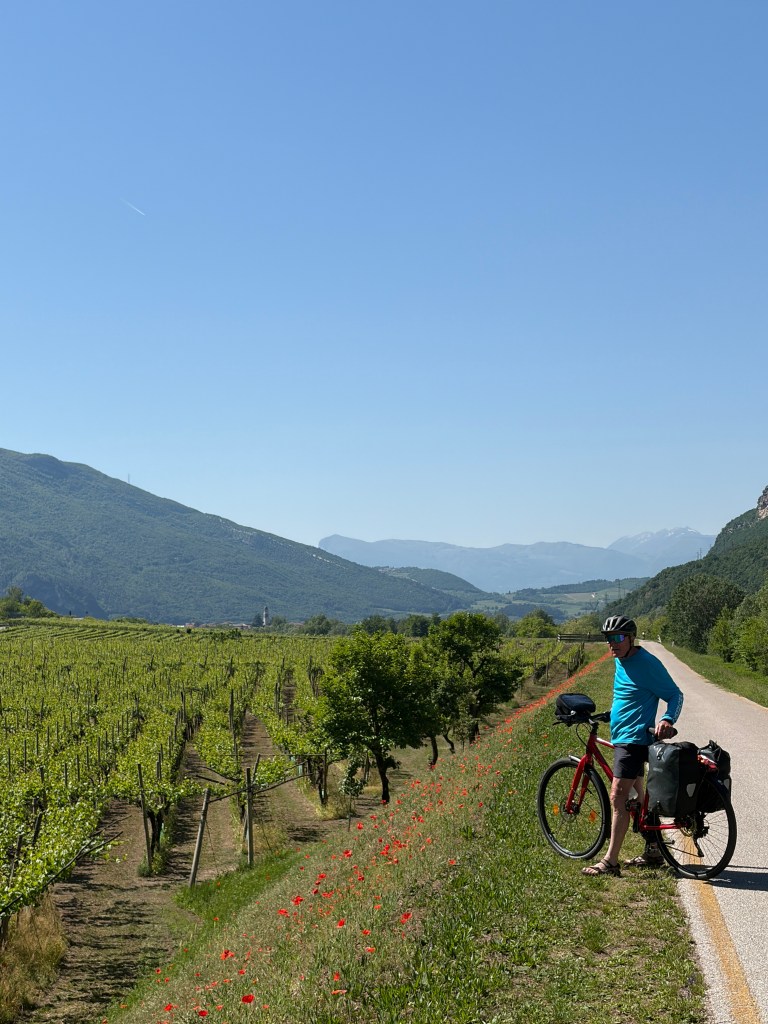
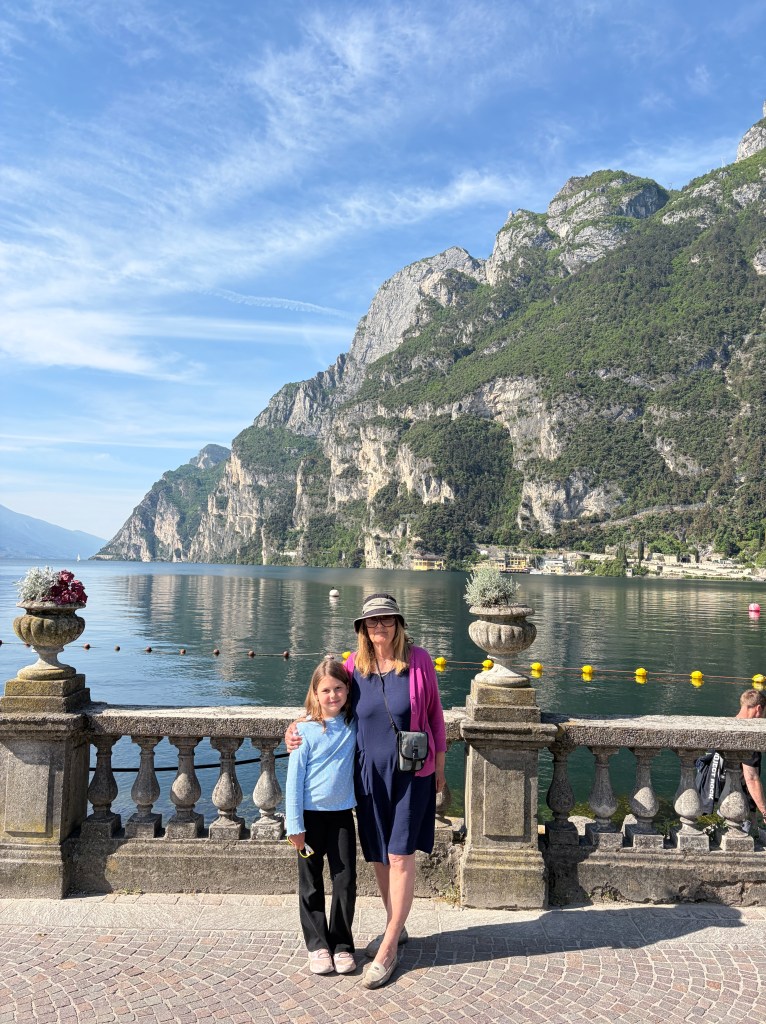
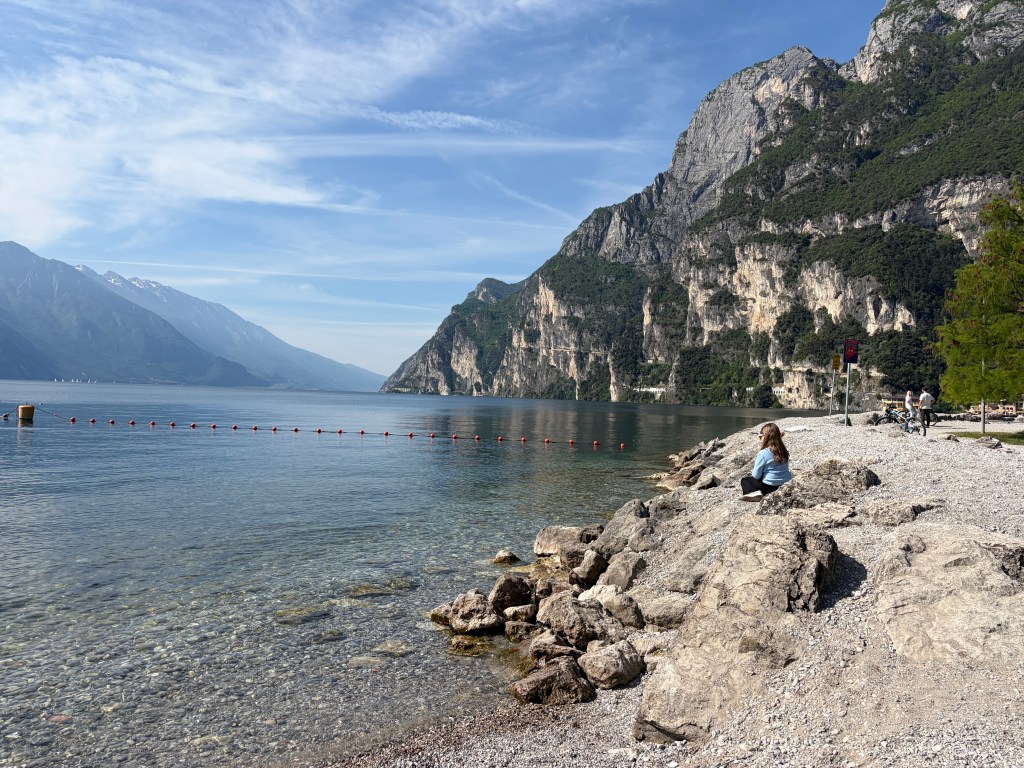
The first 30km flew by, then the climbing began: up, down, up further, down again, until finally one epic push over the mountain and into Lake Garda country. When we first caught sight of the lake, we actually cheered. The water sparkled beneath towering mountains, dotted with colorful kite surfers and sailboats. Absolutely spectacular.

Then came two massive descents. As novice riders, we crawled cautiously down the steep straight roads gripping our brakes while seasoned cyclists flew past us at terrifying speeds, including three young women tucked low over their handlebars the entire way down.

We finally rolled into what we thought was Riva… only to discover we still had another 4km to go through a huge Mountain Bike Festival packed with thousands of riders along the waterfront. We even lost one family member briefly, but after a quick backtrack to the last known sighting, our crew was reunited.

Papa had booked us an apartment for a well-earned rest day. Dave and I grabbed groceries and cold drinks while the rest of the team collapsed onto couches, completely spent. Safely the hardest ride of the trip so far.

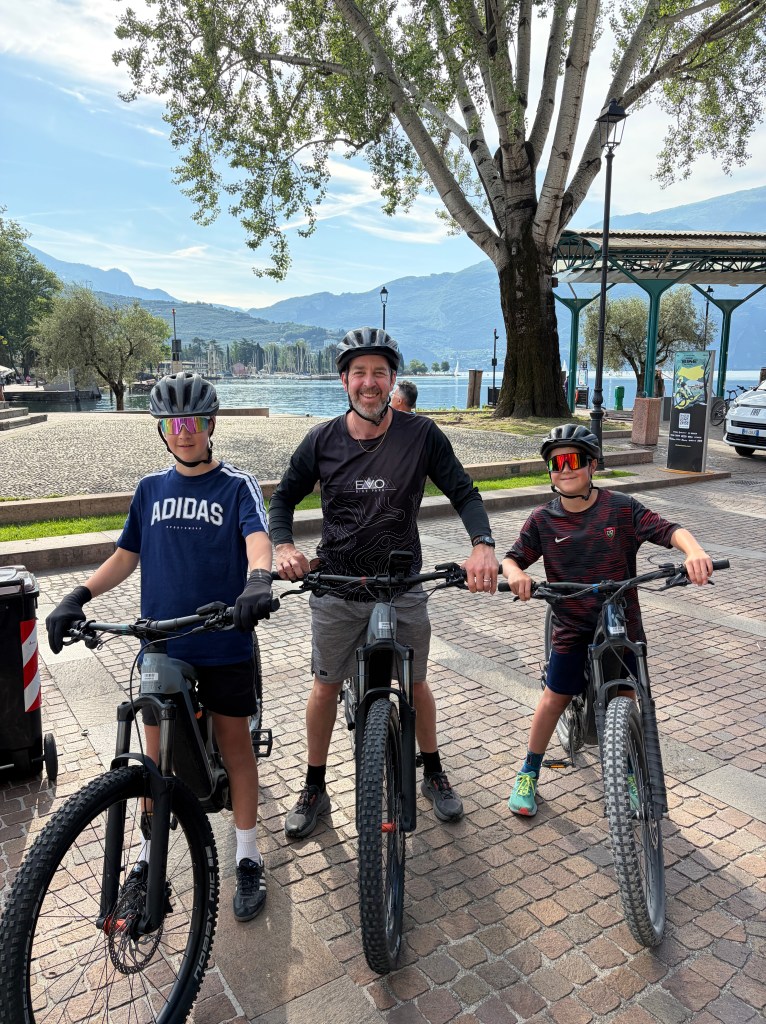
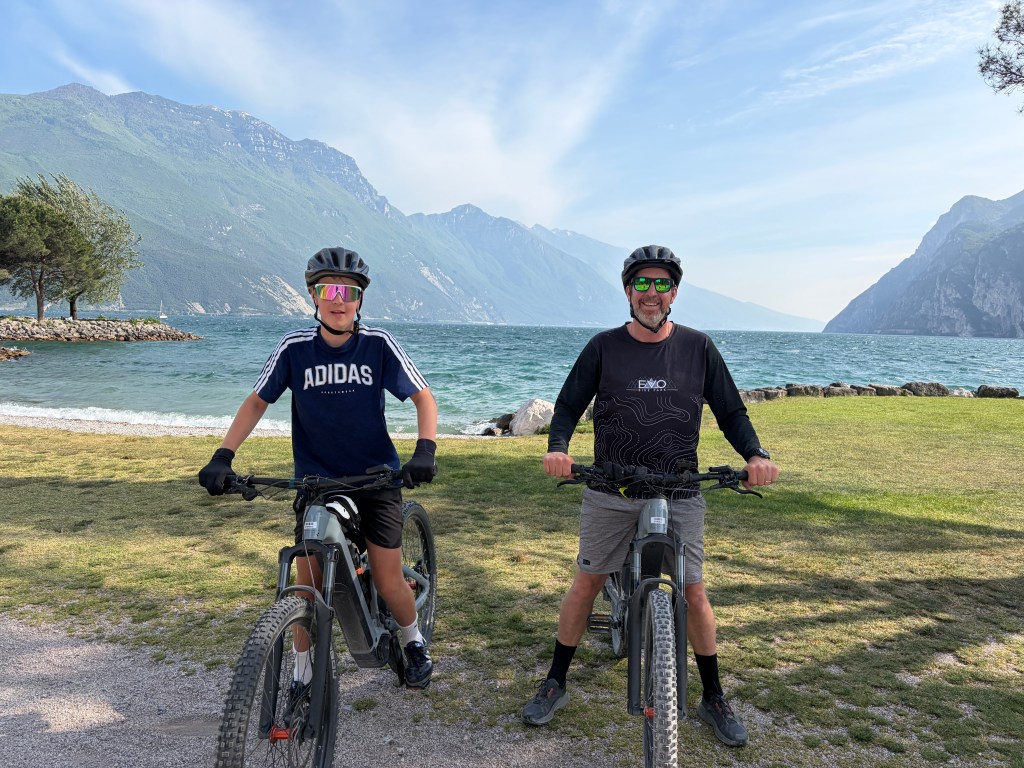
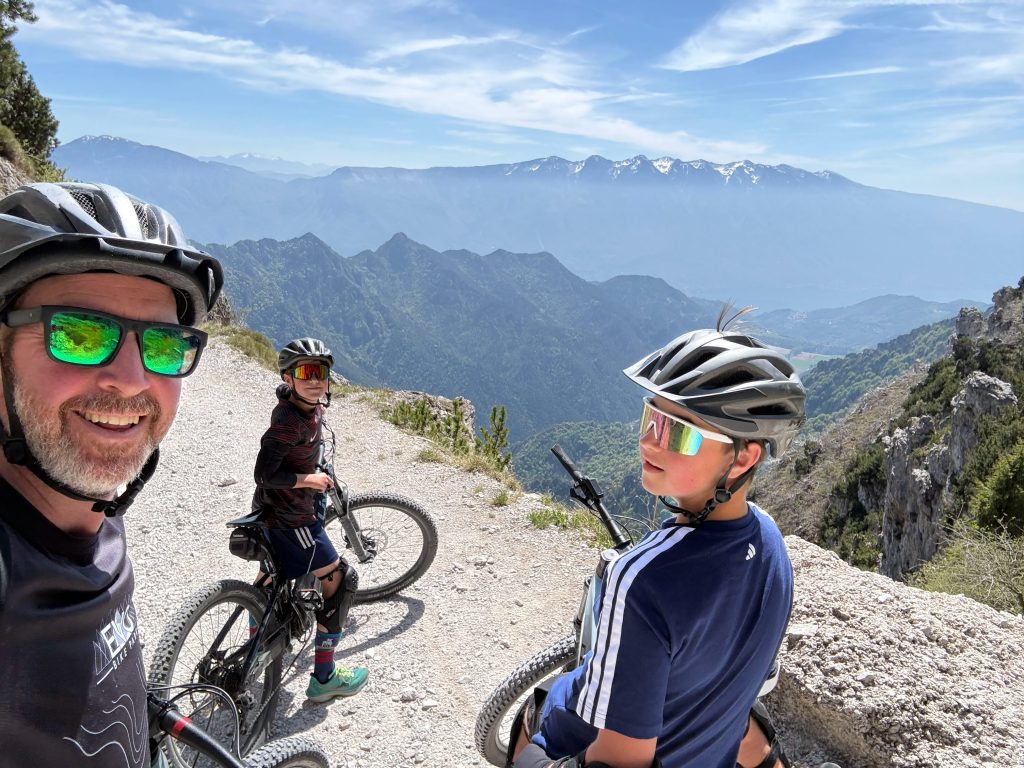
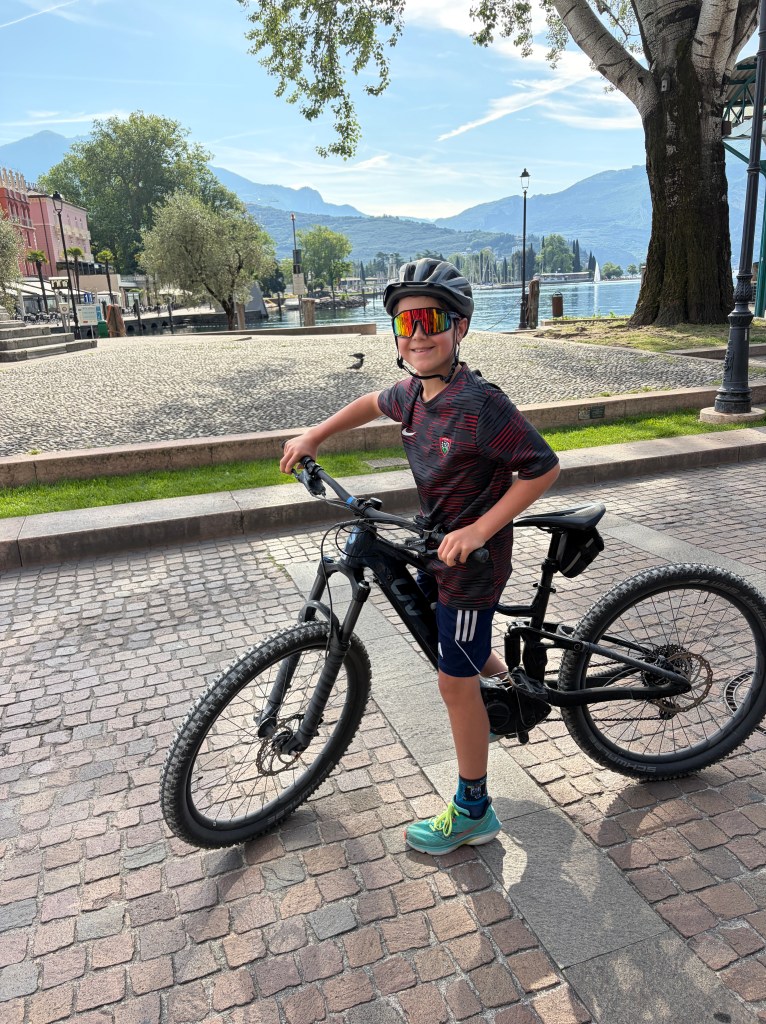
Except apparently not hard enough for the boys. At 7am the next morning, they rented full-suspension e-mountain bikes, shuttled to the snowy mountaintop, and spent the day bombing trails all the way back to Riva with a pasta stop included. They returned glowing with excitement, declaring it the “best day and best bikes ever,” then spent another two hours racing around the beach towns before reluctantly returning the bikes to the shop.
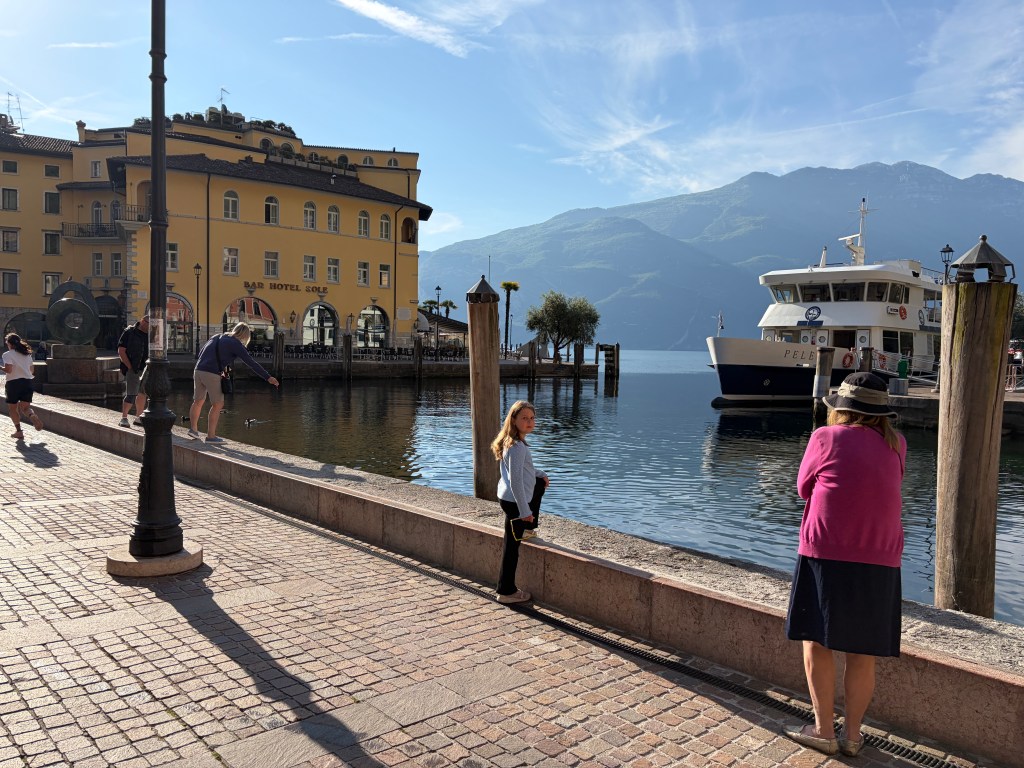
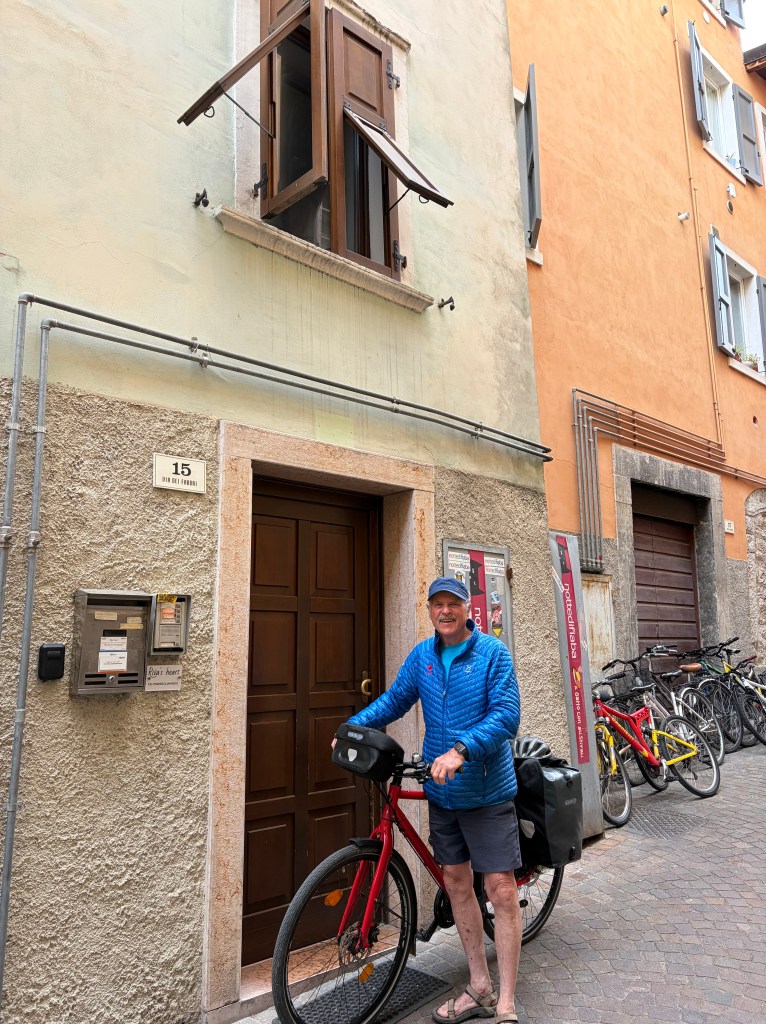
That evening we celebrated our nearly finished tour with a lively Italian dinner tucked into a narrow stone alley, complete with cheeky service, flowing wine, and excellent food.


Riva del Garda to Verona – 38.38 km

Our final day had arrived. Fatigue was high, nerves were real, and today’s ride wouldn’t even start until the heat of the day.
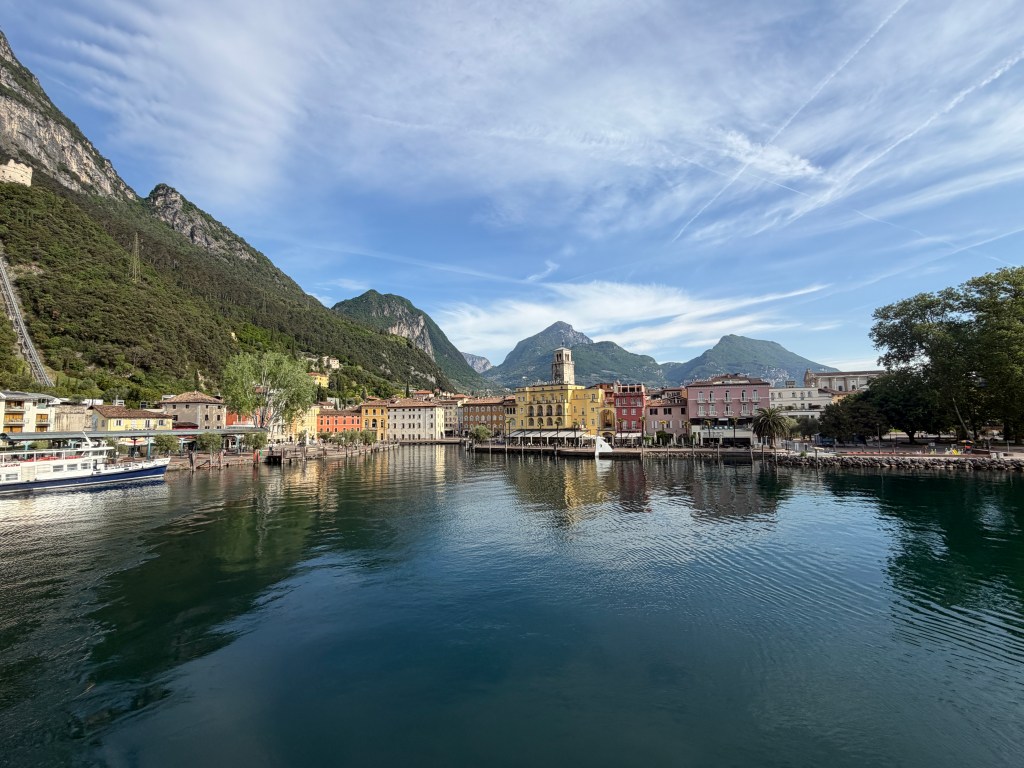
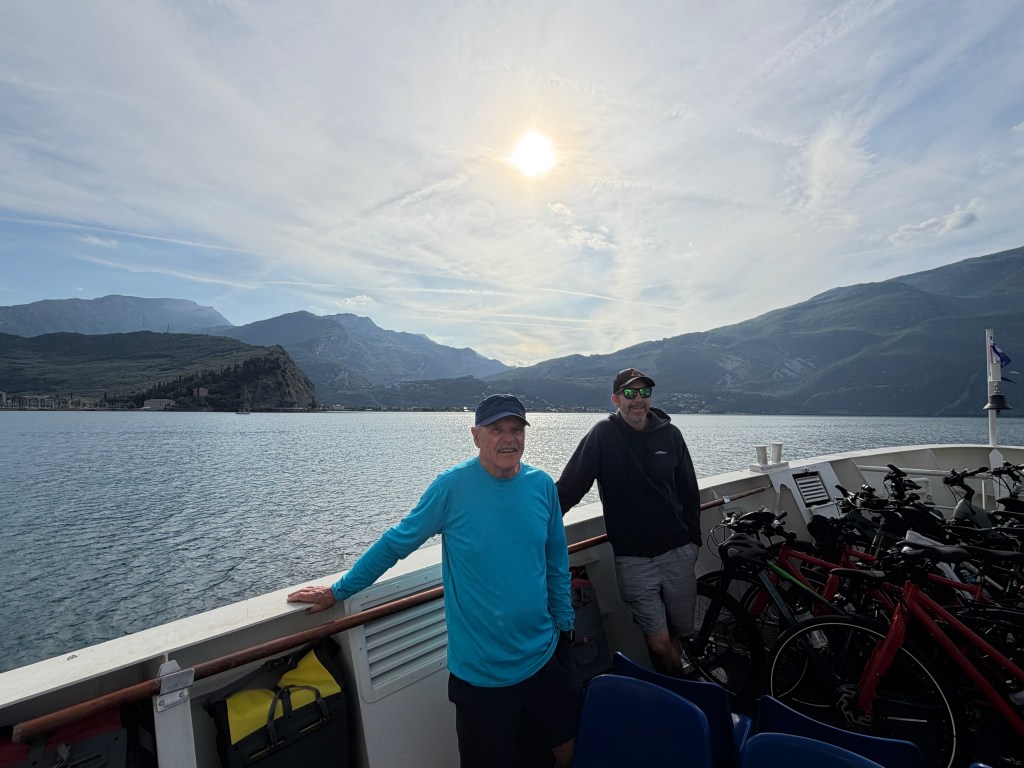
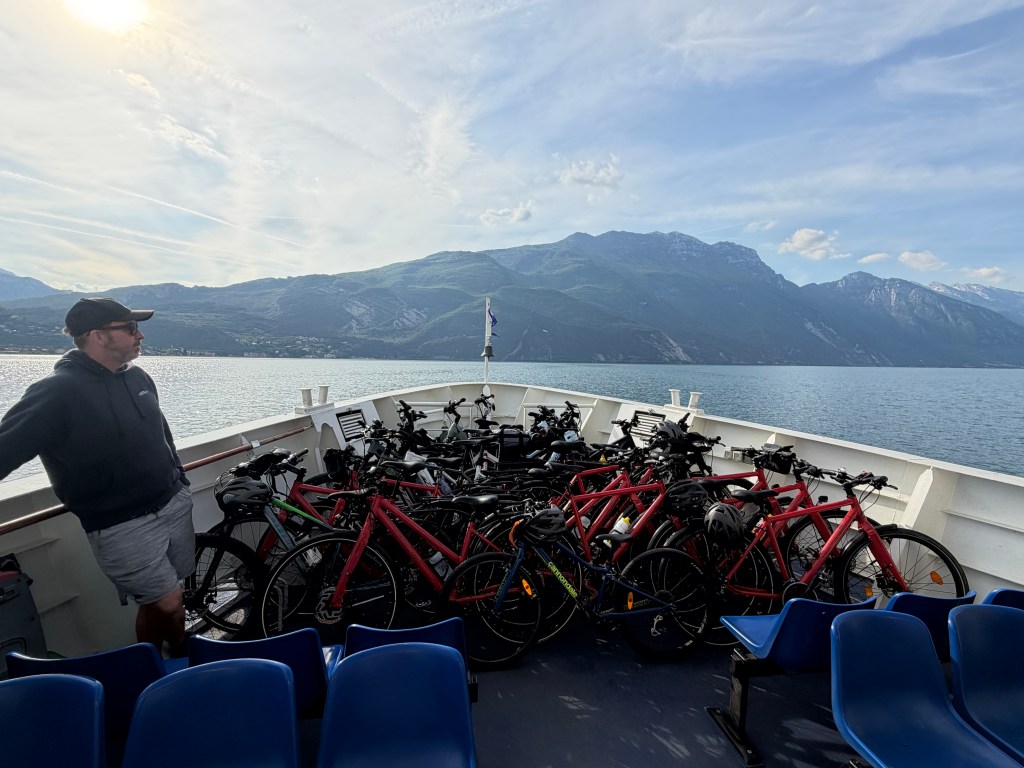
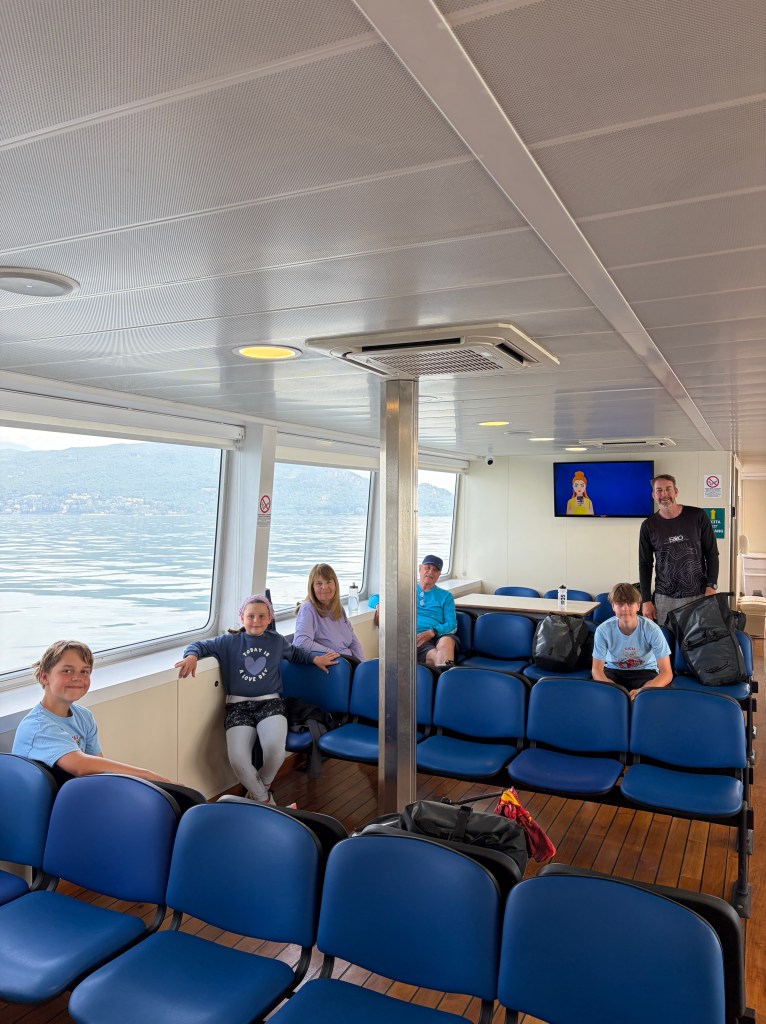
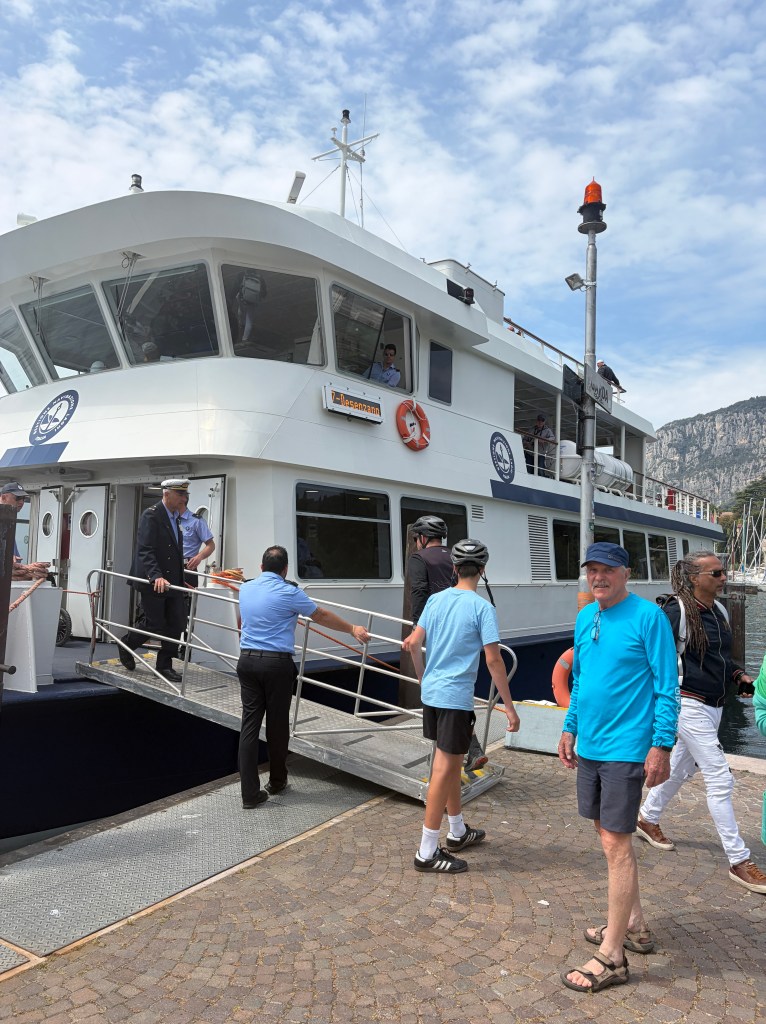
We packed up early and rode to the waterfront to catch a ferry from Riva to Garda. The four-hour ride across Lake Garda was beautiful, and by 1pm we were back on the bikes, climbing immediately up and out of town into the blazing sun. After a long, grueling ascent, the route finally flattened and then rewarded us with a bit of glorious downhill riding.

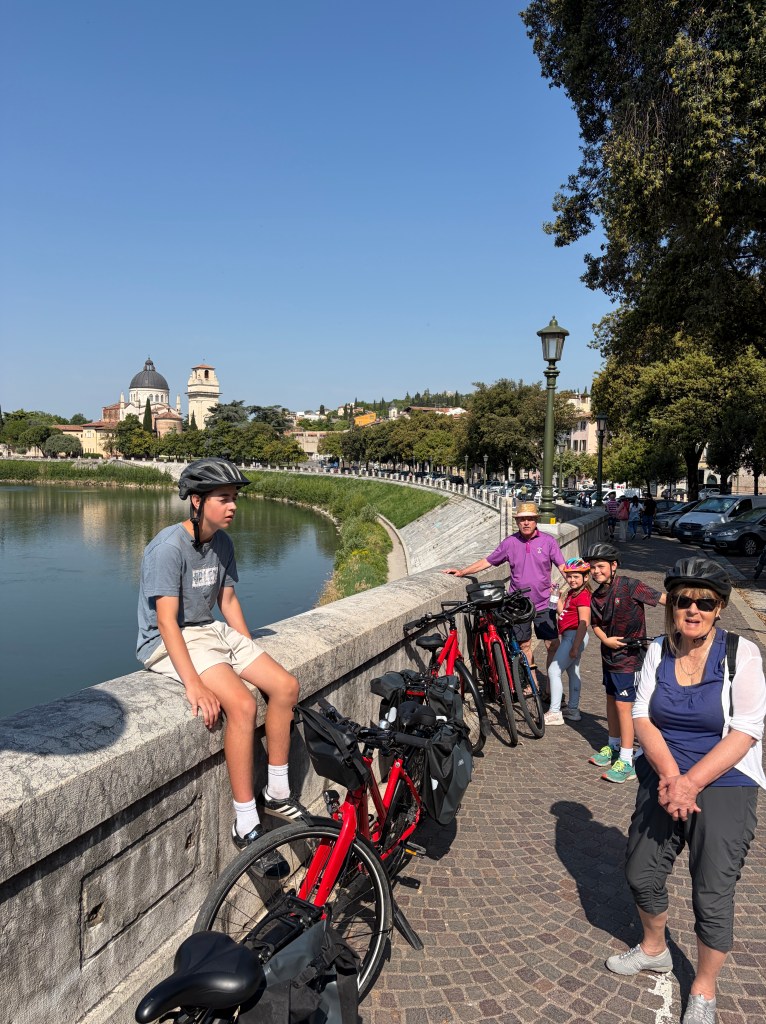
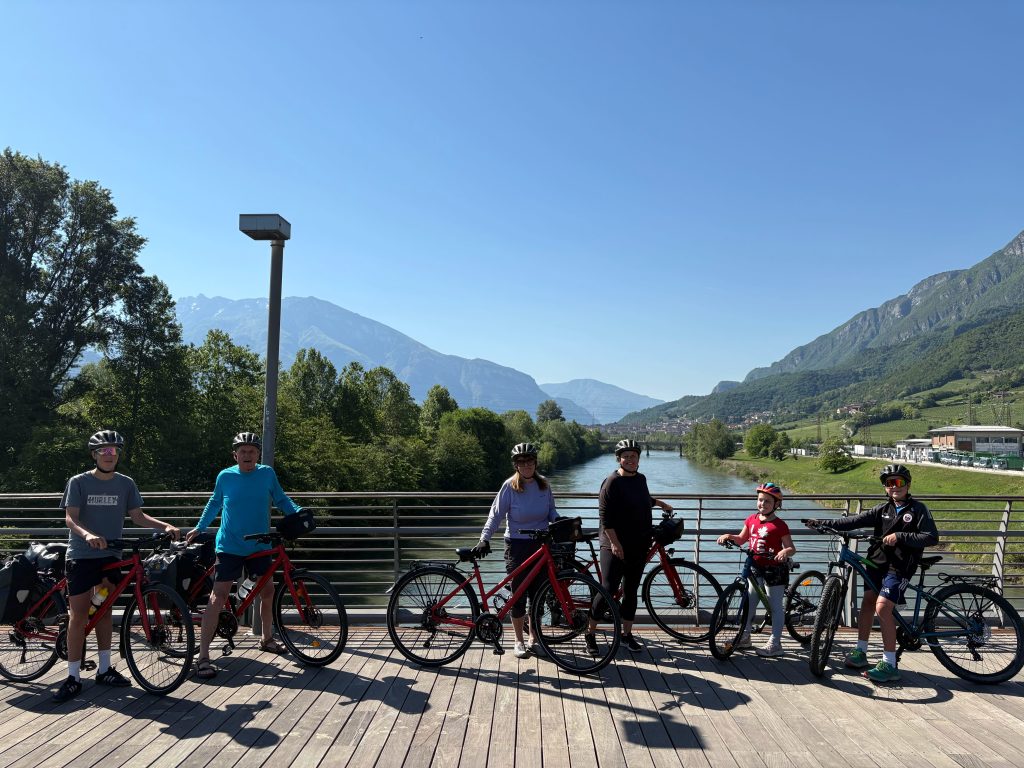
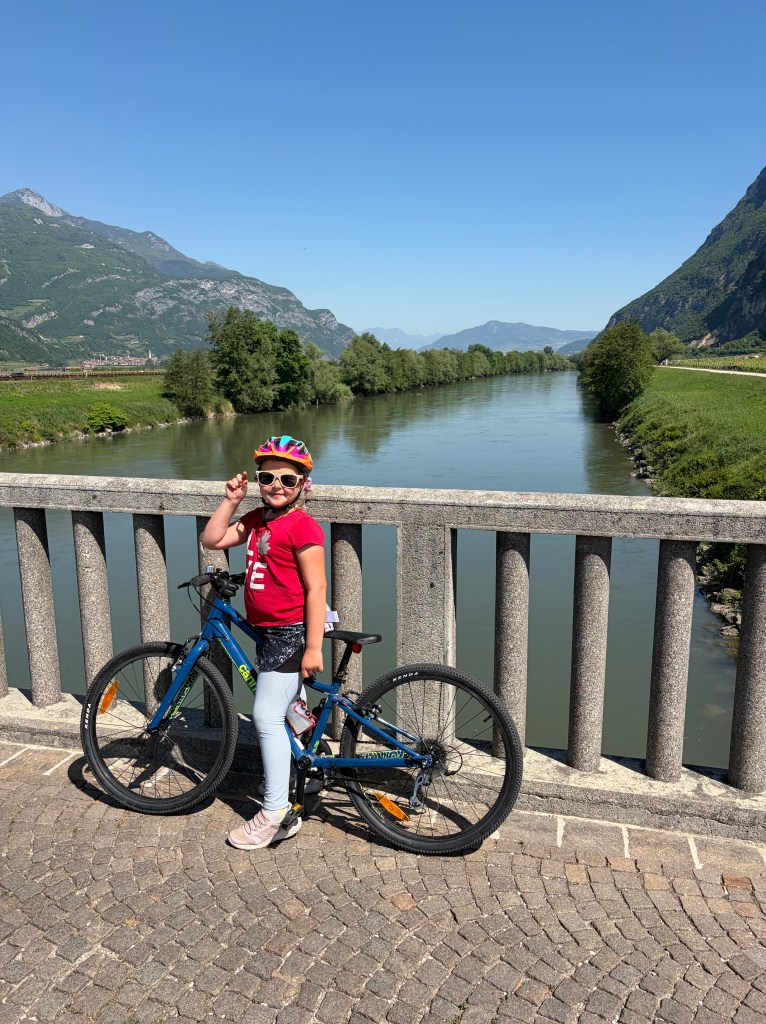
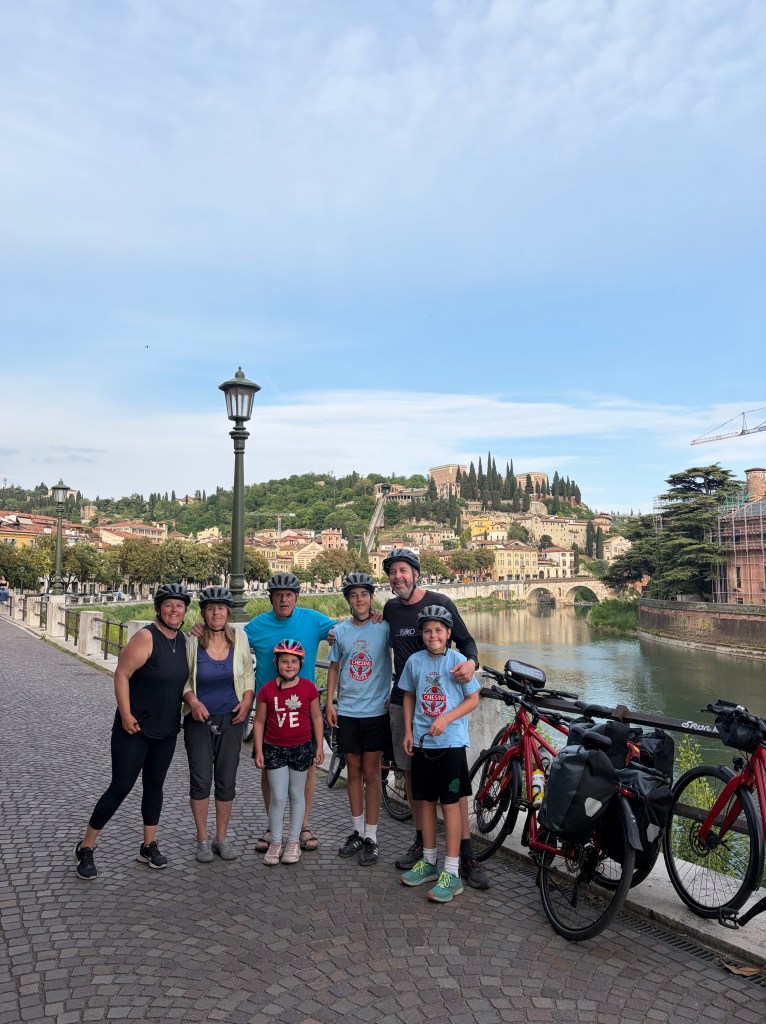
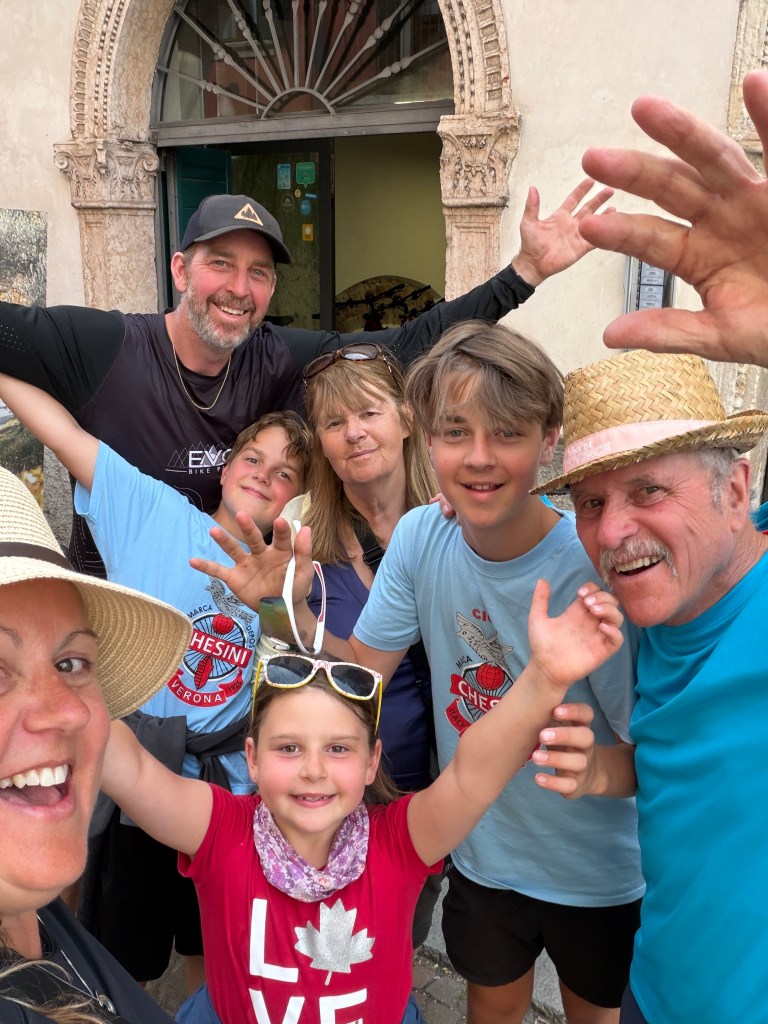
Soon we were back beside our beloved Adige River, following the bike path all the way into Verona. We had done it. One final photo beside the river, Verona behind us, a few cheers, a few tears, and then we rolled back to Francisco at Itinera to return our faithful bikes.
In Reflection…

On our very first night in Verona, Papa gathered us together and kindly, but firmly, said to us:

“Listen up everyone.  We are all different ages, different fitness levels, different abilities but we are doing this ride together. We start and finish each ride together. No one rides ahead into town alone.”

Quietly, I thought: impossible. Surely the boys wouldn’t wait. Surely this wouldn’t work.

But thanks to Papa’s endless planning, the touring wisdom of Nonna and Papa, and everyone buying into the team mentality, it worked beautifully. Every day we started together and every day we rolled in together. That became the heart of the whole trip.

We were all challenged, exhausted, inspired, and given hours each day to think, dream, and discover a different way to experience a country and culture together. Unexpected memories were made everywhere along the route.

I would encourage any family to take the plunge. I will take these memories with me through life.
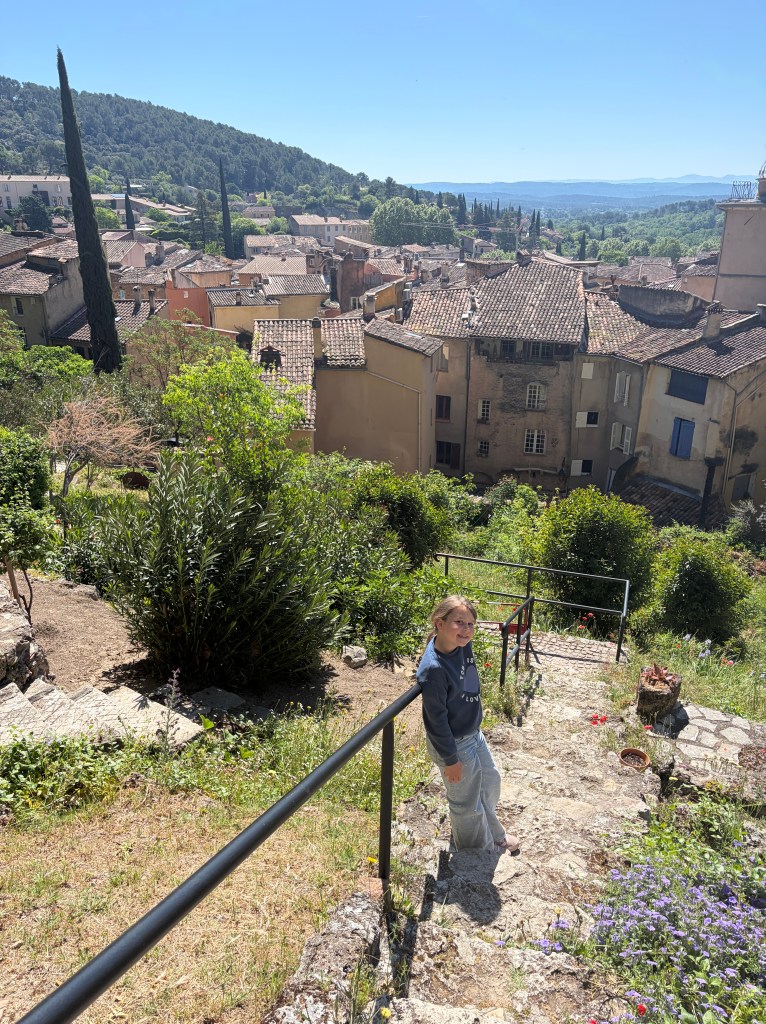
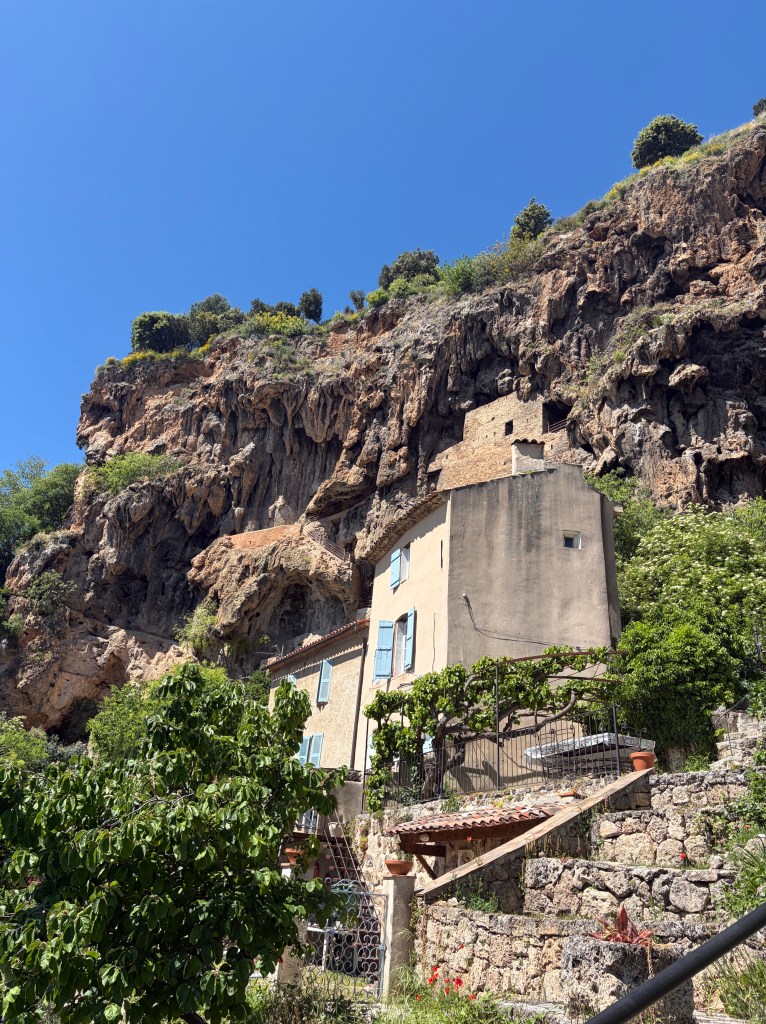
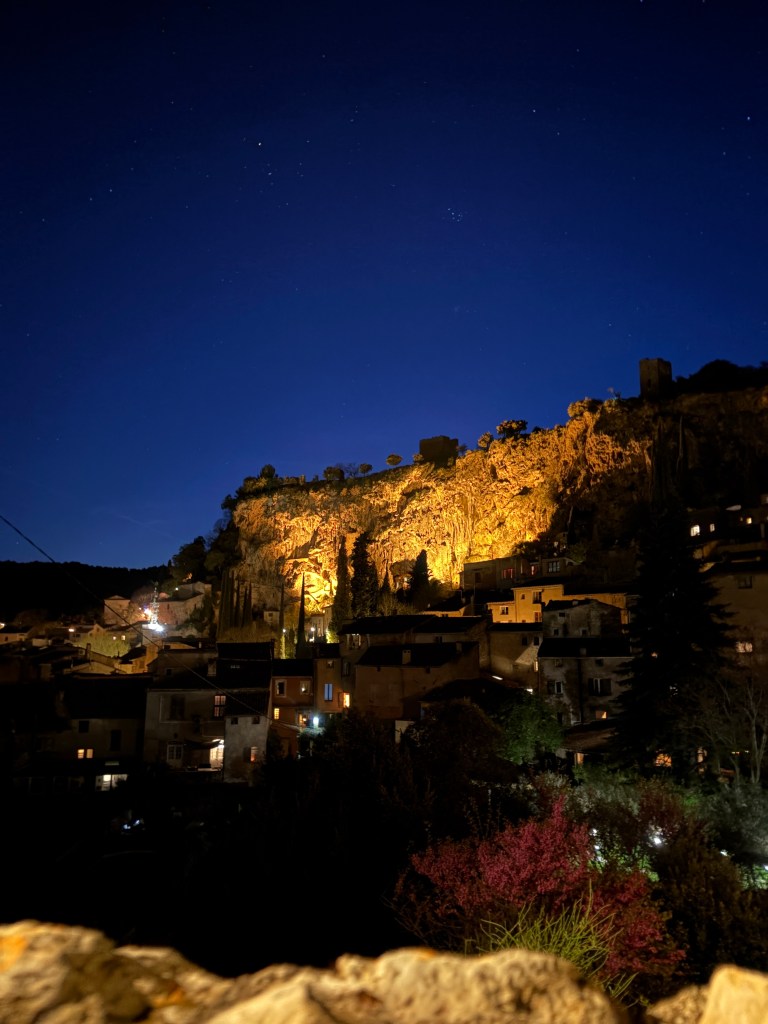
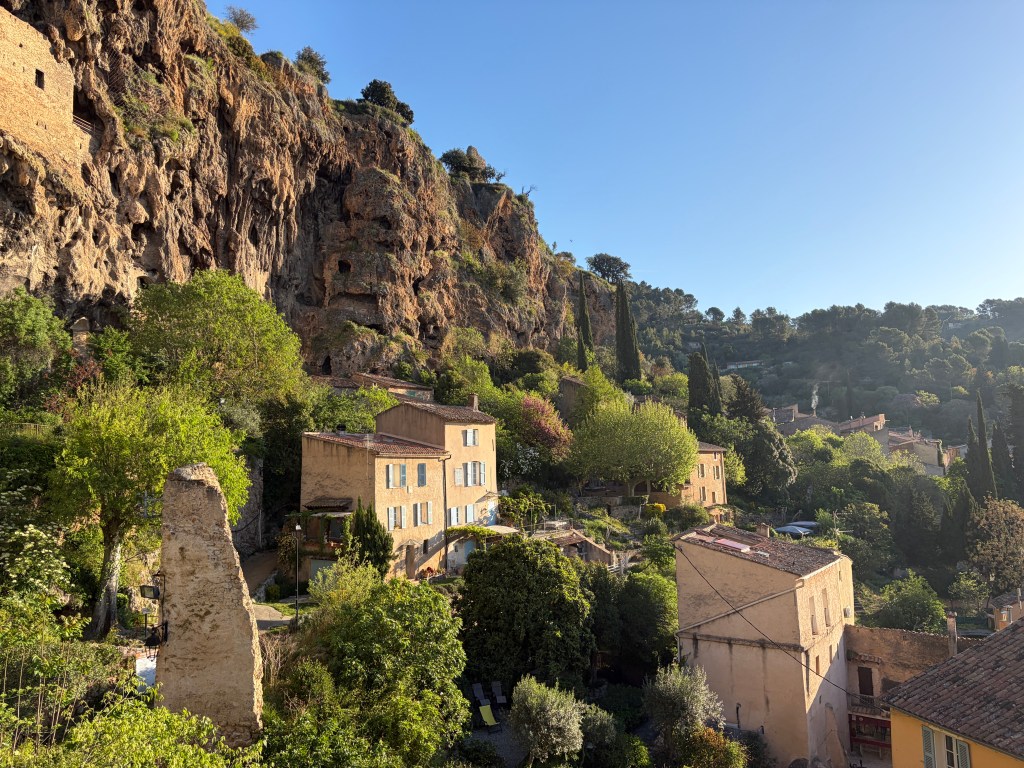
Our home beneath the troglodyte cliffs of Cotignac…

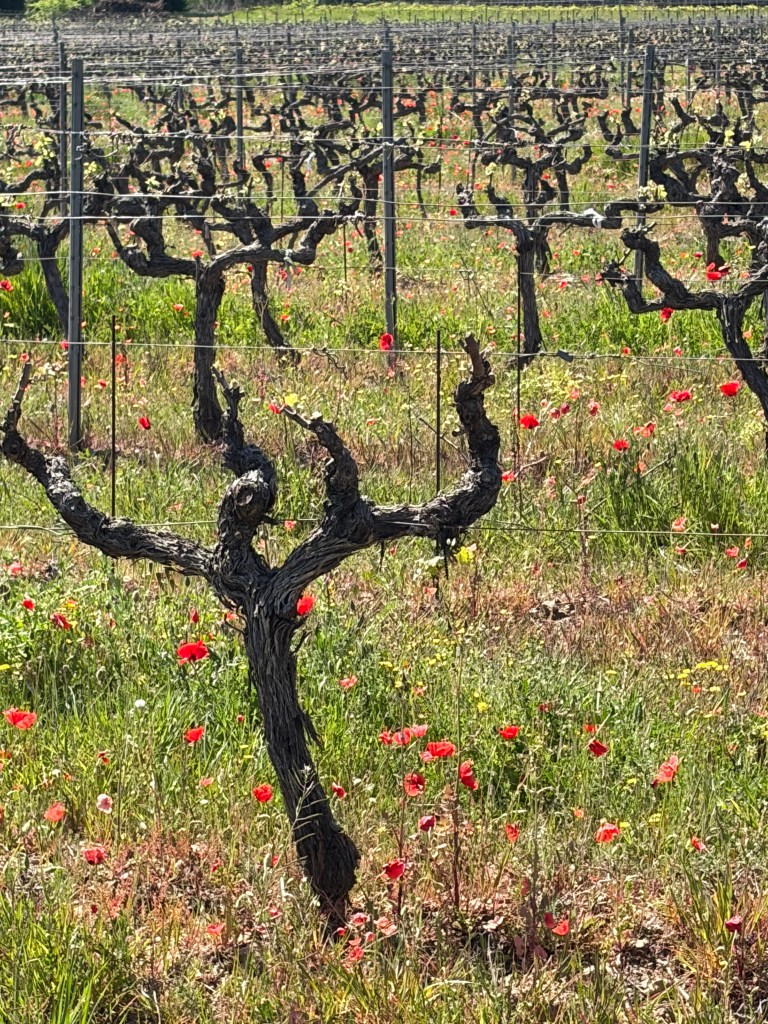
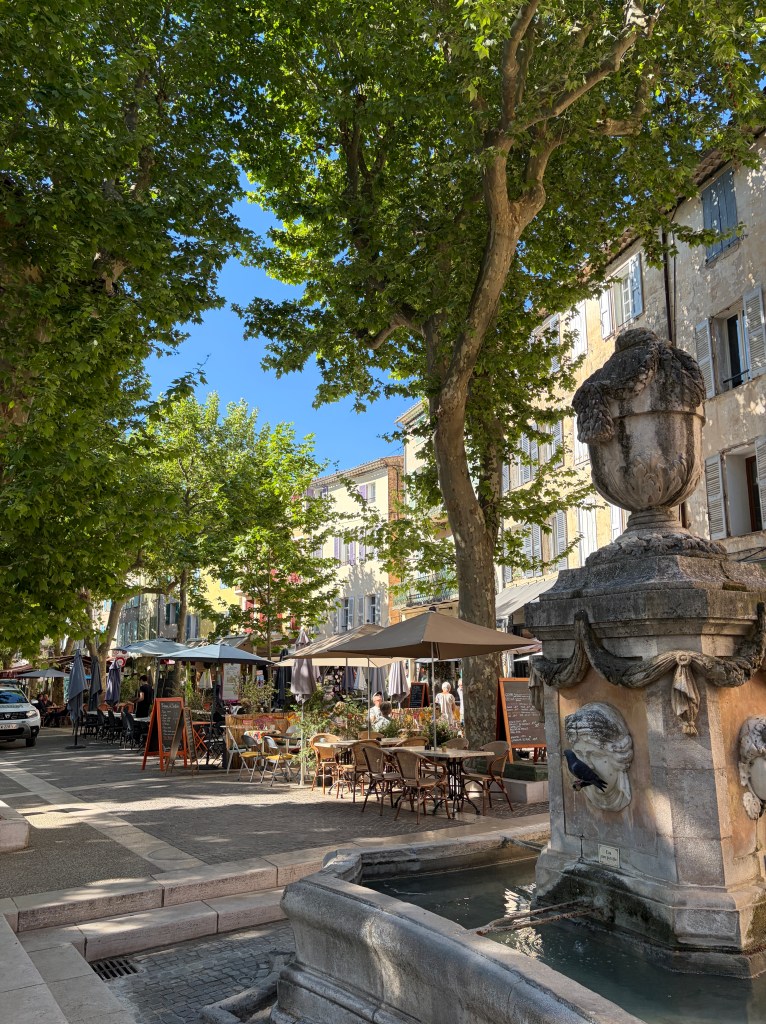
On March 29th, we unlocked the door to our little French house tucked straight into the stone walls of Cotignac, a postcard-perfect village in the heart of Provence where vineyards stretch along every winding road.

We didn’t exactly arrive so much as get gently escorted in. Célia met us in the Vigneron parking lot to prevent us from driving the wrong way down streets clearly not designed for cars, let alone our 5-person station wagon. We followed her as far as we could, dropped our bags within 20 metres of the house, and then set off on the now-familiar quest: parking.

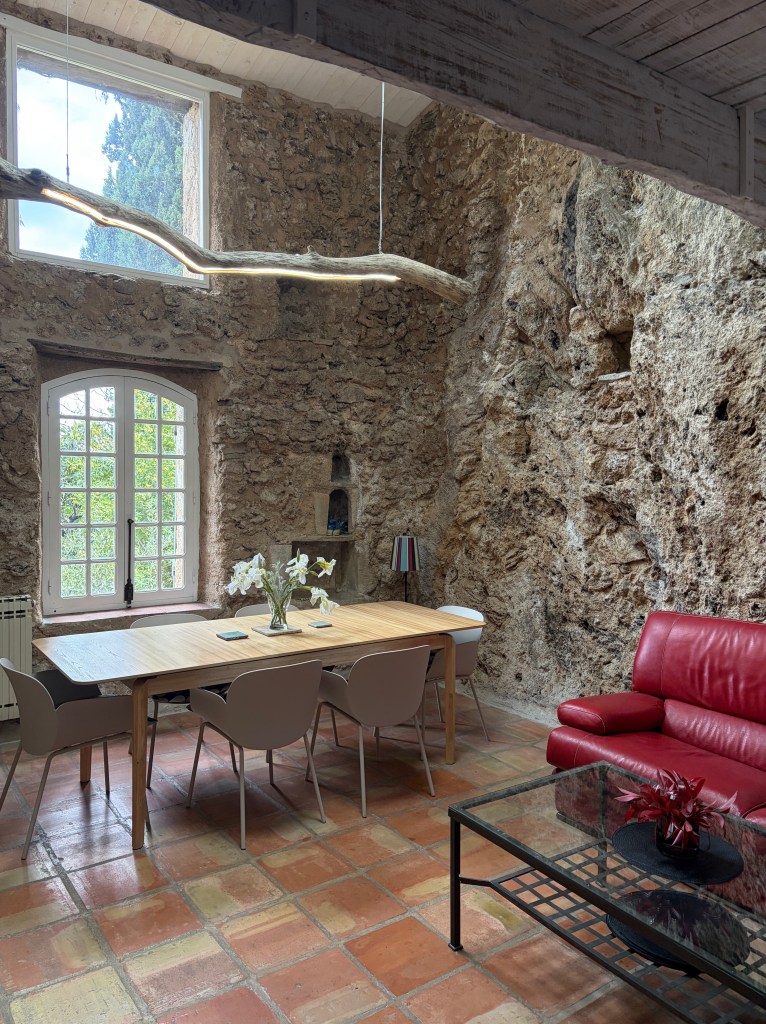
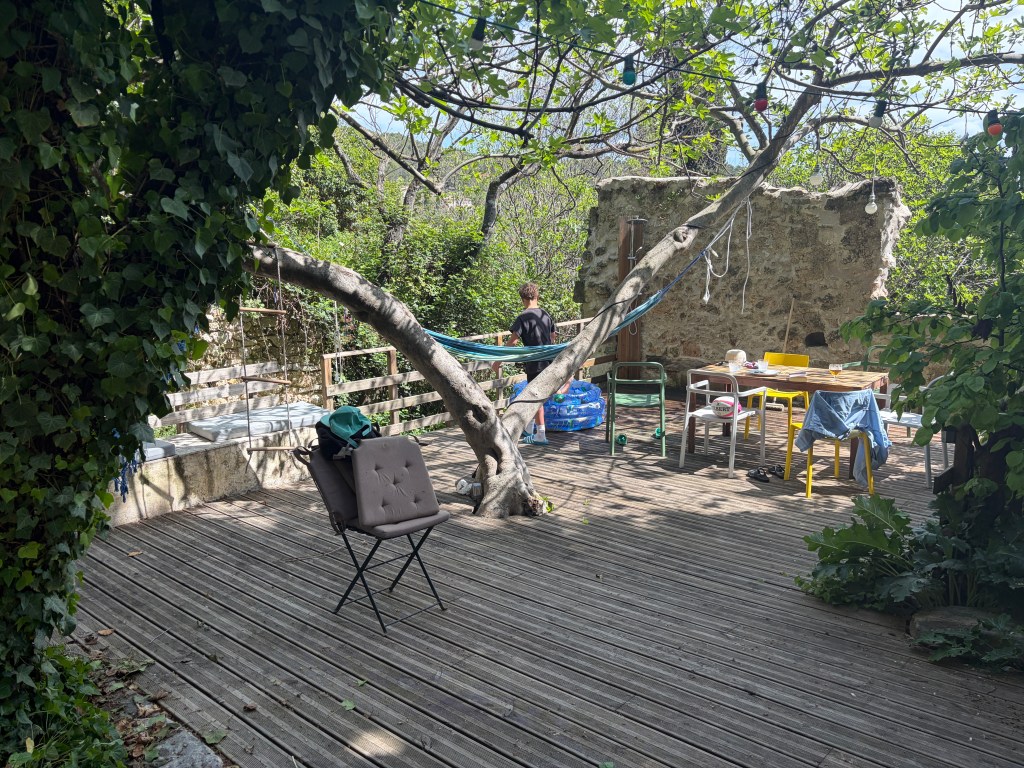
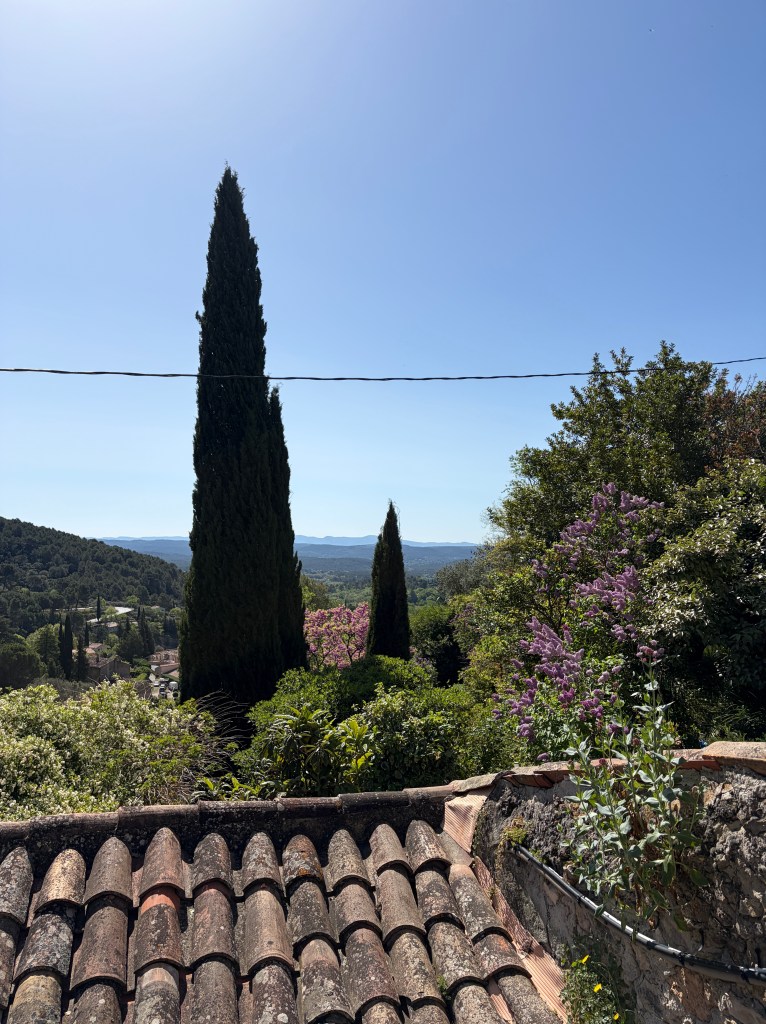
The house itself feels like it grew out of the cliff. Built into the troglodyte rock, it wraps around natural tufa stone, with uneven steps leading from one level to the next, four floors in total, each with its own quirks. The garden sits out front (the back is, quite literally, a rock face), and every window frames some version of Provence: cypress trees, tiled rooftops, blossoming vines, and that hazy, golden light. The Wi-Fi is questionable. There’s road construction just outside the door. But still, it’s our home for a month.

We arrived here a little travel-worn and wide-eyed after a whirlwind few days making our way from Spain to France: four packed nights in Barcelona ticking off icons like Sagrada Família, Park Güell, Candy land (for Olivia) and Camp Nou (for the boys), followed by a magical stop inside the walls of Carcassonne. And then, finally, we arrived in the land of rosé.

Of course, travel with three kids doesn’t exactly mean vacation. It means logistics. It means snacks. It means negotiations. It means attempting school in between it all.

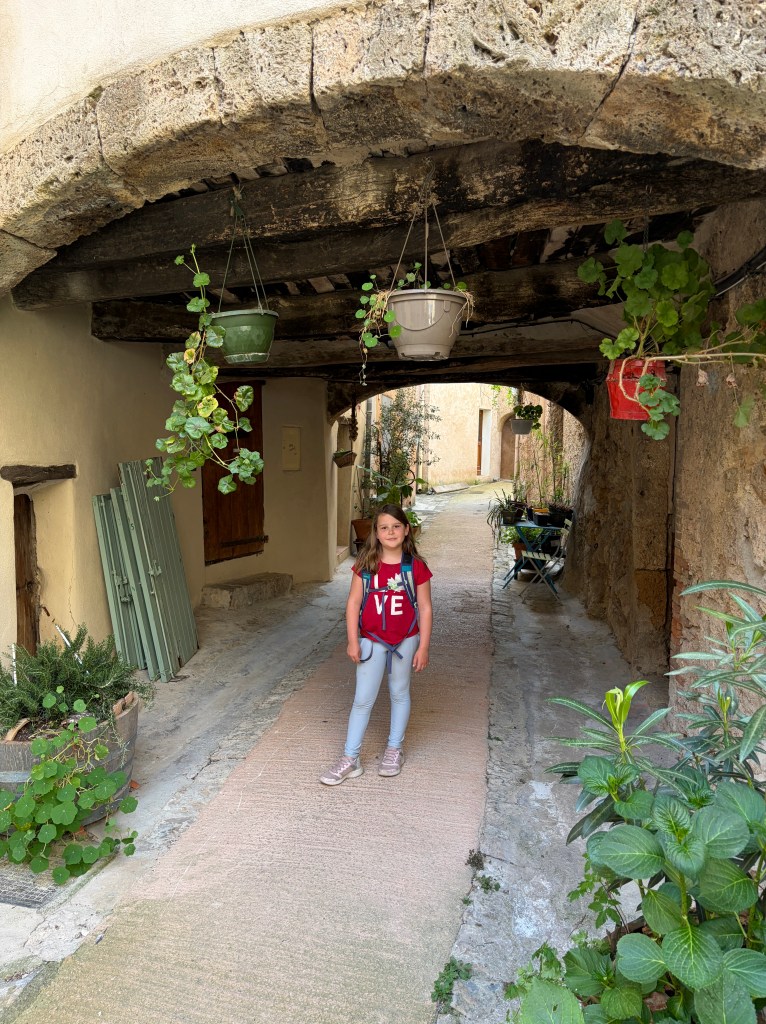
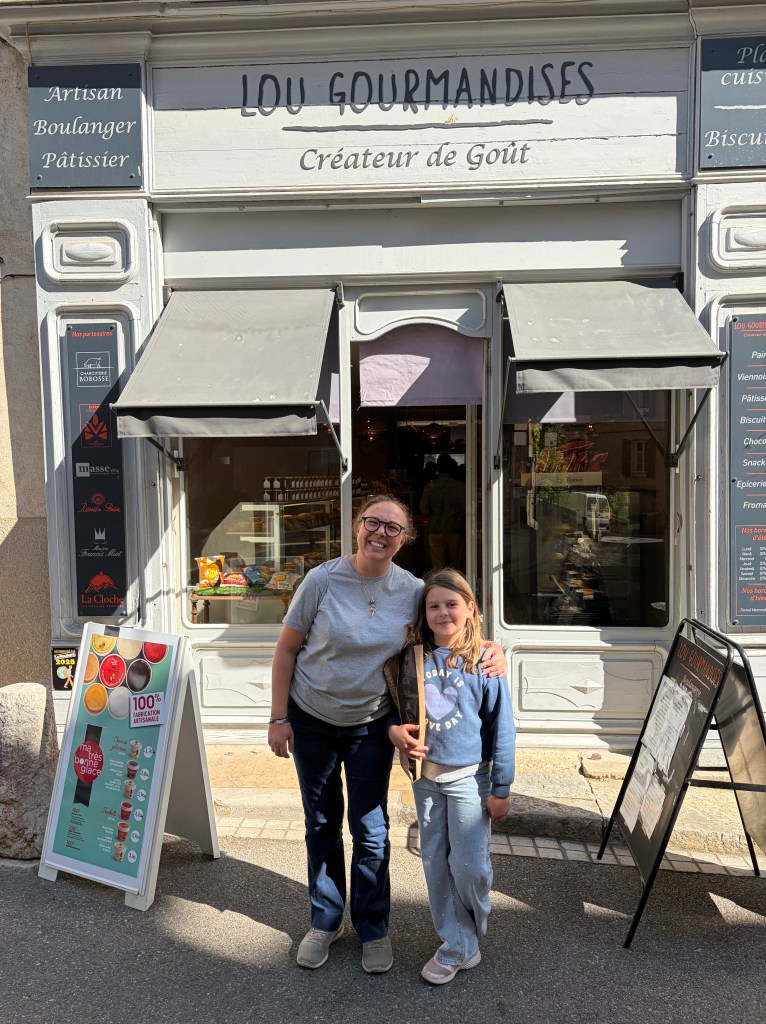
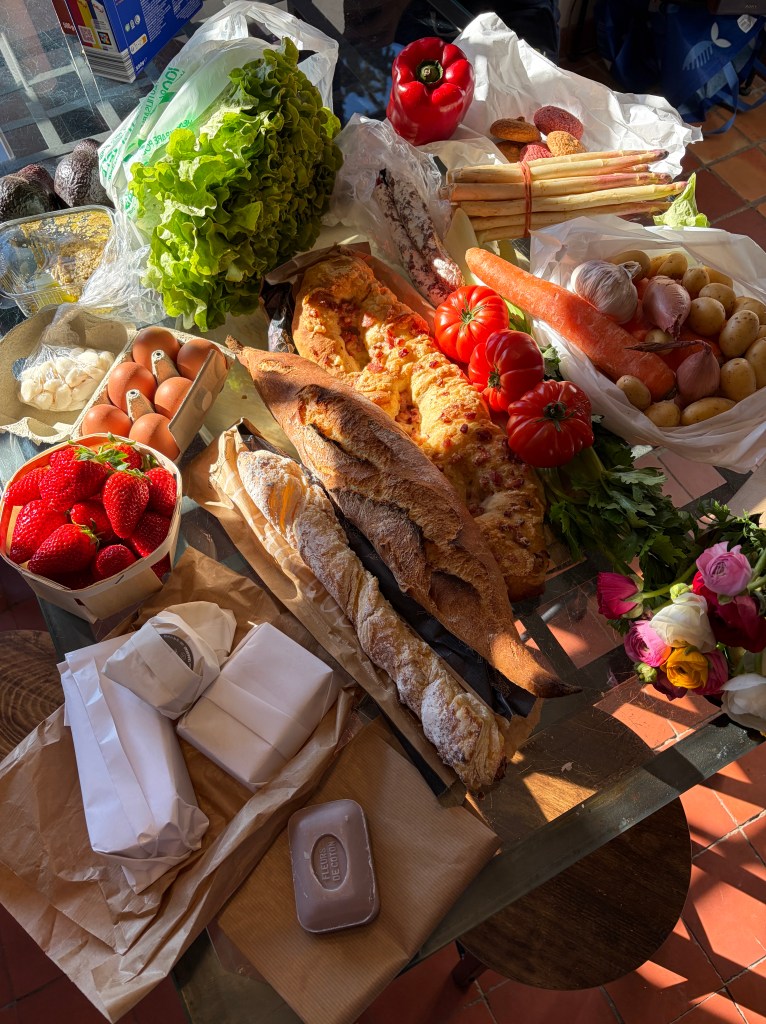
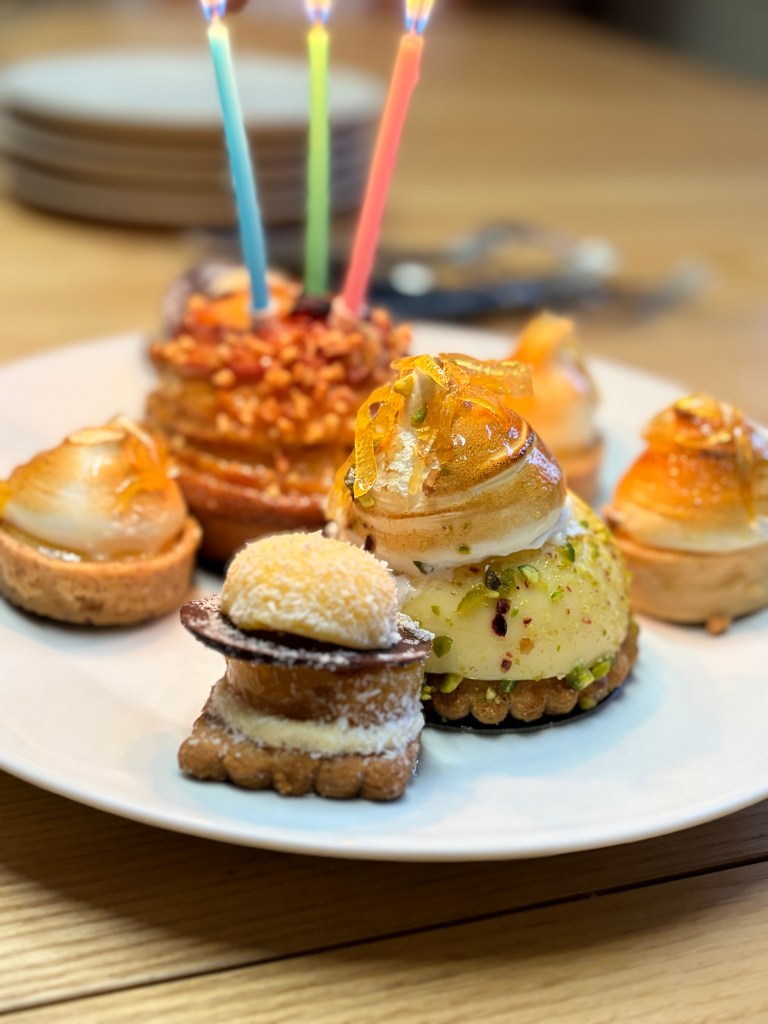
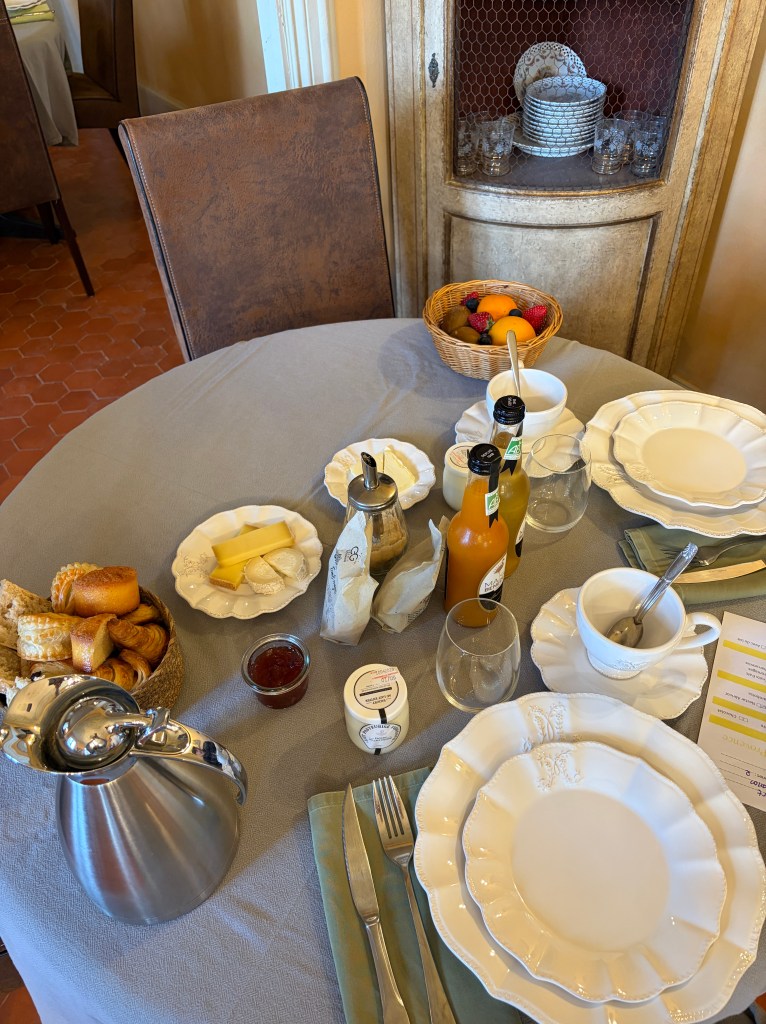
Our Cotignac routine slowly took shape. Mornings began with coffee. Non-negotiable. Then Olivia dashed down roughly 55 stone steps into the village to Lou Gourmandise, where Ganaelle greeted her like a regular. Two baguettes daily, often a fougasse (bacon and cheese baguette), Sacristains and occasionally croissants, pain au chocolats or for a birthday celebration, mignardise (little French cakes). Breakfast disappeared quickly, a few sibling disputes were refereed, and then… school.

We optimistically thought we’d hand over the IXL year long math curriculum books and watch the magic happen (Grades 3, 6, and 8). Instead, it turns out we were to continue our work as teachers. There’s more coaching, more explaining, and definitely more patience required than anticipated. Meaning our own work, our planning, and our blogging have been squeezed into the margins (clearly).

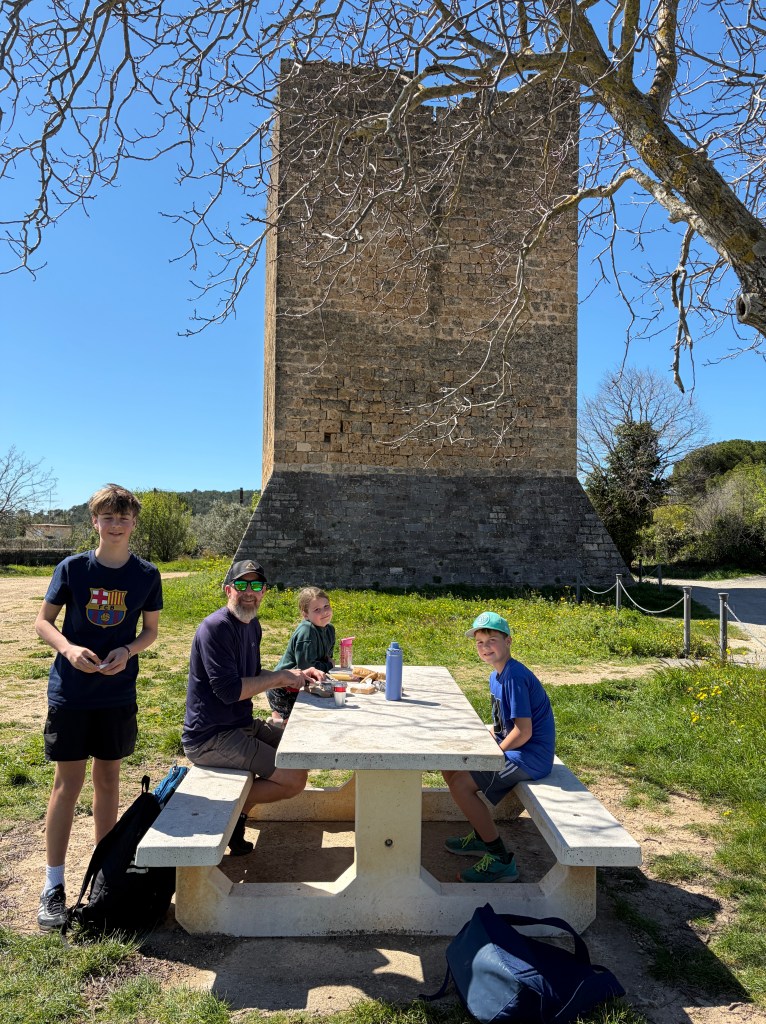
After math, there’s journaling – typed for the boys and handwritten with some drawing for Olivia. Finally, we pack a lunch (baguette, cheese and cured sausage) and head out. By this point, I sometimes feel like I’ve already lived a full day.

And then comes the reward: Provence.

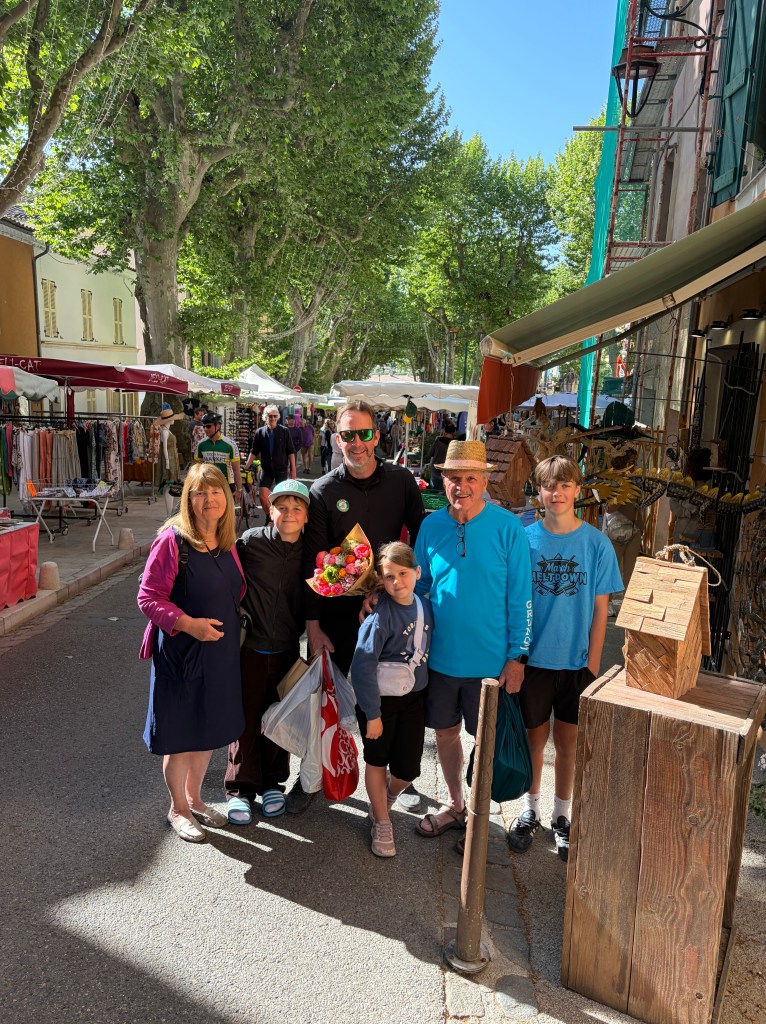
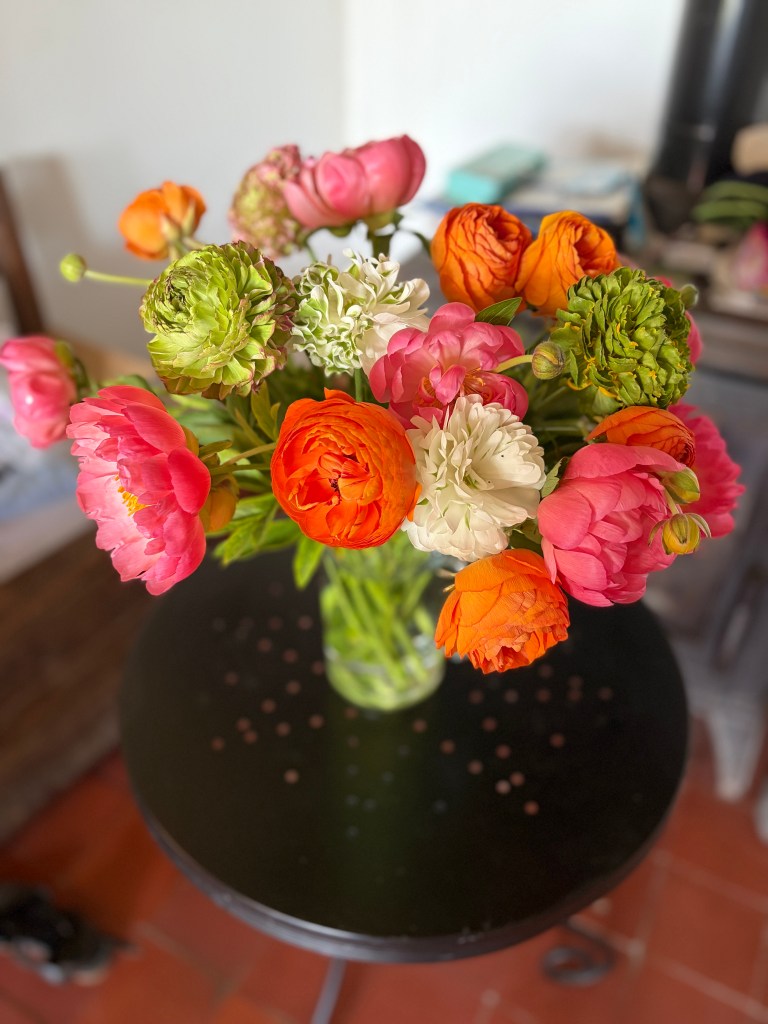
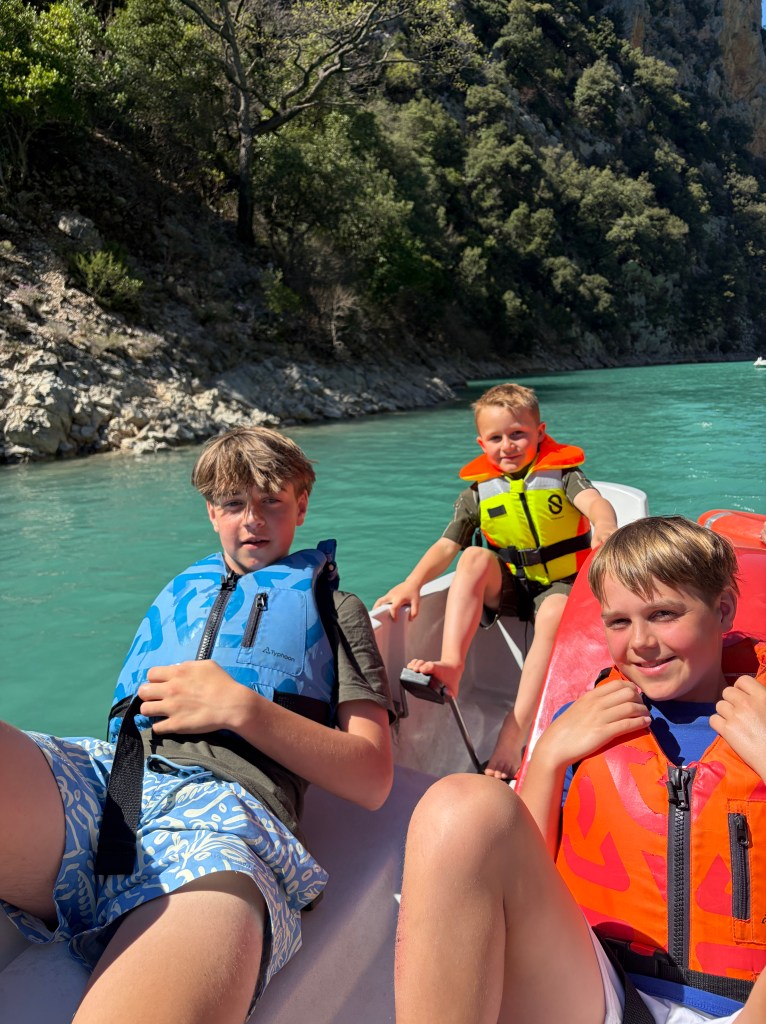
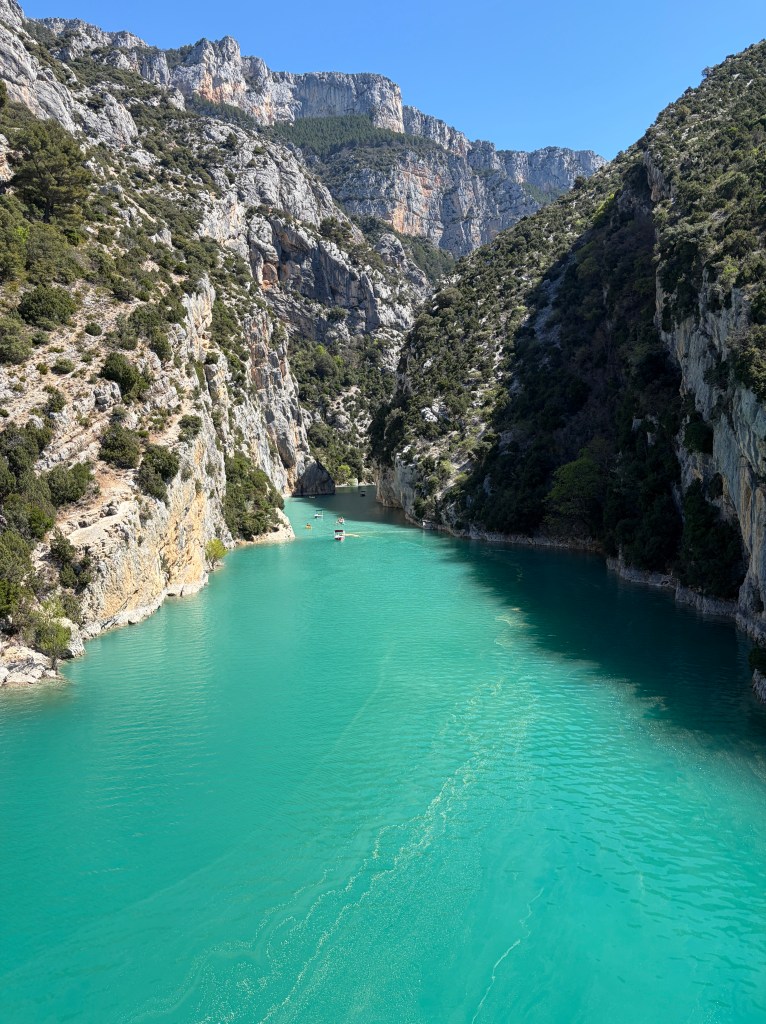
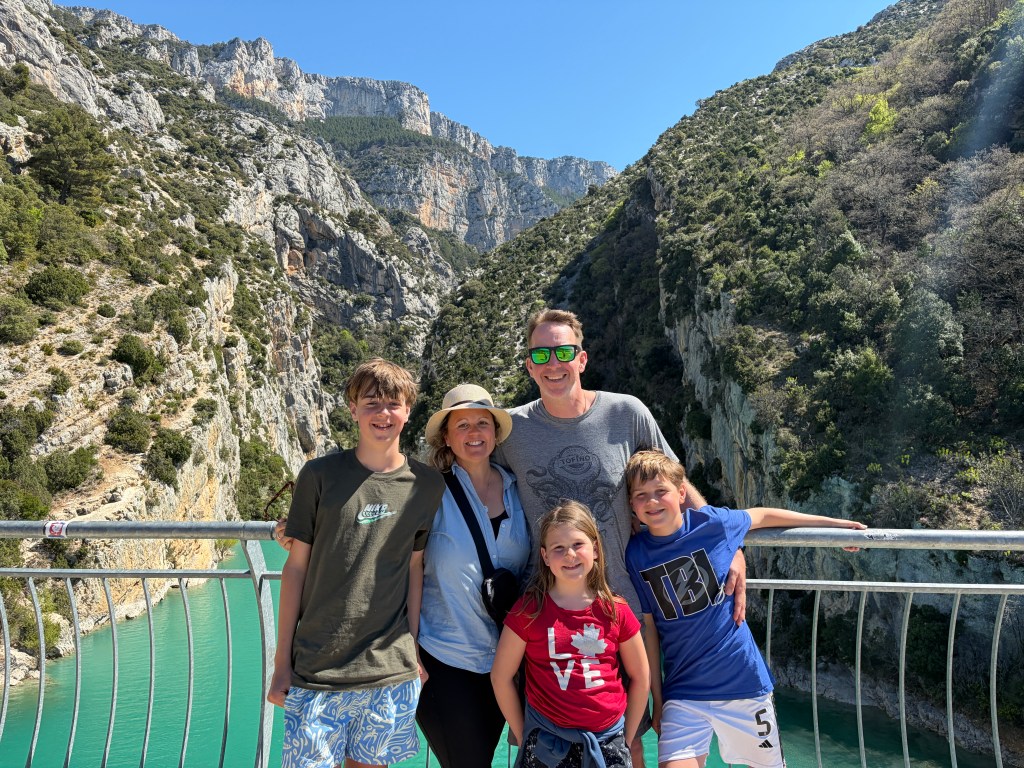
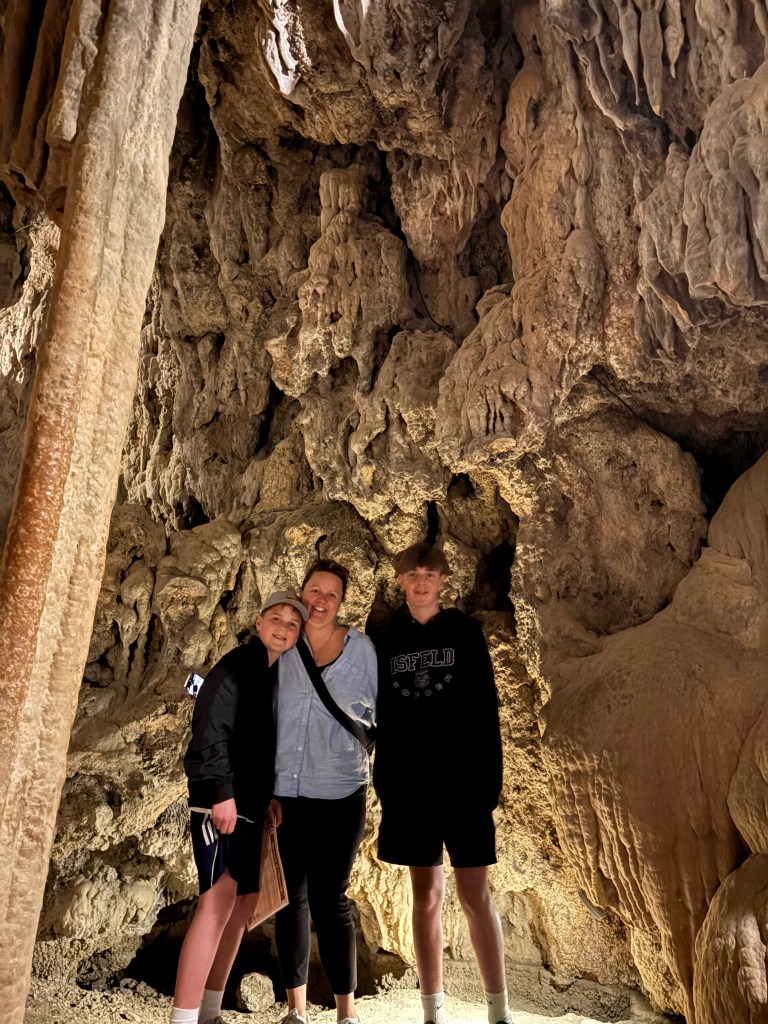
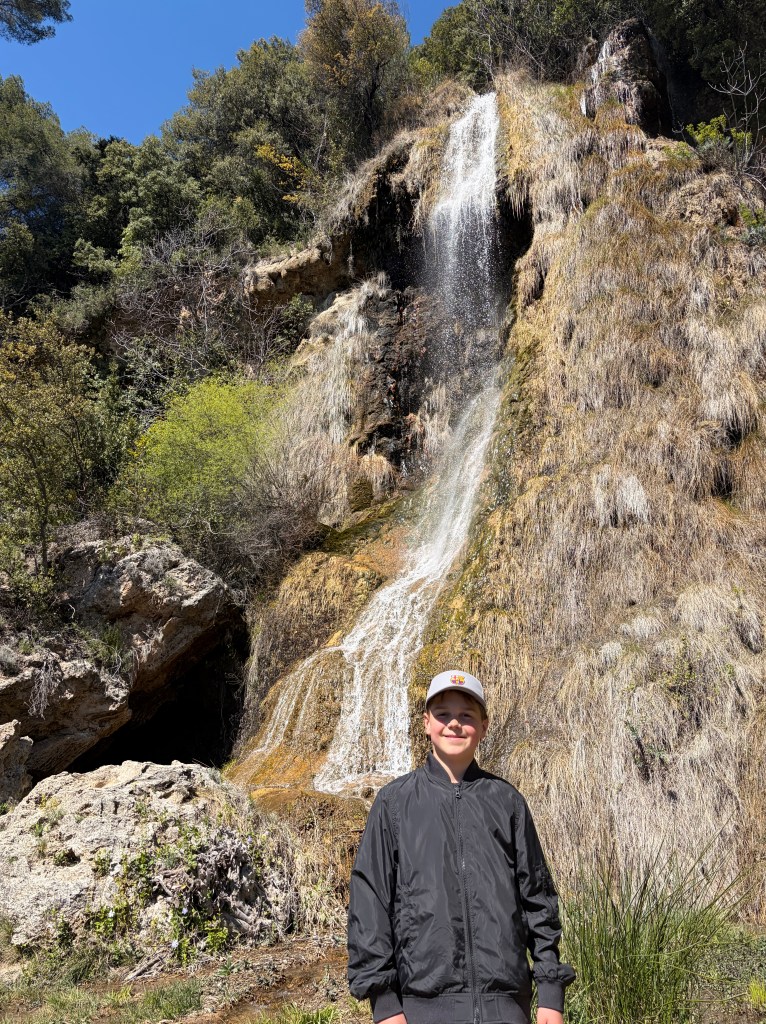
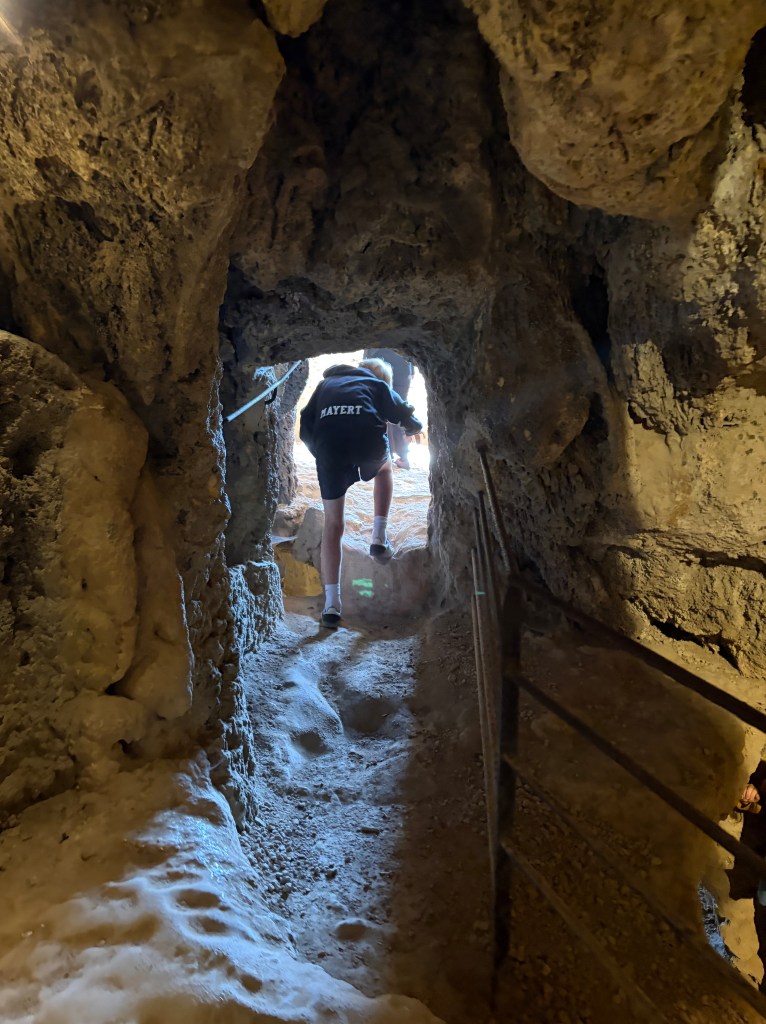
We’ve wandered through the caves (Grottes de Villecroze), stretched out on beaches in Sainte-Maxime, Fréjus, Toulon, and Saint-Tropez, and spent two unforgettable days at the turquoise waters of the Gorges du Verdon pedal boating through cliffs that barely seem real. We climbed to Tourtour, a village that feels like it’s above the clouds, and lost ourselves in the rhythm of the Tuesday market – overflowing with local cheese, produce, flowers and things we didn’t plan to buy but absolutely needed.

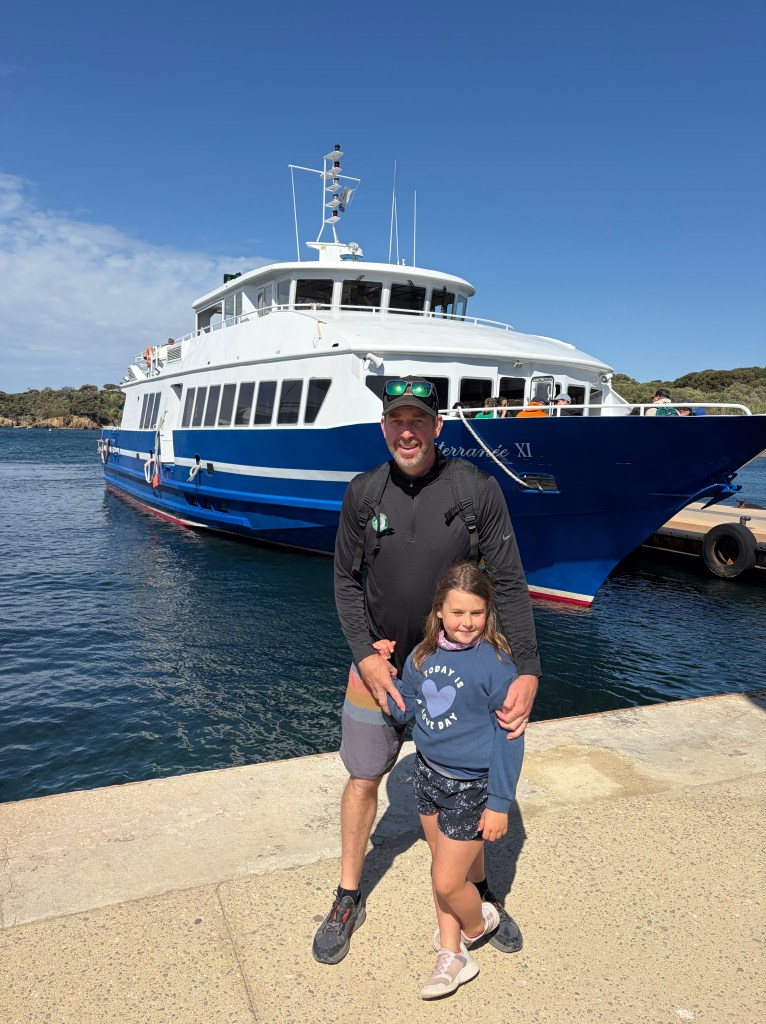
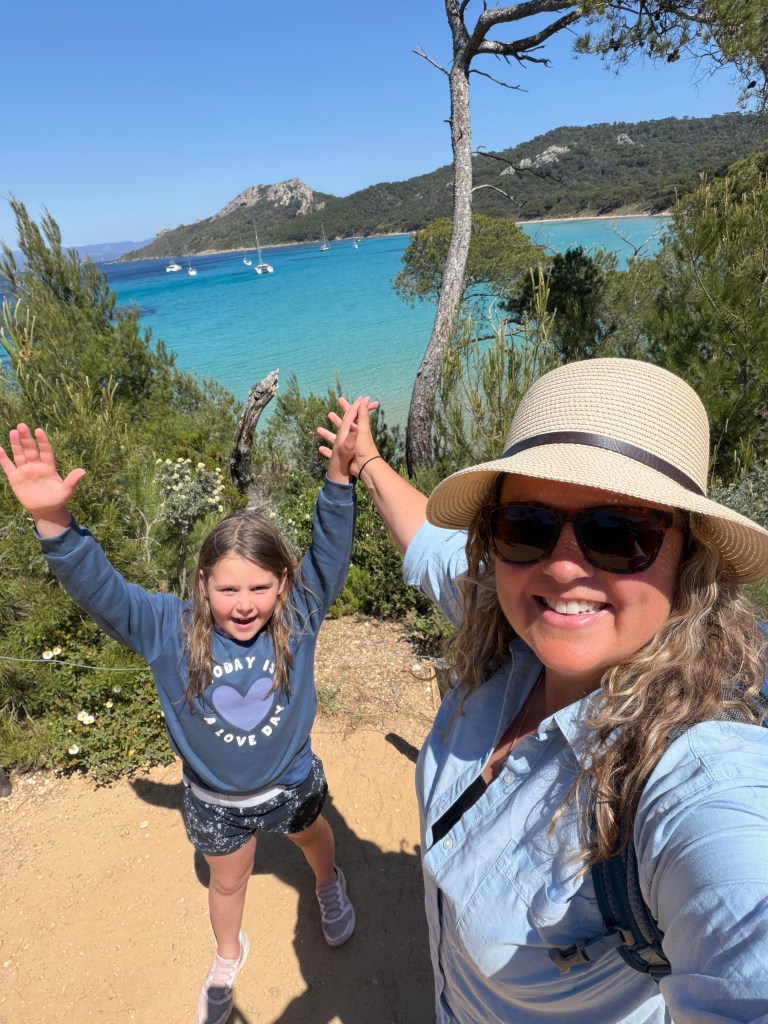
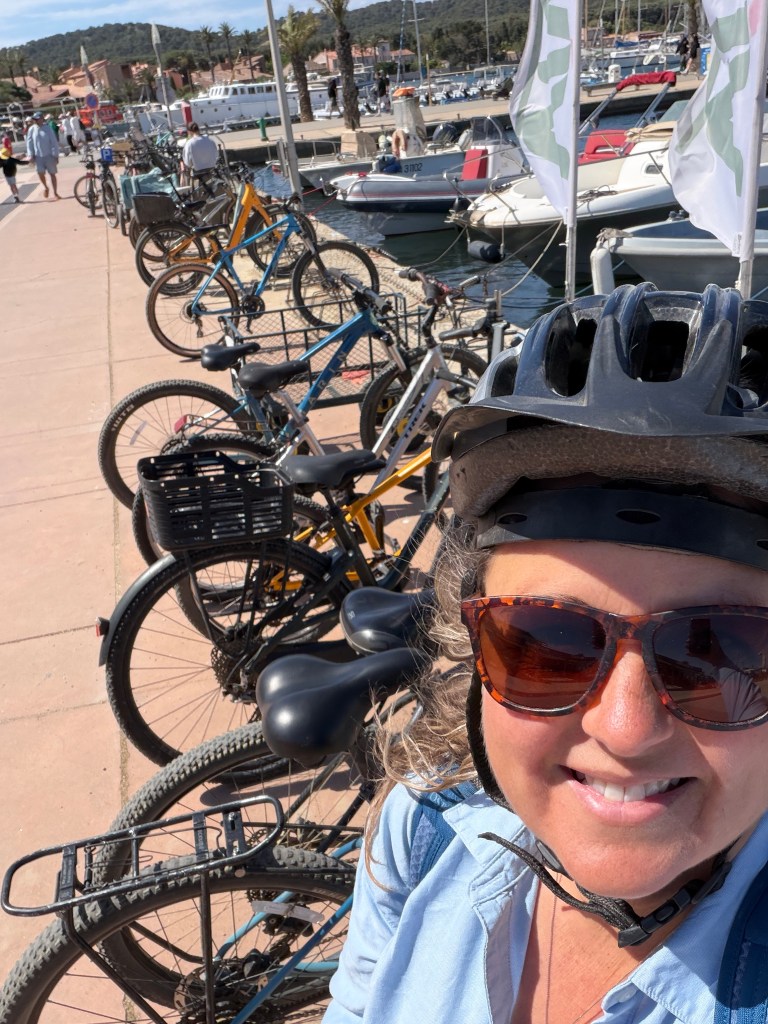
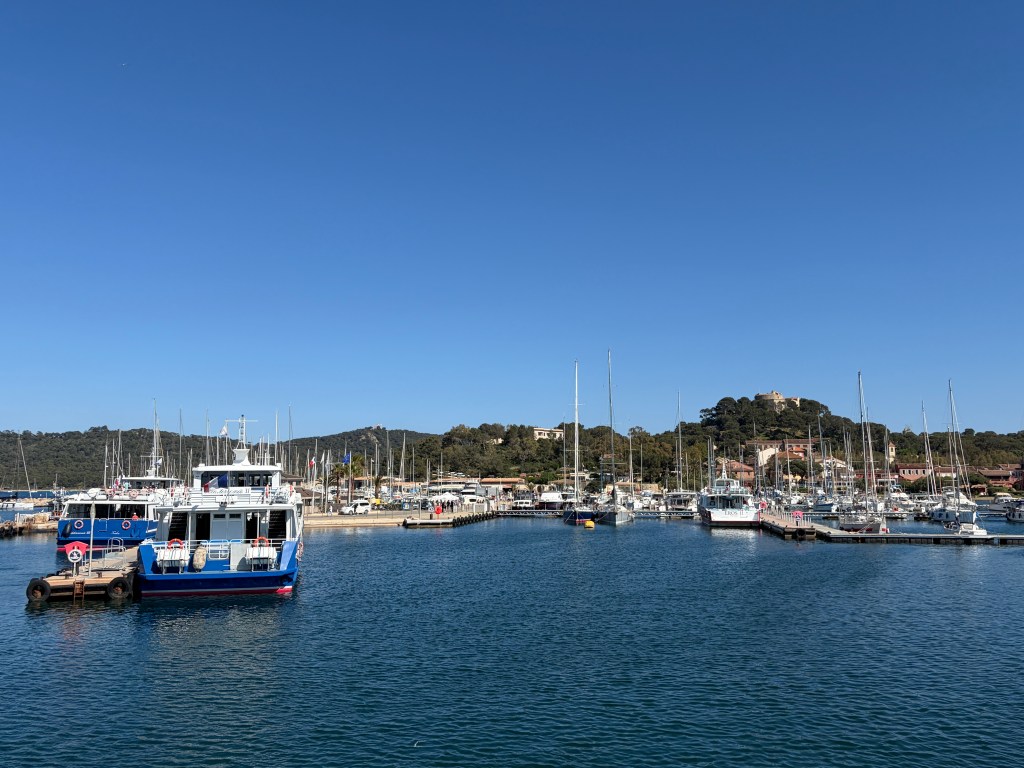
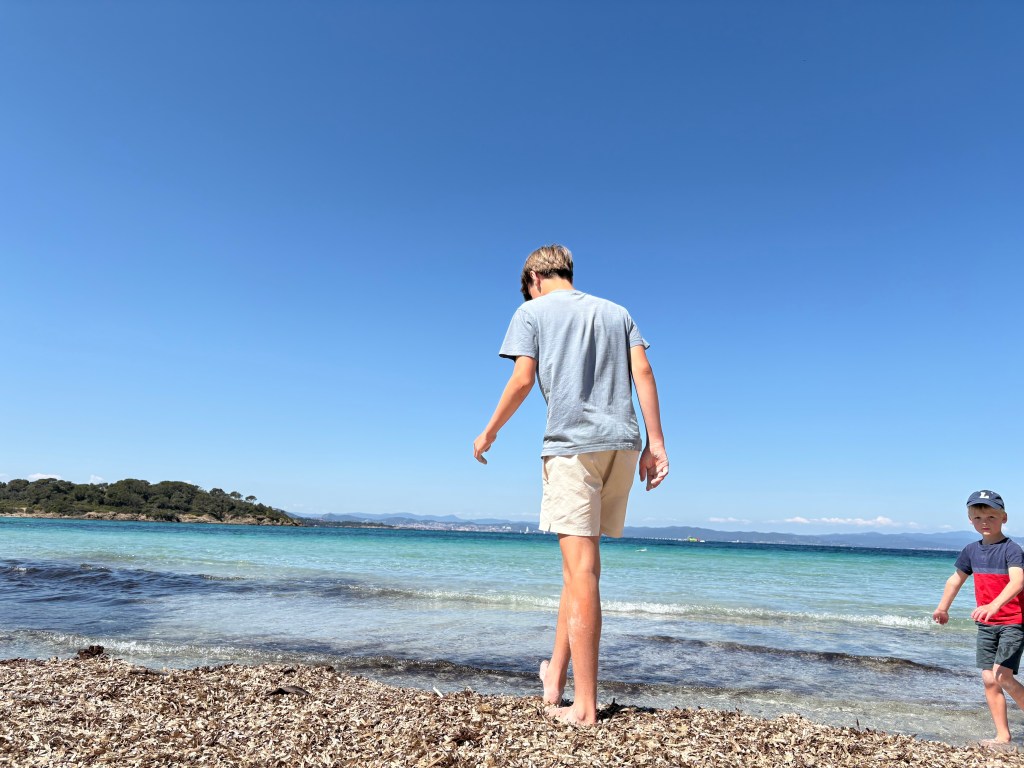
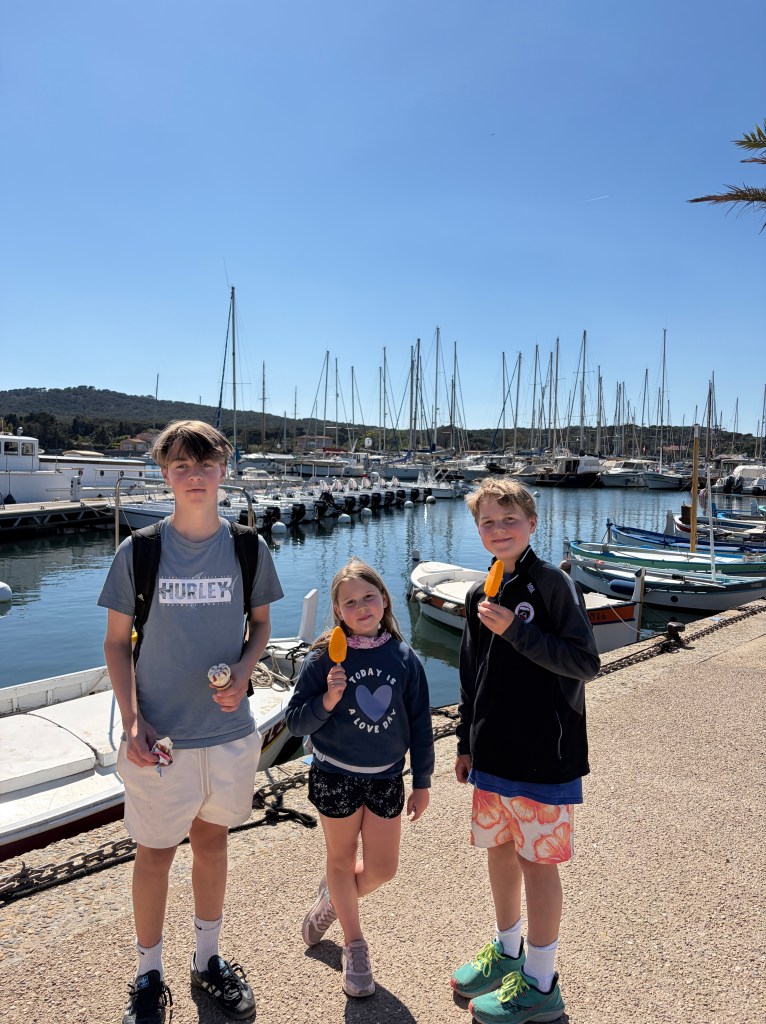
One of our final adventures took us out to the island of Portquerolles, a place that feels like it exists slightly outside of time. Just 250 residents call it home, yet in the height of summer, that number swells to over 6000 sun-seeking visitors each day. There are no cars there and we arrived by passenger ferry. You explore by bike or on foot, following sandy paths that wind through vineyards and eucalyptus groves with a bustling marina to support all the tourists. Sandy beaches give way to water so impossibly clear and blue it hardly looked real. It was still only April but the sun was warm with a gentle breeze and before long the kids were in the water. Shoes abandoned, sleeves rolled, faces turned to the sun. We leaned fully into it.

When we arrived, Célia told us Cotignac had just come through 90 straight days of rain. Somehow, we caught the opposite. 28 days of sunshine out of 30. It felt like summer had shown up early… just for us.

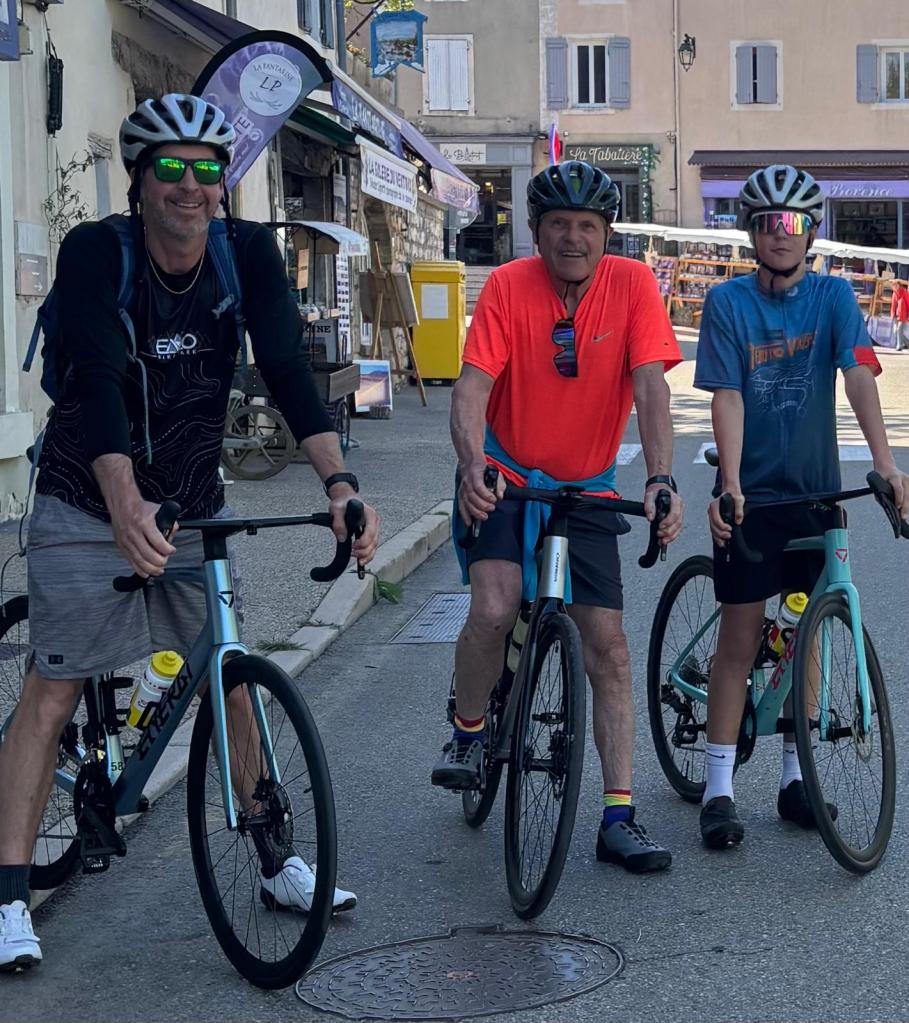
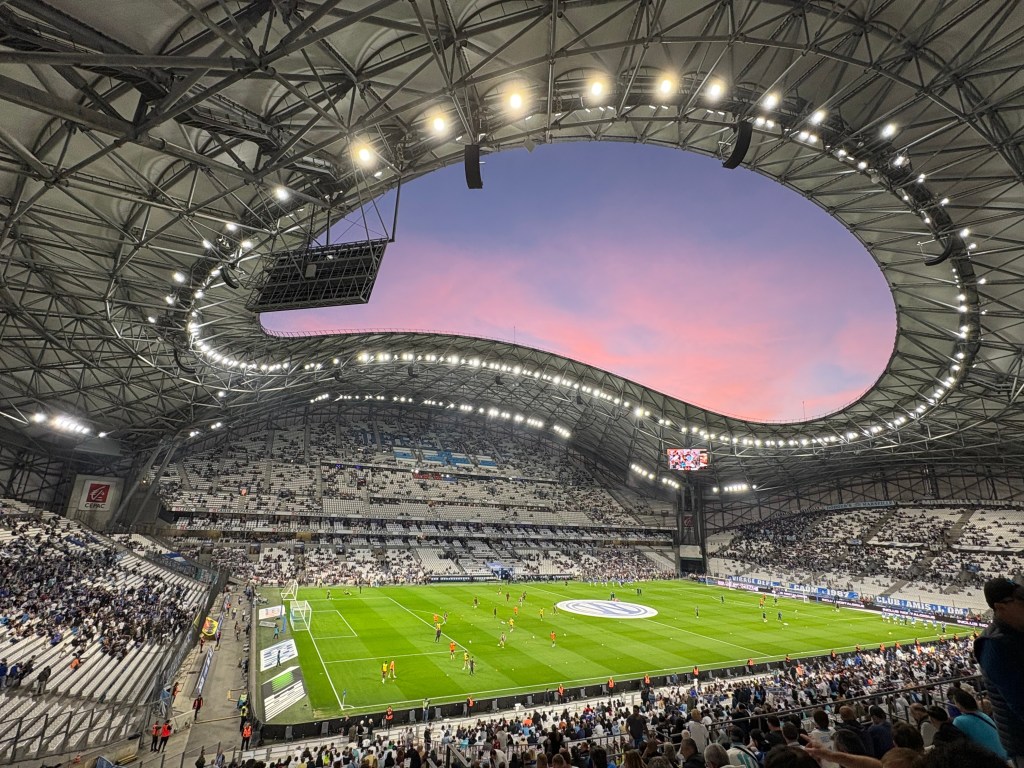
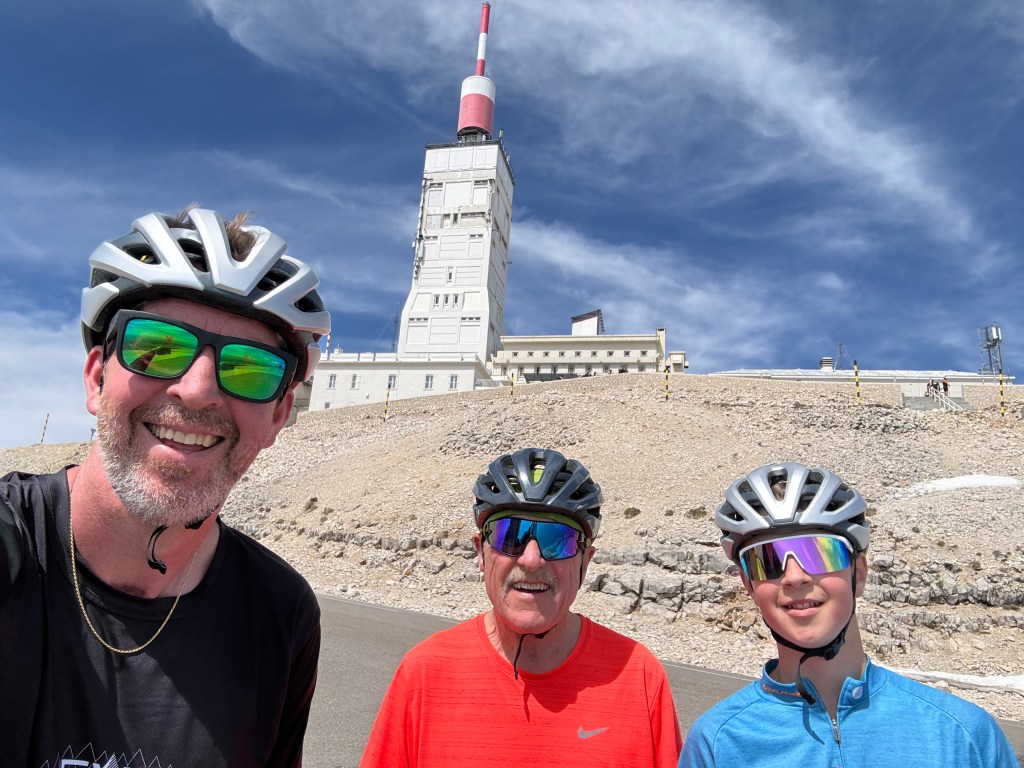
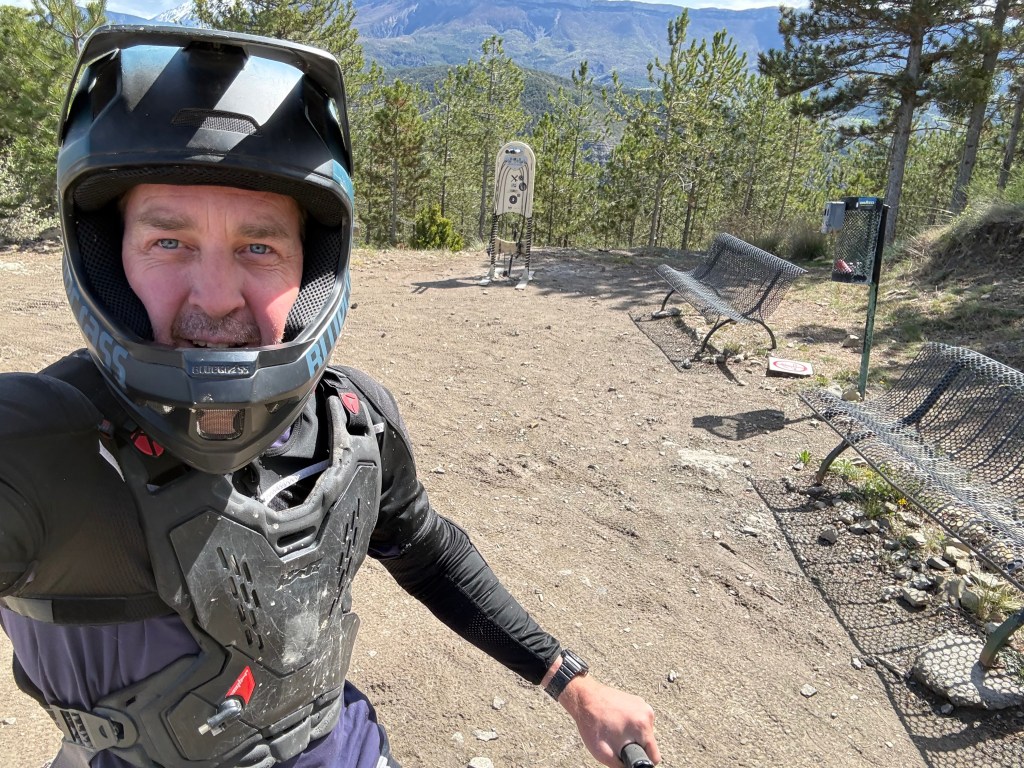
Dave carved out two mountain bike days, and in a highlight that feels hard to top, he, Nick, and Papa rode up Mont Ventoux, a Tour de France climb and a three-generation bonding experience. No small feat. We managed to also catch two excellent rugby games in Toulon and Nick and Dave snuck off for a soccer game in Marseille which they said was a wild and exciting event.

We’ve been lucky to share it, too. My cousin Peter and his family brought a bit of England with them from their accents, to football talk and lots of laughter and then my parents joined us for a few days and we will reconnect with them again in Italy this weekend for another adventure. Dave and I were then fortunate enough to sneak off to Château Mentone for a night of quiet, relaxation and recovery thanks to Nonna and Papa to the rescue.

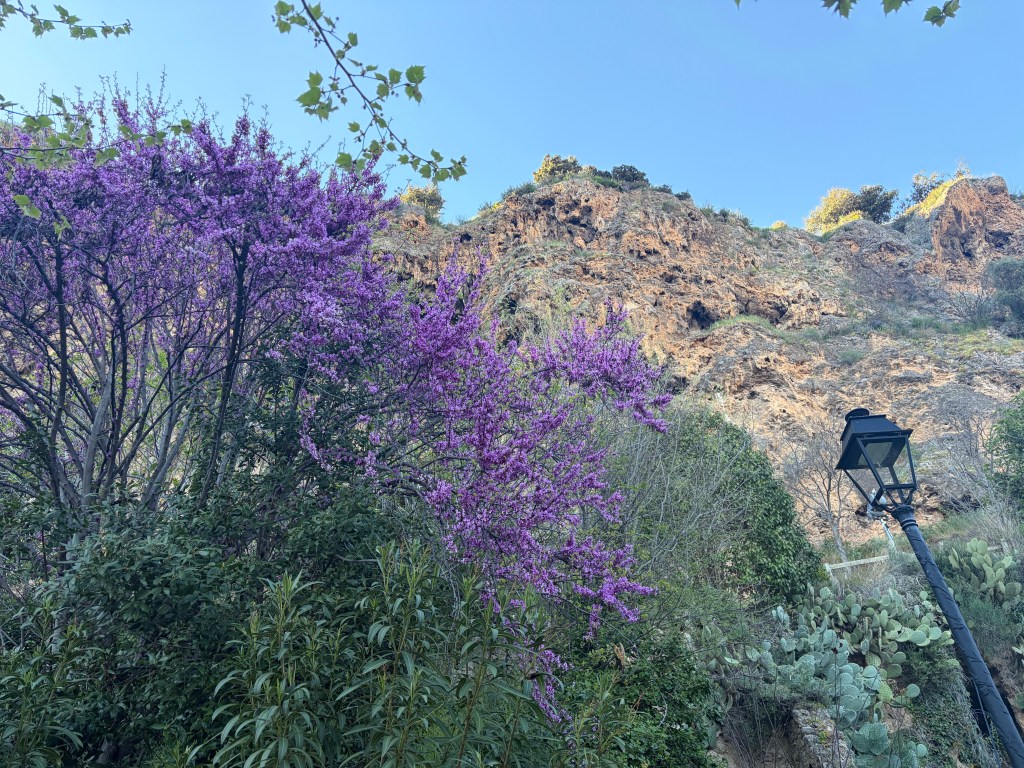
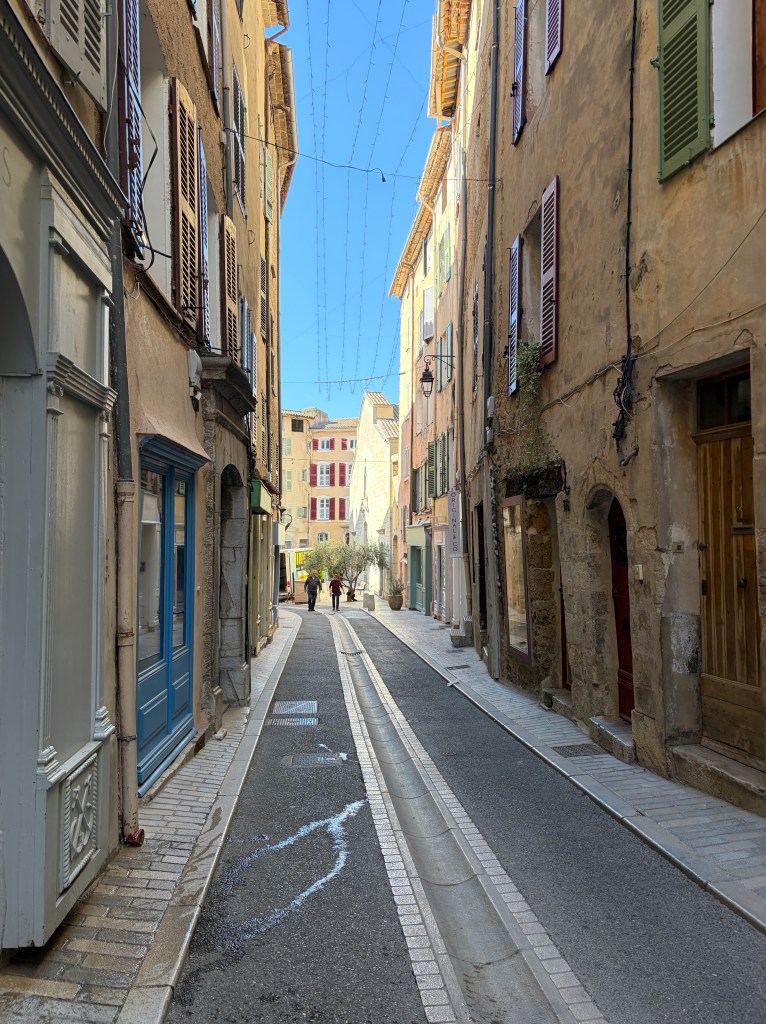
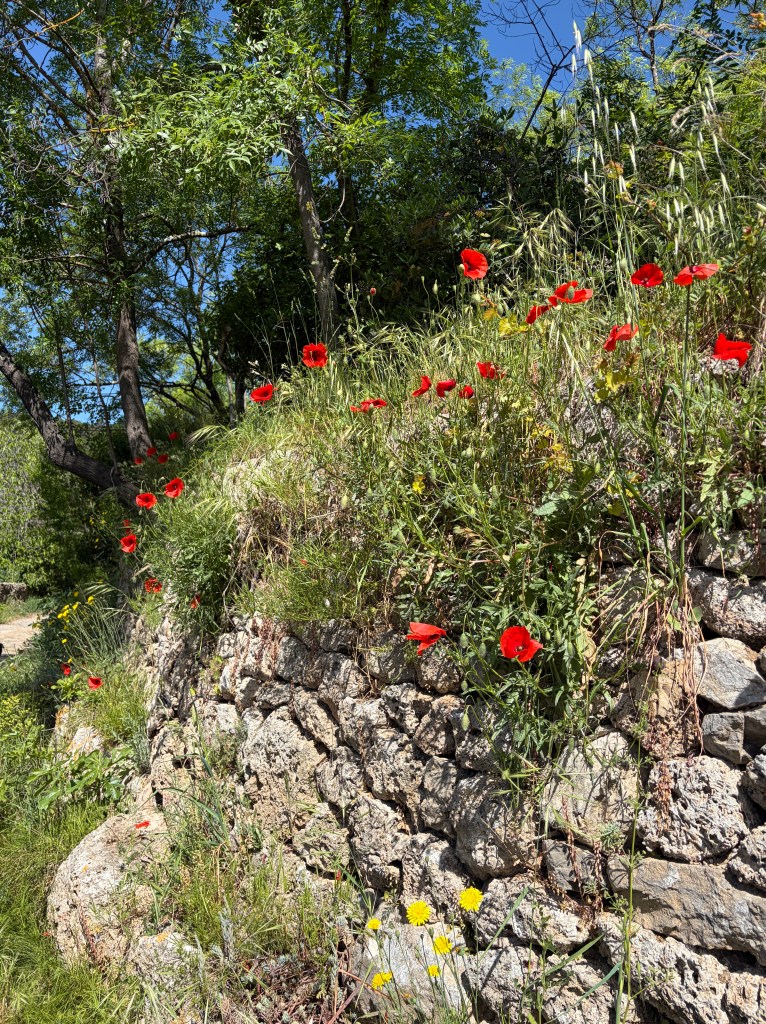
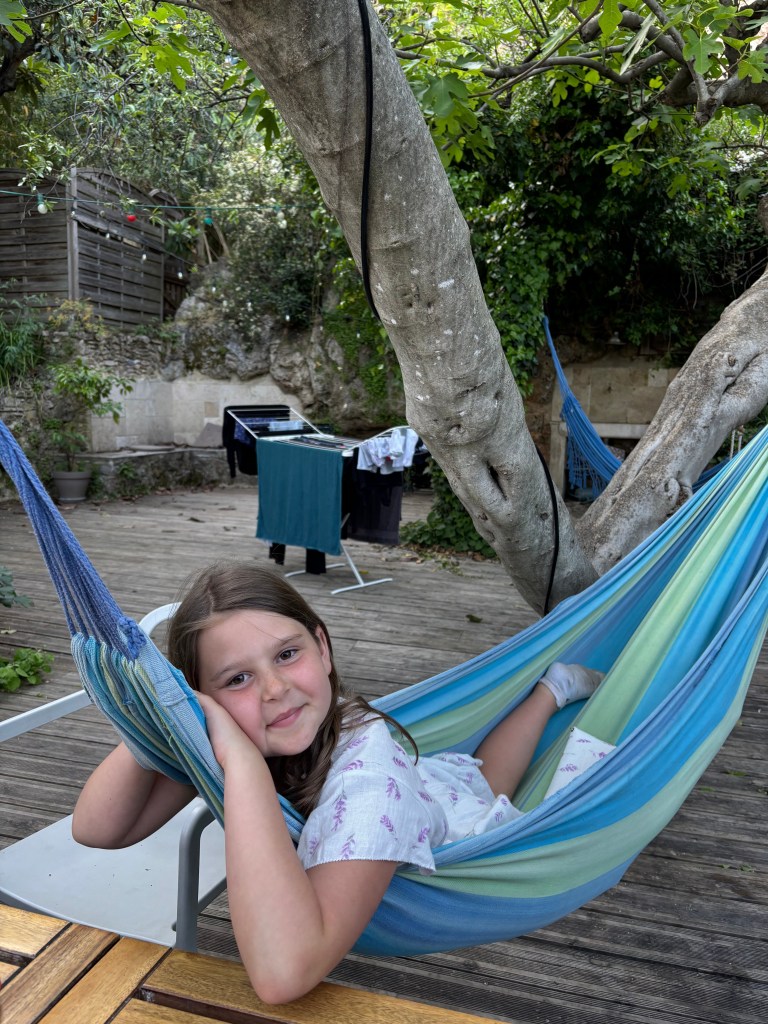
In between it all, there have been a few quieter moments. The kind that might end up meaning the most. Wandering the village streets. Reading in hammocks on our terrace. Climbing up to Sanctuaire Notre-Dame de Grâces, one of the stops along a pilgrimage route through France. Kicking a ball around the turf field. Noticing the season shift as leaves slowly unfurled and flowers began to bloom across the rock walls. Letting the days stretch, just enough.

It’s not always seamless. It’s not always relaxing. But it’s real, and it was ours for this one month in Provence.

Tomorrow night we sleep in Verona, Italy. Alla prossima volta!

(Blog post by Katy)

Las Fallas celebrations in Valencia

Blog post by Katy

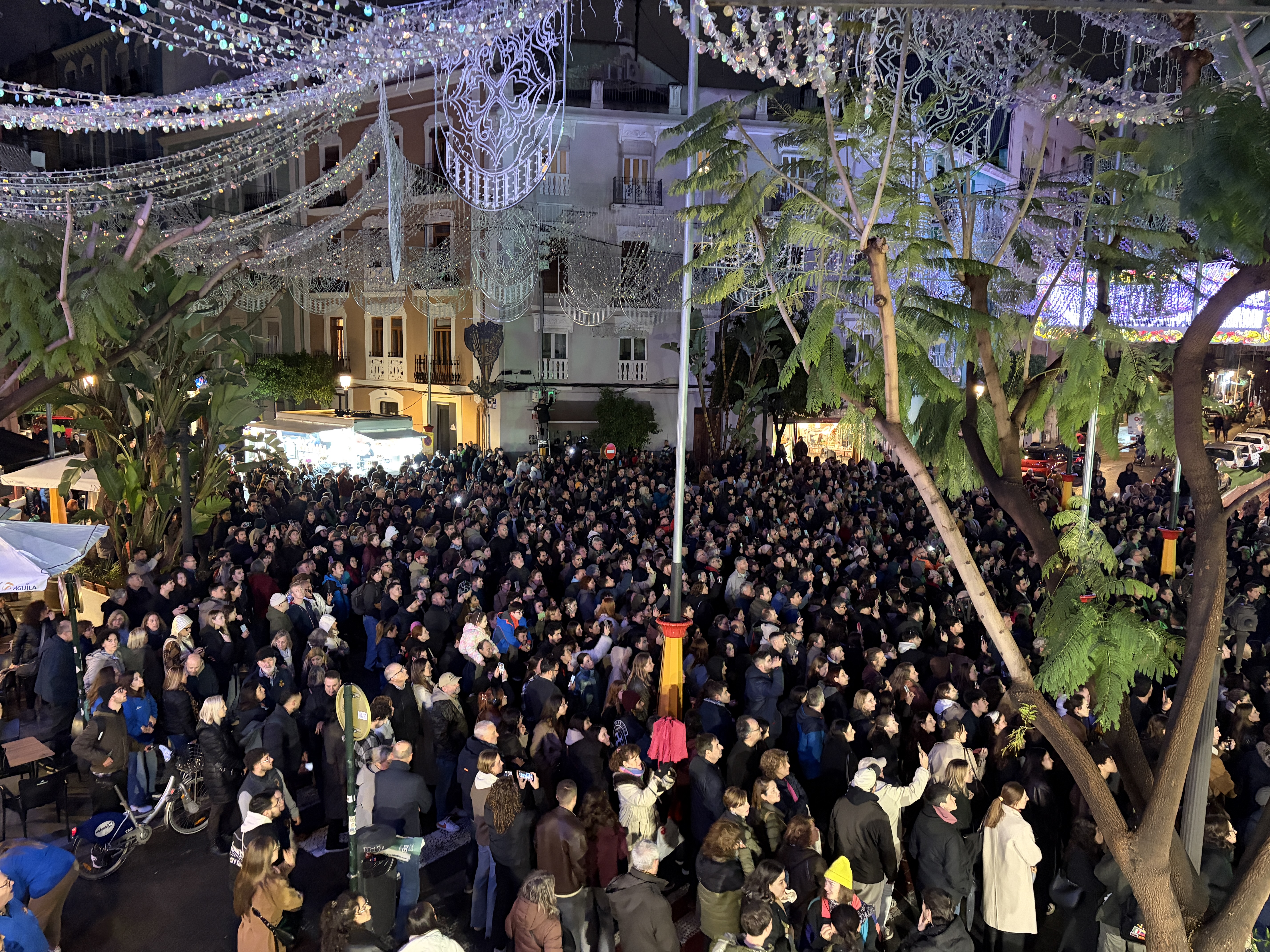
On Friday, March 6th we flew to Valencia from Paris. At around 730pm we dragged our suitcases over cobblestones for about ten minutes, searching for Plaza Puerto Rico in the Ruzafa neighbourhood. We rolled past the bullring and down a few narrow, winding streets before suddenly arriving at a very full plaza. And by full, I mean hundreds of people packed in like sardines, all staring up at the sky (see below).

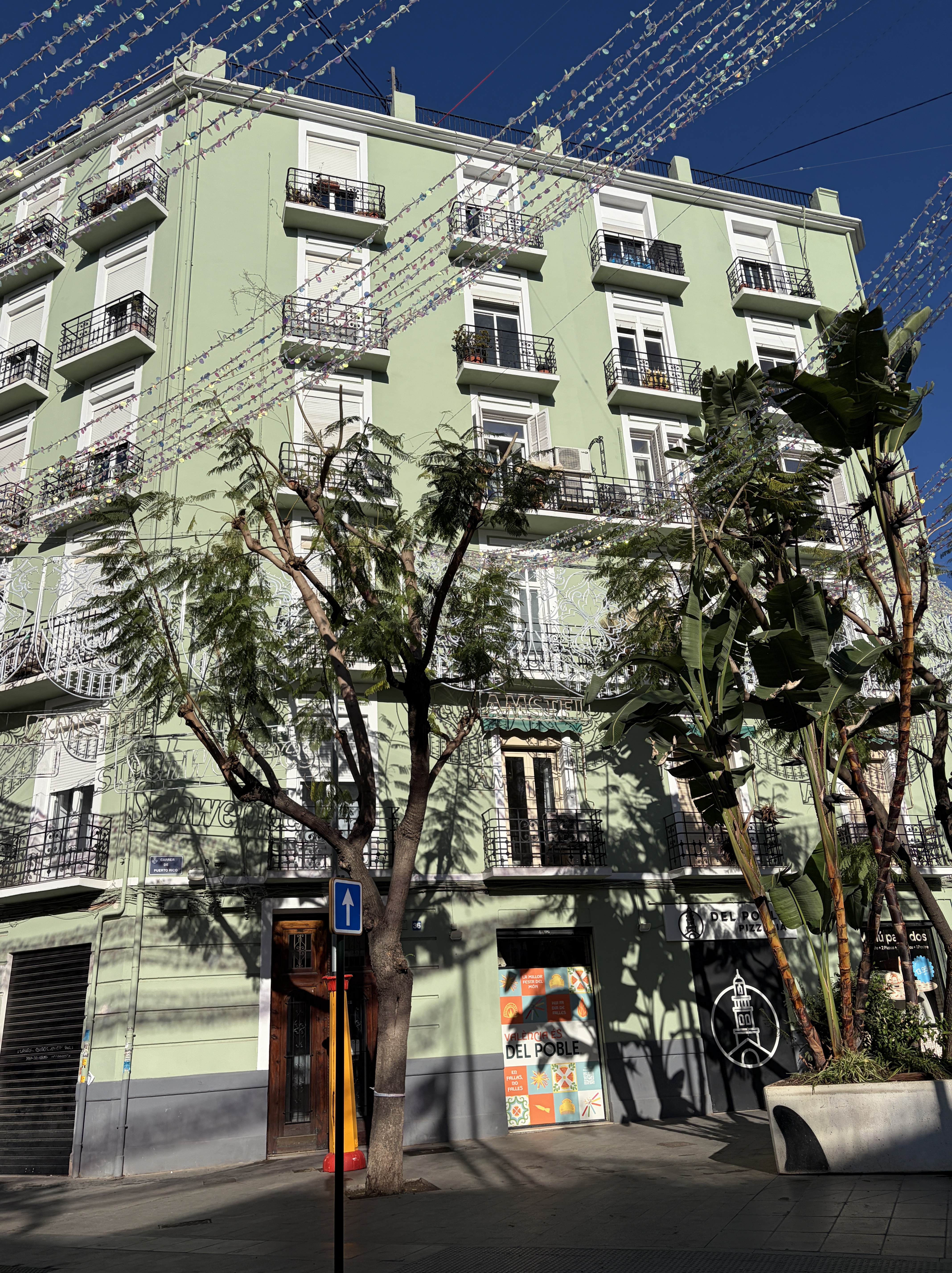
We squeezed through the crowd, scanning apartment numbers until we finally spotted #36, a green building (see above right 2nd floor) tucked into the corner of the square. A quick buzz upstairs, an apartment tour entirely in Spanish (no comprendo), and suddenly we were standing on our three tiny balconies overlooking the plaza… just in time to hear a countdown begin.

Then everything went boom. Plaza Puerto Rico lit up in the most spectacular way. Thousands of tiny lights, glowing arches, and explosions echoing through the square like nothing we’d ever heard before. The whole place erupted in cheers.

Plaza Puerto Rico at light up (needs sound)

Well… this was quite the welcome. Our home for the next three weeks.

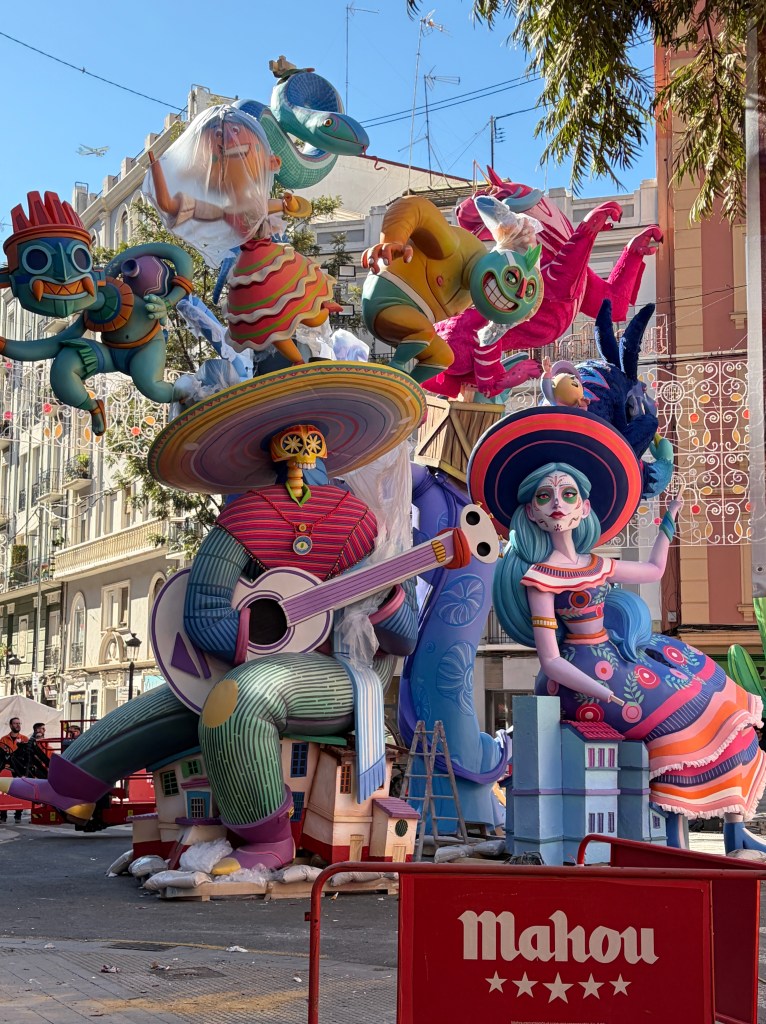
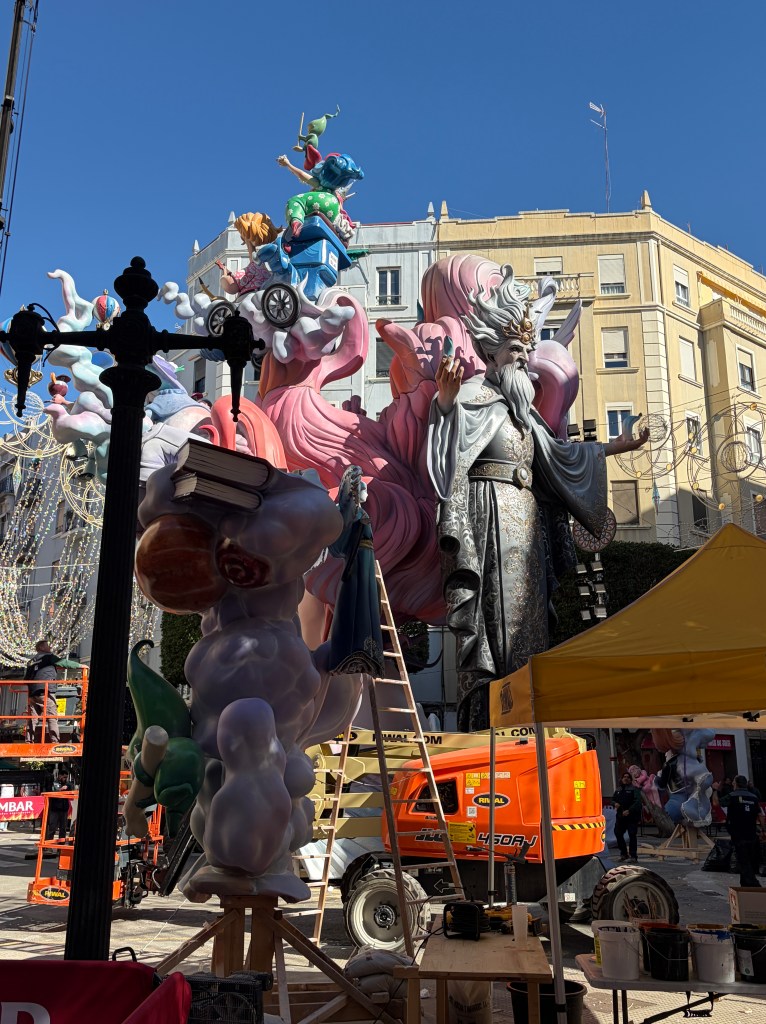
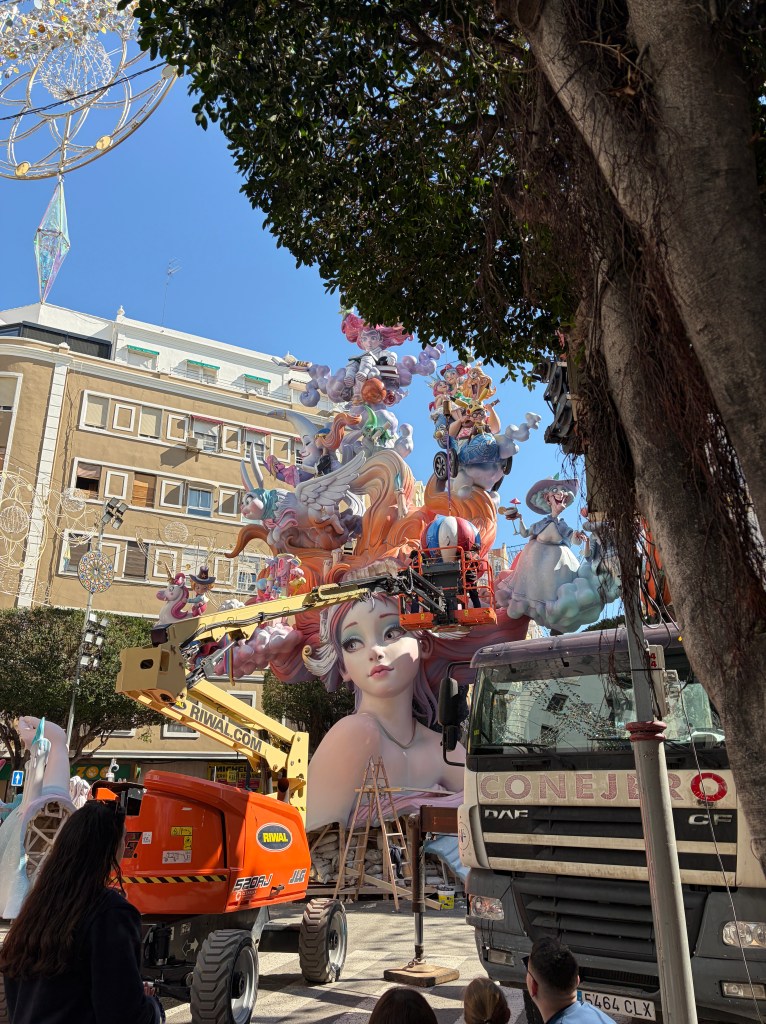
If you’ve never heard of Las Fallas, imagine a city-wide celebration where art, fireworks, noise, and community all collide. Every March in Valencia, neighbourhood groups build enormous, elaborate sculptures called Fallas and display them in the streets. This year there are over 800. For days the city fills with firecrackers, music, parades, street food, and dazzling light displays that keep the energy going late into the night. Then, on the final night, all but one of the over 800 sculptures are set on fire in huge bonfires called la cremà. A dramatic farewell that symbolizes renewal and the arrival of spring. So far it is loud, colourful, and unlike any festival we’ve ever experienced.

On our first night we closed our three balcony blinds and fell asleep to explosive sounds lasting until 3am. We had purposefully planned our time in Valencia around this festival but nothing could prepare us for what was about to unfold. The next day, we decided we need to go with it so our first stop was the firecracker shop. We bought a box of 12+ yrs firecrackers for the boys and a box of 8+ yrs firecrackers for Olivia. We proceeded to the street with our lit pieces of rope and began exploding firecrackers! Loud piercing blasts echoed off the walls. Ours were the ‘quiet’ ones. All of this would not be legal in Canada so it was definitely eyes wide open for us all!

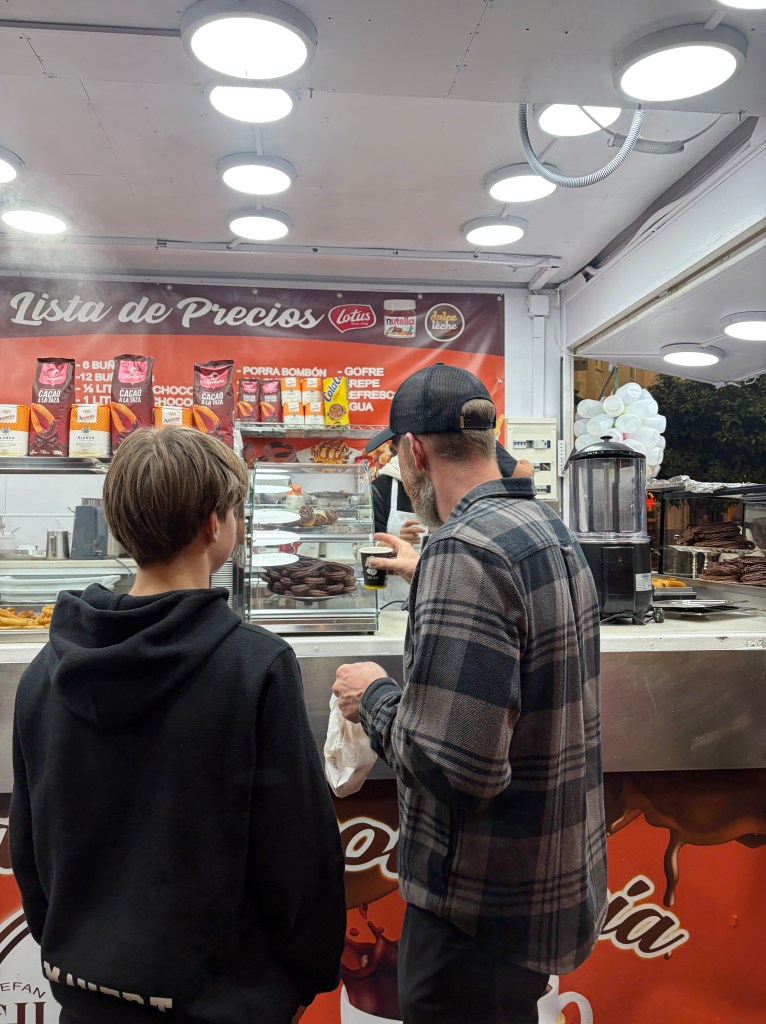
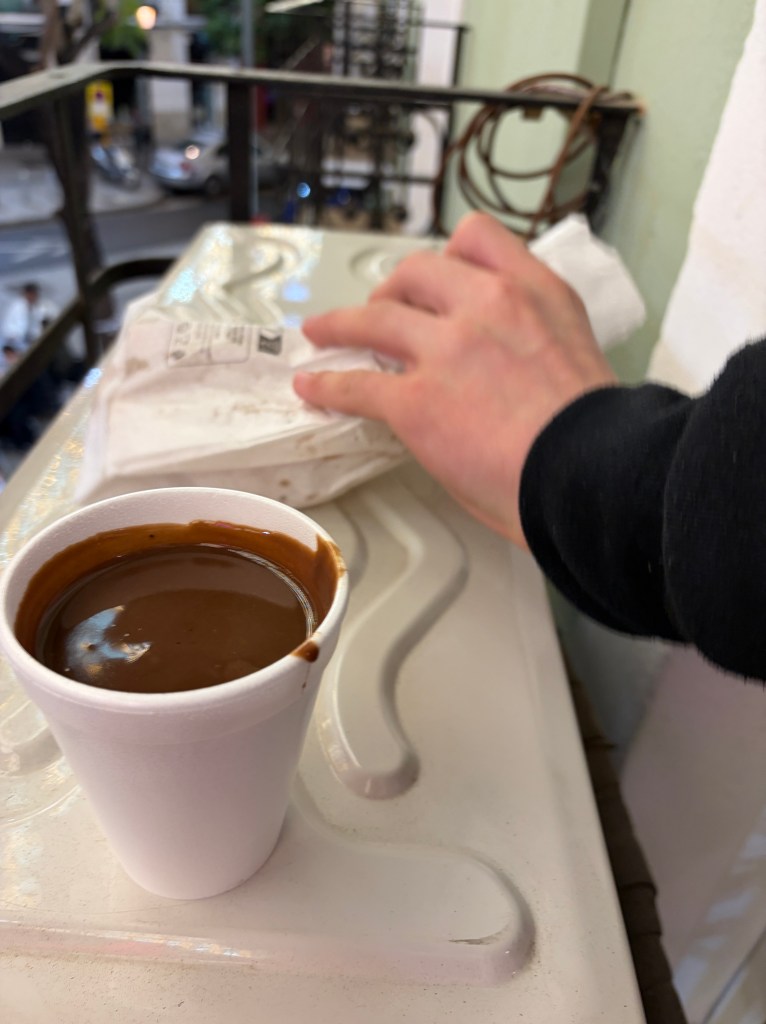
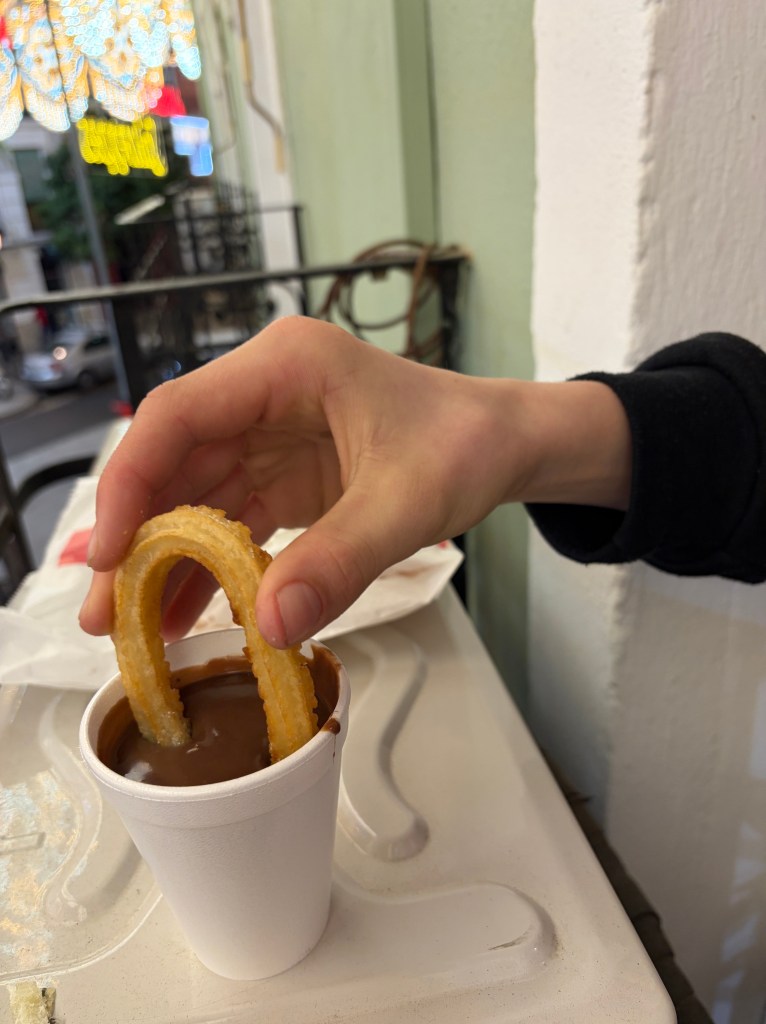
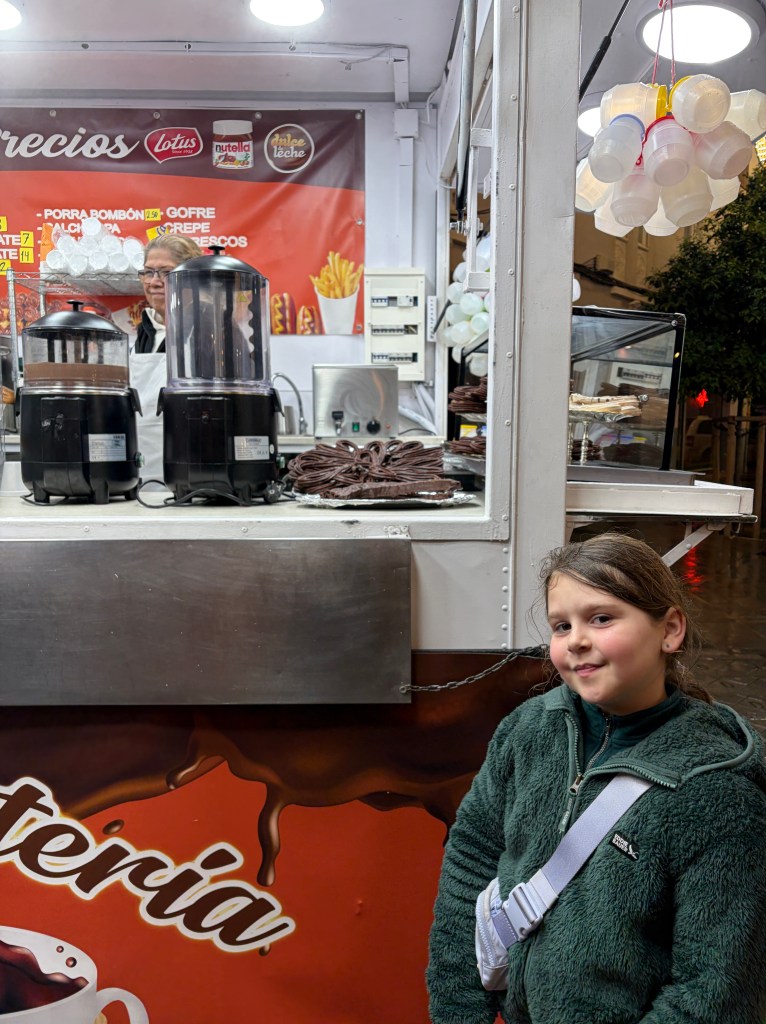
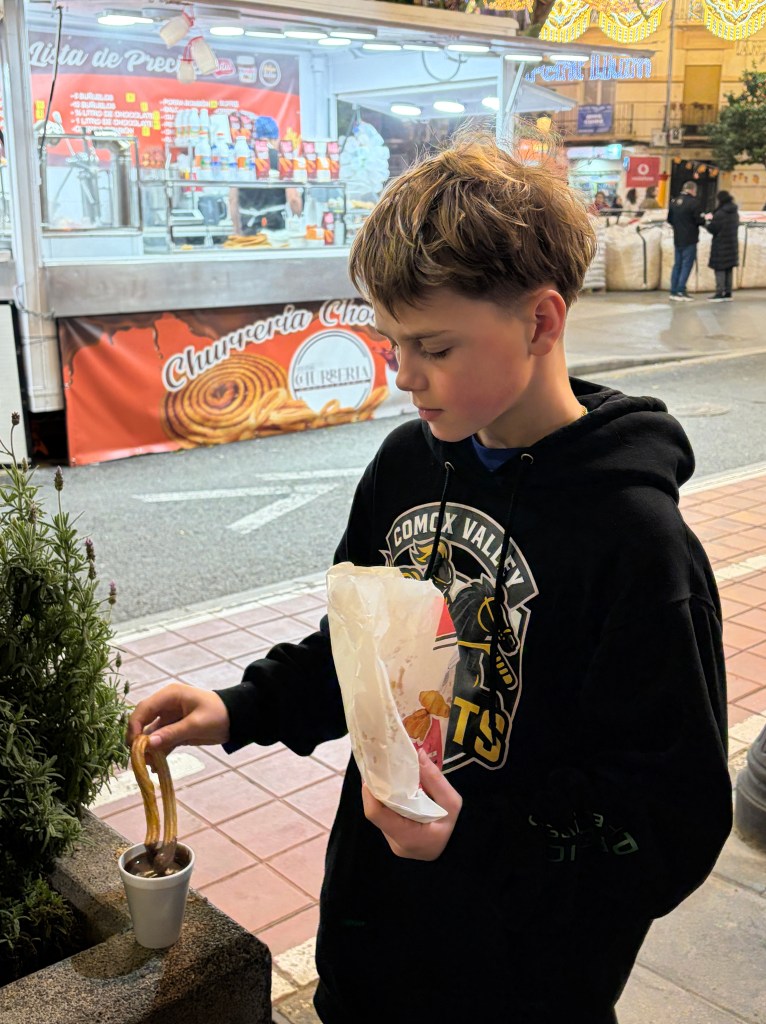
Las Fallas officially runs from March 15–19, with a packed schedule of events happening day and night. The preparations are already well underway, and from our balcony and the streets in Ruzafa we’ve been watching it all unfold. Every night something new appears, and every morning we wake up to a different view of the plaza and streets. Two days ago we spent the day at the spectacular modern monument of the City of Arts and Sciences (and at the Oceanoraphic -aquarium) and returned home to discover about eight new food trucks had rolled into the square joining our well loved churros truck. Market stalls are popping up too, transforming the plaza into a full festival ground. The kids are already planning their rounds: churros (see below images), bocadillos (large sandwhich), burgers, patatas bravas, cotton candy, sweets and fruit juices.

The location of our apartment honestly feels a bit like living in the middle of the Filberg Festival back home – just with alot more noise and no curfew.

Each community seems to celebrate fallas in their own little areas of town. There are white tents all over the streets during Las Fallas that are temporary gathering spaces called “carpas” set up by neighbourhood Fallas groups. Each neighbourhood in Valencia has its own Fallas committee (called a comisión fallera), made up of local residents who spend the whole year planning their sculpture, fundraising, and organizing events. The tent parties spill into the streets. Last Sunday, we found small fires cooking paella (apparently a Paella competition). It seemed to be an all-day, highly social affair, filled with laughter, conversation, and the smell of good food.

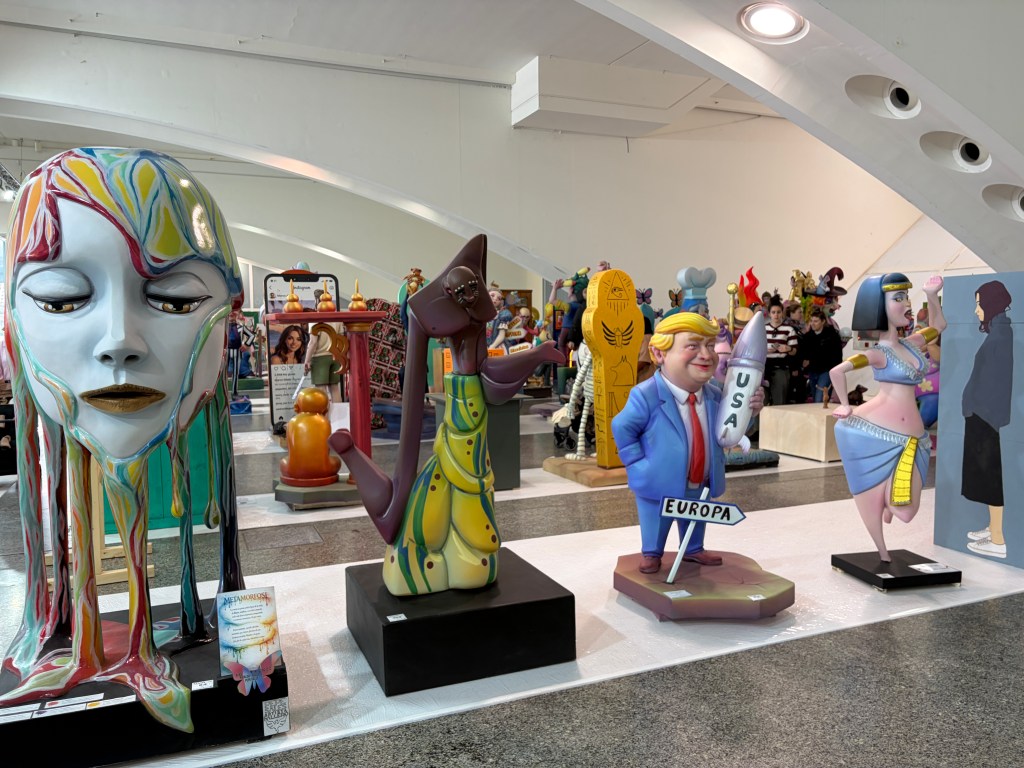
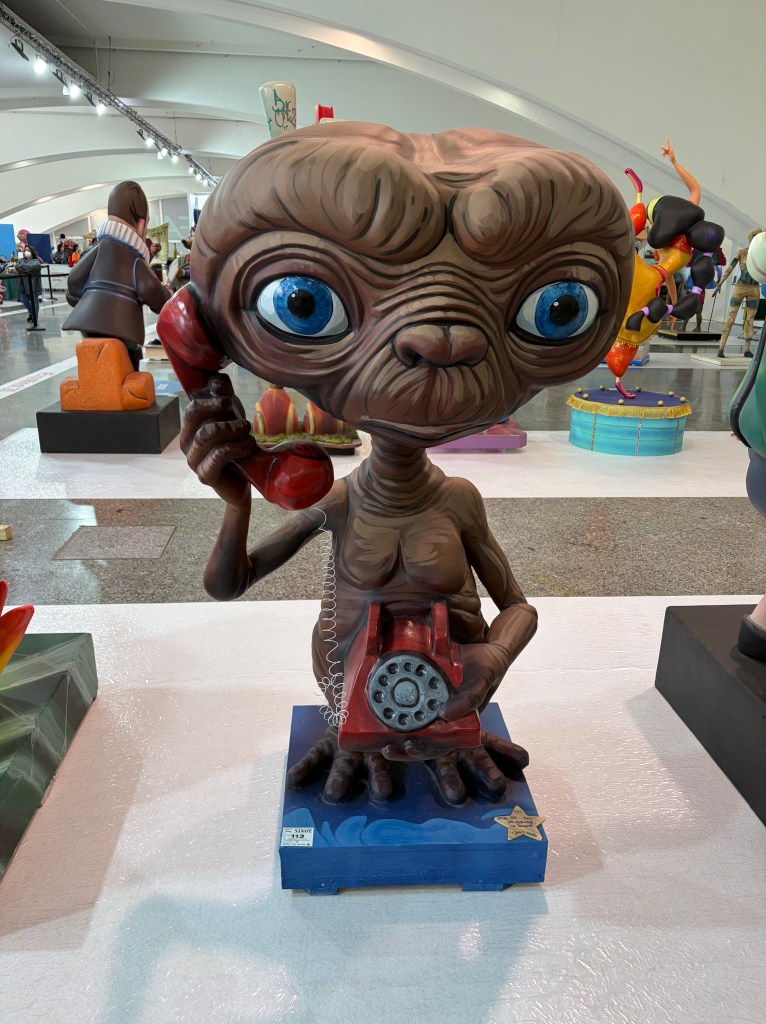
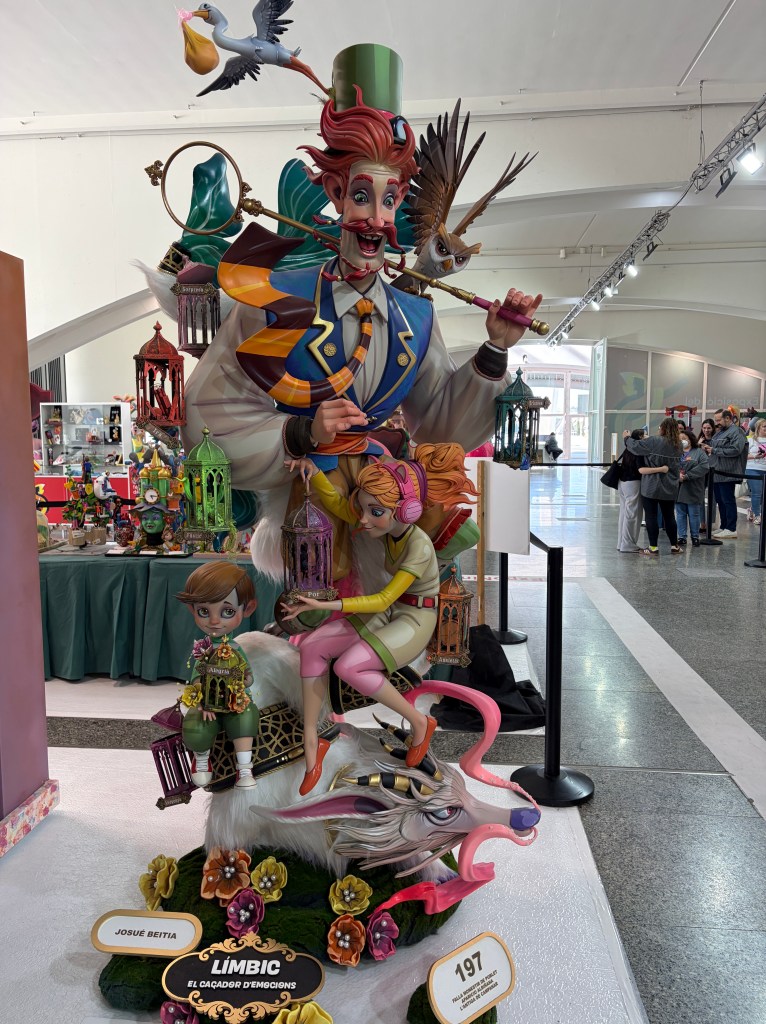
Yesterday we visited the competition museum of ninots. The giant Fallas sculptures around Valencia are made up of many smaller figures called ninots which means “little dolls” in Valencian. Each ninot tells part of the story. They’re often funny, exaggerated, and sometimes a bit cheeky, poking fun at politicians, celebrities, social trends, or everyday life. A single Fallas monument can include dozens of ninots, all working together to tell a theme or visual joke. We voted for our favorite ninot at the museum.
Las Fallas creates jobs across many parts of Valencia. Artists and designers spend the year building the giant sculptures and ninots, while carpenters, welders, and crane operators help assemble them in the streets. Pyrotechnic companies plan the fireworks, and the festival brings plenty of work for food vendors, restaurant staff, musicians, dressmakers, and market stall owners. Behind the scenes, police, firefighters, and city crews also work hard to keep everything running safely. In many ways, Fallas isn’t just a festival, it’s a year-long industry that supports thousands of local jobs.

After seeing hundreds of ninots around the city, we can say they’re truly incredible works of art, unlike anything we’ve seen before. Traditionally they were made from wood and papier-mâché, but today many are built with modern materials that allow for incredible detail and bright colours. Some are several metres tall, with cartoon-like expressions that make them just as entertaining up close as they are from across the plaza.

Next Thursday, March 19th the Fallas sculptures will all be burned to the ground (all night) and from what we understand, when we wake up on the 20th, there will be no trace of the Fallas festival to be found in Valencia. To be continued after March 19th…

Travelling band! The party went until 4am last night…

Mayert family adventure round two…

Today’s blog is written by Katy

Suitcases zipped, passports ready and just enough chaos to make it memorable.

Not only has the world changed a lot since our last big adventure in 2018, but so has our little family. The kids are growing up right before our eyes, stretching into new versions of themselves. And so are we. Nick is 13, Matt is 11 and Olivia is 8.

We’re taking this opportunity to press pause.

For a few months, we’re stepping away from routines and schedules. We’re trading carpools for cobblestone streets and practices for piazzas. We’re choosing roads instead of routines and sunsets instead of schedules. We want to see the world through each other’s lens. To gather stories instead of things.

We are a family of five travelling to five countries in Europe.

Dave is on a deferred salary leave from his role as a high school administrator. I’m taking leave from my music teaching position in French Immersion. I’ll continue working on the Yellowpoint Christmas Spectacular while we travel. It’s hard to believe I’m heading into Season 18. I feel incredibly lucky to carry that creative work with me on the road.

Right now, our life is wonderfully full. Work, school, hockey, soccer, piano, gymnastics, tap, basketball, house, garden, and all the driving in between. We’re taking a break from all of it.

We’re leaving behind Canadian mountains, ocean air, rushing rivers, and deep green forests. In their place, we’re diving into history and culture. We’re excited for the kids to stand in front of monuments that have existed long before Canada was even born.

Our adventure begins late Sunday morning – after a few final hockey games and some hard goodbyes.

I’ll miss spring in the garden. The tulips and daffodils are just beginning to push through the soil. I’ll miss our friends, our community, and yes… my own bed (and pillow).

But mostly, I’m excited.

This trip has been years in the making.

Dave and I will be writing regular blog posts and sharing photos along the way. We’re also hoping the kids will chime in with their own perspectives – because let’s be honest, they’ll probably see things very differently than we do.

We’d love for you to follow along.

The Itinerary:

  • Mar 1 – 6 Paris, FR (France)
  • Mar 7 – 22 Valencia, SP (Spain)
  • Mar 23 – 26 Barcelona, SP
  • Mar 27 – 28 Carcasonne, FR
  • Mar 29 – Apr 25 Cotignac, FR
  • Apr 26 – May 4 Verona, IT (Italy) – Brenner Pass 7 day bike ride: Vipiteno, Brennone, Bolsano, Trento, Riva, Verona
  • May 5/6 – Venice, IT
  • May 7/8 – Rome, IT
  • May 9 – 18 Puglia Region, IT – Stay in San Michele Salentino
  • May 19 – 21 Athens, GR (Greece) 
  • May 22 – 24 Santorini, GR
  • May 25 – 27 Naxos, GR
  • May 28 Rhodes, GR
  • May 29 – June 5 Oludeniz, TR (Turkey)
  • June 6 – 11 Sarigerme, TR (Holiday Turkey Village)
  • June 12 – 14 Cappadocia, TR
  • June 15 – 20  Istanbul, TR
  • June 21/22  Paris, FR
  • June 22 HOME

Beautiful Croatia

We have had a wonderful 3 weeks exploring the beautiful coastal country of Croatia.

We began our adventure in Split.  After a long day of travelling from the Dordogne, a quick grocery shop, and settling into our apartment in the old town, we went for a dinner at the restaurant located below us.

The next day was Nick’s birthday and he decided that as a treat he would like to take a ride on the harbour submarine. It was a beautiful day to be out on the water, even if there was little sea life to see from the submarine… We spent the afternoon at Bacvice beach which was a huge hit with the boys. The warm shallow water meant we didn’t have to worry much and they spent countless hours splashing around and avoiding the locals playing picigin (a game of keep up with a small ball in the shallow water).

With its’ Diocletioans Palace you could definitely feel the influence of ancient Rome and modern Italy in Split. Nick and I did a harrowing bell tower climb to get a wonderful view of the city.  It was an eye opener to see the difference in safety regulations with the open staircases that offered little protection to a fall to the inside and outside.  It was great to see Nick up to the challenge though. We also did a tour of the basement below the palace. It was amazing to see the vast spaces that were used recently as a backdrop for Game of Thrones and as a garbage dump and sewer by residents until fairly recently.

From Split we took an catamaran passenger ferry to the island of Korcula, where we were met by our friends Magnus, Cecilia and Julius from Denmark. We made our way to the suburb of Medvinjak where we shared a house with a wonderful pool for five days. The pool was idealic and the kids had a great time. Their swimming improved so much that the water wings were no longer needed by the end of the week. Early one morning we visited the local fish market and bought some stingray, sea bass and small fish for a seafood barbecue in the traditional Croatian style. It was great fun to cook over the open fire and we had a marvellous feast.  With a beach just down the hill and the pool we didn’t stray to far from home, but did spend one day on the southside of the island at a beach near the town of Lumbarda. It was nice and sandy for the kids, but they preferred the shallow warm waters of Bacvice beach in Split… and the pool!

We said goodbye to our friends and spent our last 5 days on Korcula in a little apartment right in the old town of Kocula. The walled town had been built when it was a port for the traders of Venice, and had a celebrated connection to Marco Polo. With a great seaside promenade and narrow alleys it was great fun to explore on foot.  Having stared at the beautiful Adriatic Sea for days, we decided that we needed to rent a boat and took out a little traditional fishing boat on a couple occasions to explore the other small islands and coastal regions of Korcula. On our first day out we stopped at a great little beach in Torkul and had a great time. We also explored the island of Badija with its’ Franciscan monastery and history as a school for elite athletes during the communist days of Yugoslavia. The deserted and dilapidated infrastructure was a little eerie. There were numerous abandoned basketball courts and you had to wonder if this is where the likes of Drazen Petrovic and Tony Kukoc got their start. We enjoyed the boat so much that we took it out again and this time headed to the beach north of Lumbarda for a great day in the sun and crystal blue waters.

From Korcula we travelled south, once again by catamaran, to Dubrovnik and along the cliffside highway to the little seaside village of Mlini where we had a little apartment by the beach. Our first excursion was a boat ride up to Dubrovnik for the day. The seas were  rough and Katy started to think she would have preferred the cliffside drive. When Matt got seasick and threw up on the way I tended to agree. Despite a dubious start, Matt recovered quickly after an ice cream cone and we climbed up to explore the famous walls of the City. The views were amazing and it was easy to see why it has been chosen as the setting for so many movies and tv shows including Game of Thrones’ Kings Landing. We spent a hot couple hours circling the town up on the walls. The boat ride back was just as rough, but this time Matt fell asleep, possibly helping us avoid any further sea sickness. On the way back we spotted many bombed out seaside resort buildings, which was our first real perspective on the war that took place here just 25 years ago. I got up the next morning and went for a run to the abandoned seaside resort of Kupari that was destroyed during the invasion of Dubrovnik in 1991.  The owner of the apartment we stayed at also told us her story of escaping the bombing in Mlini and showed as the hole in the 500 year old plane tree outside the house caused by one of the bombs.

While in Mlini we also decided to try out the local cuisine. It seems we may have travelled with our stomachs a lot the last couple months. We shared wonderful Dalmatian sea bass, shrimp, calamari, pasta and lamb. It was great fun to watch it cooked over the open fire and enjoy the sea views below.

On our last night I snuck out after the kids went to bed to head down the local seaside bar to watch the World Cup football match between Croatia and Nigeria. It was a great cultural experience to see the locals packed around the open bar, dressed in the national colours, waving flags, singing songs and setting of flares when Croatia scored. By coincidence all the countries we visited this year are represented this year’s World Cup.

IMG_4857

The next day we drove up the coast to Split, along a beautiful coastal route and briefly through Bosnia along the way. The 200 kilometre drive took almost four hours, luckily the scenery was magnificent. On to Paris…

Everything Tastes Better with Duck Fat…

One of the highlights of any trip to France is the food. The Dordogne has a fantastically  unique food culture based on local ingredients. We have thoroughly enjoyed not just sampling the food in restaurants but also having the time, and our own kitchen, in order to experiment with these great ingredients ourselves.

The fresh, direct from the producer nature of the ingredients is wonderful. Many of these producers sell directly from the many markets in the region. We have been able to see several of these producers repeatedly as they travel the weekly rotation of markets. We have visited markets in Belves (very small, but unique with the covered town square) and Sarlat (a little too big and touristy) but have enjoyed the markets of St. Cyprien and La Bugue the most because of the more manageable size and noticeable local presence. The markets have been a contrast to the daily covered markets of the Basque country and Seville we have already experienced on this trip. We loved the local strawberries, sausage, baked goods, cheeses, duck, asparagus, mushrooms and other fresh produce.

One of the items the region is well known for is foie gras. Foie gras is duck or goose liver that has been fattened by use of a tube that force feeds corn to the animal for 12 days before it is slaughtered. The process is called gavage. There are many types of foie gras from whole or entire, to mousses and pates. My experiences with foie gras in Canada had all been of the pate variety, which I was not a big fan of. However, the entire was a whole different experience and I thoroughly enjoyed the buttery, rich delicacy on a thin slice of bread. There is some controversy about the treatment of the animal based on force feeding it in order to be able to eat the liver. Seeing how the french use and eat every single part of the bird however, it seems far less appalling than some of the things going on in the chicken or beef industry.

One of the other specialties of the region is confit de canard, which is duck preserved in salt and it’s own duck fat. This was probably our favourite meal. We cooked it ourselves, and ordered it several times in restaurants. When you buy the canned version, as most french people do, the duck fat is then kept for cooking later on.


While in the Dordogne, Katy and I treated ourselves to a day at a cookery school called  La Chevrefuille. With the kids happily spending time with Katy’s parents, we got to experience the local cuisine in a much more relaxed manner. After arriving at the Auberge, run by a couple of British expats, we had coffee while meeting the other participants in the class, a couple from North Carolina. After discussing what the day’s menu might look like with Chef Ian, he took us all off to the market to buy the days ingredients. It was fantastic to experience the market with the chef. He spent time explaining many of the different local produce and ingredients at the stalls including all the different types of duck that were being sold: from the raw pieces, to the confit to the foie gras. He showed us what to look for to get quality meats and produce and explained many of the local specialties. Some of the highlights were included in the ingredients for the days meal including white asparagus, cepes mushrooms, brown mushrooms, honey from bees in a walnut orchard, walnuts, fresh strawberries, walnut oil, canned confit de canard and the fat, and cabacous goat’s cheese. Because of his relationships with the producers, we got to sample many of the range of products at each stall and learned about how they were produced. It was great to see these same producers again and again at the markets throughout our stay.  We felt much better versed in how to ‘shop’ and this all added to the fun we had cooking in La Dordogne.

When we returned from the market we discussed the days menu over another coffee and got right to work. We started by preparing the dessert which was to be a chocolate fondant with strawberries, fresh homemade banana ice cream and creme freche. This was a very measured recipe and it was good that no wine had yet been consumed as it was very important that we follow the instructions from chef exactly in order for the fondant to be a success.  While we were waiting for it to set in the fridge we started working on the starter which was cabacous cheese in puff pastry with ice greens, strawberries, walnuts and a garlic, walnut oil, honey and mustard dressing. Once prepared we took a break to enjoy our creation.

We then got back to work on the main course which was confit de canard with white and green asparagus, fava beans (also known as broad beans), onions and shallots, with a rich and creamy cepes mushroom sauce. Special care was taken to prepare the duck so that the extra fat was removed (and saved to cook with) and all excess water and moisture cooked out of it. The chef drove the point home with his observation of, “there is nothing worse than floppy duck fat”. The end result was delicious, the crispy duck and the rich sauce mixing the cepes, creme fraiche, homemade stock, garlic, duck fat and walnuts was amazing. This will definitely be added to our regular cooking repertoire at home if we can source the duck.

After enjoying our mains we went back to the kitchen to prepare the rest of the dessert. We put the chocolate fondant in the oven, made a banana ice cream and strawberry salsa to top it all off. All in all it was a fantastic experience (we even left with a jar full of duck fat) and we plan to make cooking classes with the whole family more of a part of our travels in the years to come.

We took what we learned (and the duck fat) home to our accommodations for the next two weeks and had a lot of fun experimenting with the local ingredients and feeding friends and family. We didn’t get out for dinner too often but the two meals that stuck out were at the Auberge Medieval in Audrix and at La Merenda in Meyrals. Confit de Canard with the three course menu was again my meal of choice and the desserts were amazing.


With the rich food and wine eaten by the French we had to ask why people were not overweight. The answer we got back was portion size and no snacks.  In general they don’t over eat and they drink in moderation compared to the British and North Americans.  We resorted to exercise because the food and drink was far too good to pass up… because everything tastes better with duck fat!


Chateaux, Caves and other Dordogne Adventures

We have been overwhelmingly surprised by the number of quality family friendly activities available to us in the Dordogne.  Within about 30 minutes drive we have experienced numerous surprises at attractions that have entertained us all. This is not an easy feat with a seven month old and busy 4 and 5 year old boys.

Les Chateaux

The first thing you notice in the Dordogne is the castles or les Chateaux. There are so many it is impossible to see them all even with a month long stay. Every drive in the area resulted in the discovery of another castle up on a hill, many of which looked to be private residences and not tourist attractions.

Our first visit was to Chateau de Beynac. Located at the top of a cliff towering over the Dordogne river, this imposing structure has an amazing view of the valley below. It looks across the valley at it’s rival Chateau de Castelnaud. Eleanor of Aquitane and Richard the Lionheart played major roles in this region. These castles were later involved in the Hundred Years War between the French and the English.   There was plenty to see  at Beynac with the guards room and kitchen being highlights, but the view from the ramparts stole the show.

Chateau de Castelnaud was a totally different experience from Beynac. Our adventure started with a lesson for the boys about how to be a guard of the castle. This included sword lessons which Matt very diligently completed and resulted in us making a stop in the gift shop afterwards… There was also a demonstration with the loading and shooting of a rifle and swordsmanship by a guard, a blacksmith demonstration and a trebuchet demonstration. There were great displays of knights in armour and weaponry of the middle ages. It was great to have Katy’s cousin Jenny, her husband Mike and son Isaac with us to enjoy the chateau.

Our next excursion was to Chateau de Milandes. One of it’s claims to fame is that it was the home to actress/dancer/singer Josephine Baker.  It has recently been renovated and had beautiful gardens and grounds including aviaries and a play castle for the kids. The chateau itself had a museum dedicated to the life of Josephine Baker. One of the highlights was the raptors show. They showcased owls of various sizes, a bald eagle and a peregrine falcon. It was amazing to see these creatures in flight and in such close proximity.

Fort Maison de Reignac looks small and underwhelming when you first drive up, but behind the walls in the cliff lies a surprising expanse and a multitude of exhibits on life in this cave dwelling, turned fort and chateau. The room dedicated to devices of torture was both fascinating and disturbing. It is really hard to fathom how awful people can be to each other. The one instrument of torture that I noticed right away was “the rack”, as for years a modern version of it provided frequent relief for my back in the physiotherapists office.

Le Bournat was another interesting full day excursion. It was a recreation of life around the year 1900 and included a full village with a working windmill, a blacksmith, wood turning, a baker, a walnut press for oil, a brewer, pottery, glass blowing, farm animals, and farming equipment of the time. It also had numerous period carousel rides and games that the kids thoroughly enjoyed.

The Marqueyssac Gardens were another pleasant surprise. The views from the belvederes over the valley to Roque Gageac and Castelnaud were fantastic. There were an amazing number of boxwood hedges that were all maintained by hand cutting. There was a dinosaur bone discovery displayed which the boys loved, and a fantastic suspended walkway in the trees which my mother-in-law gamely conquered on her 68th birthday. There was even a Via Ferratta, although unfortunately I wasn’t able to try the route that day.

Les Grottes

Our first cave experience was at the Gouffre de Proumeyssec. We chose to walk through the pedestrian entrance rather than being lowered down in the basket. We were led to a giant cavern where a dramatic light and music show took place where the 11 people who bought the ticket for the basket were lowered down as part of the show. We were glad we chose the walking route… When the lights came on we saw a giant cavern with beautiful pools of water, stalagmites and stalactites. They even leave pottery in the cave to be calcified and sold to tourists. The colours and size of the cavern was amazing. Outside they had a great setup for the kids with a route to learn how to move like a caver through the tunnels and around obstacles, as well as many learning centres. They also had stationary bikes that produced the power to lower the basket into the cave. The boys pedalled enthusiastically if not effectively.

After exploring the bastide village of Domme we ventured underground to explore the caves below the town. It was in contrast to our experience at Proumeyssec as the ceilings were low and the tunnels tight despite being excavated for tourists. It was amazing to see the stalagmites and stalactites up close and many that had actually grown together. We were all again amazed by the wonderful crystalizations. We smelled the bats inside and heard how the caves needed to be cleaned by hand annually to counteract the bacteria brought in by humans. We exited outside of the cliff outside the town, where the caves had been originally discovered.

La Roque Saint Christophe was another pleasant surprise. After a morning tour of Fort Maison de Reignac, we stopped for a picnic lunch and decided to check out the site. It was a cave on the side of a cliff more than a kilometre long that has been inhabited for over 55,000 years. It was amazing to see how this cave dwelling evolved into a thriving village in the cliff with the buildings built right into the rock and supplies brought up by crane from below. It actually thrived during the middle ages as it had defensive advantages. The machines rebuilt to show what they used to build and supply the town were a definite highlight.

As a history teacher I was looking forward to the Lascaux caves.  The original cave was discovered in 1940 and was closed to the public in the 1960s to better preserve it. In the 1980s they constructed a copy built beside it out of concrete called Lascaux II. Recently they rebuilt this copy down in the town of Montignac called Lascaux IV (Lascaux III is a travelling exhibit).  The scale of the reconstruction was amazing. They used 3D printer technology to create an exact replica of the original caves. It was an enormous undertaking and the scale of the reconstruction was probably the highlight of the visit. We showed up and were encouraged to do the english language tour that didn’t start for a couple more hours. They suggested we go to their sister park Thot and visit and have a picnic while we waited. Thot was probably our first disappointment of the sites on our trip to the Dordogne, there were animals to see (descendants of those depicted in the caves) and some small scale exhibits, but nothing too exciting. When we returned to Lascaux, the actual viewing of the caves was underwhelming as we took part in the mandatory guided tour which was a little drawn out and even more difficult for three little kids. We definitely felt we should have taken the french language tour earlier in the day when we were all excited to explore and ready for the day.  My french has improved enough that I probably could even have understood the main points. After the guided tour there was a great interactive display called the workshop, which showed how Lascaux IV was constructed and had full size 3D models of all the caves and paintings which could be further explored through the interactive tablet you were provided.

After Lascaux the last cave experience on our to do list is Font de Gaume in Les Eyzies. We would like to see the cave paintings in their natural state. We will head early one morning to hopefully get a spot, as they only allow about 80 visitors per day. We are also heading out this weekend on the river. Unfortunately children under 5 are not allowed on the canoe rentals, so we are going to take a gabares, which is the traditional boat used to move merchandise along the river. It would have been great to spend more time on the lovely river looking up at the chateaux and villages.

Overall we have found the Dordogne to be a wonderful family vacation spot. With a lovely old farmhouse to stay in with a pool to play in, we have been quite happy and comfortable.  The amazing assortment of family friendly attractions nearby has made it a thoroughly enjoyable experience. We have enjoyed sharing our experiences with cousin Jenny and family from the UK as well as Nonna and Papa (Annette & Peter) who again traveled to find us by bike from Biarritz in La Dordogne – cycling is such a wonderful way to see the countryside.

And we say all this without yet mentioning the amazing markets and food in the area. Stay tuned…


A month in Biarritz

It is hard for us to believe but we have been in Biarritz, France for almost a month now. The spring weather has been varied and unpredictable. Although this has meant fewer beach days than we might have liked, there has been plenty to keep us occupied.

When the weather has been warm (we have had days of up to 30 degrees Celsius) the beach has been fantastic. We have spent most of our beach time at the Biarritz Grande Plage just a short walk from our apartment. Full days at the beach with picnic lunches and ice cream when it gets too hot have been great fun for all! Between building chateau de sable, playing rugby, soccer or paddle ball and playing in the waves the kids have been fully entertained.

On the Biarritz Grand Plage between the Casino and Hotel de Palais is an original carousel. The boys had a blast trying it out. They also got to try out the two level Carousel from Bayonne dating back to 1900. Matt was quite pleased that he got to ride a bull!

Biarritz has a nice little aquarium on top of the hill by the La Rocher de la Vierge. The boys especially loved les tortues and the giant tank with les requines.

In working to get the boys excited about our trip Katy bought the boys messages in a bottle to throw out to sea. Biarritz was a perfect place for them to write their messages and throw them off the cliff into the Atlantic. They decided the Rocher de la Vierge was the best place and had fun letting them loose on a stormy day. Of course five minutes later Matt was already asking why we hadn’t heard back yet:)

As always the food in France is a highlight. Cooking here often involves a spicy red pepper called espellette, while other favourites for us have included Jambon Bayonne, cerise confiture, olive tapenade, gateaux Basque (a cherry or cream filled cake) and a unique lightly carbonated/low alcohol cider. I also found a fantastic summer wheat ale by La Superbe brewed locally.  Being on the ocean the seafood is also fantastic. The daily indoor market at Les Halles has been a great place to buy gateaux basque, moules, shrimp, local cheese, fresh bread, macaroons, saussicon basque, fruit and vegetables. Moules have quickly become a favourite with the kids. We enjoyed a great lunches at the Cafe du Commerce, Bar St Jean, and moules at La Tandem.

At the north end of Biarritz is the lighthouse. Our first excursion to the lighthouse ended with disappointment as the actual lighthouse was closed (open weekends only) but on our second visit we were able to climb 243 stairs to the top on a sunny day for some amazing views in all directions.

Bayonne was our first trip outside of Biarritz when I took the boys to a rugby match.  Chocolate is big in this region, as this was one of the first places it was introduced from the Americas. At this point in the trip we were without car. One rainy afternoon, we took the bus to Bayonne and found ourselves walking 20mins away from the centre into the industrial area of town where we discovered an Atelier du Chocolate. Here we learned a lot about the production of chocolate, the kids decorated their own chocolate fishes and we sampled many fantastic varieties. Nick even managed to find a chocolate egg, with a real egg shell.  The adventure was well worth the trip!

Bayonne has a much different feel to Biarritz. It is much older and has a more traditional French feel in the centre, but is also a very industrial city spread out along the river. This is a big contrast to the resort areas of Biarritz, Bidart and Anglet. The Musee Basque there is fantastic, giving both the history of the area and the Basque people. There were also lots of hands on exhibits for the boys to explore.

Three weeks in, Katy’s parents cycled into town and joined us for a week in Biarritz. They took the boys for a night so that Katy and I could get away. That gave us a couple days in San Sebastian to fully sample the tapas culture, with fantastic pinxtos including goat cheese risotto, pigs ear, and various other unique combinations of seafood, cured meats, and cheeses on little pieces of bread. It was also a great night away for Katy, Olivia and I, and a much needed break!

The rest of the week the boys had fun taking turns having sleepovers with the Nonna and Papa in their apartment with a fantastic view overlooking the Cote de Basque.

We went with Katy’s parents and their friends down to St Jean de Luz for a day. We were pleasantly surprised by what used to be a fishing and port for the corsaires and pirates. It had a much more traditional feel than upscale Biarritz and it was nice to immerse ourselves in it for the day. The church had a traditional basque interior with balconies on the side for the congregation. It also had a great protected beach which was perfect for the boys. They even found pirate treasure in the form of a pirate candy store.

After renting a car, we have also spent a couple afternoons just north of Biarritz in Anglet. It is a much more modern resort area with the typical condo type accommodations of the 1970s and 1980s and numerous golf courses. There are many great beaches and boardwalks to explore. We also found a great recreation complex at the mouth of the river. Along with an ice rink, there is beach access, a skatepark and huge play areas for the kids. This was one of Matt’s favourite spots as he could “skateboard” and play in the playground. The playgrounds were well laid out with 6 separate areas (2-6 years, 2-8 years, 2-12 years, a small soccer pitch, and two adult exercise area).

We also ventured out into the Basque countryside to take the single gauge railway up to the top of La Rhune. The railway ride was a little steep and unsettling for some of us but the views, landscape and wild horses at the top made it well worth the trip.

While in Morocco we met a nice couple from Ireland. The wife was French and had spent six months in Biarritz as an au pair twenty years ago. One of her recommendations was to go to a “Venta” for dinner. A venta is a traditional family run roadside restaurant in Spain or the Basque country. We found one nearby in Bidart, and while it was a little more commercial than what we may have found in the countryside (or twenty years ago), we had a great meal. Katy and I both had the Plat de Pays. I had a plate of jambon Serrano, followed by axoa de veau (mashed veal, onions, tomatoes sauté and flavoured with red Espelette pepper) with fries, followed by some black cherry gateaux basque and some patxaran liqueur (made by soaking blackthorn fruit, coffee beans, and cinnamon pods in anisette for eight months). Katy went with a salmon cru entree, followed by a tuna main with artichoke and olives, and Basque Brebis (sheep’s milk cheese) with cherry confiture for dessert. It was great to see the multiple pilota courts in the centre of town and the kids playing there while their parents enjoyed a meal or a drink.

As our month here comes to an end we are looking forward to our next stop in the Dordogne to explore the regional cuisine, chateaus, and hopefully some warm weather by the pool.


Biarritz en Forme

We have been in the French resort town of Biarritz for over two weeks now. The area is really the combination of 4 towns, each with it’s own unique flavour: Biarritz, Bayonne, Anglet, and Bidart. We have spent a little time exploring each but have stayed close to home in Biarritz the majority of the time.

Biarritz is on the Atlantic Coast about 25 km north of Spain. It was a small Basque fishing and whaling port until the late 1800’s when it became a favourite spot for Napoleon III (Louis Napoleon)  and Empress Eugenie, his wife. With them came nobles from around Europe, and Biarritz became a very popular beach destination. Ambassadors and royalty from around Europe spent time in Biarritz and built huge villas on the cliffs. Because of this the architecture is fairly new compared to the rest of France. The location remained a popular resort destination with Hotel du Palais and the Casino being focal points on the Grande Plage. In the 1950s surfing was introduced and the coast became the centre for surfing in France. Because of this there is a unique mix of upmarket tourism and the surfing and beach lifestyle.
In addition to this, Biarritz is part of the Pays Basque (a distinct cultural region in southwest France and northern Spain), which brings with it it’s own language, food, culture and sports.

We have found Biarritz to have a very active and sporty population and have jumped right in alongside them. They have some great public exercise routes integrated into the infrastructure and ideas for the public to keep fit that they can access on their smartphone through posted QR codes. Katy and I have been jogging daily along the unbelievably scenic waterfront. The views make it difficult to work too hard. From the Hotel du Palais, along the Grande Plage, past the Port de Pecheurs, Plage de Port Vieux, Rocher de la Vierge, and along the Cote de Basques beach and up the stairs has been our daily route.

Katy talked in an earlier post about the Plage de Port Vieux and the swim club there. The other thing that has been a common occurrence there and on the Grande Plage is surf rescue training. There is even a school program for high school aged kids during the day where they practice rescues, surf skiing and swimming in the waves..

On our first day here we celebrated Matt’s 4th birthday.  It isn’t easy to pack birthday presents while on vacation, but he was pretty happy with his toy cobra from the markets of Marrakesh and a new skateboard from a surf shop in Biarritz. Of course we had to get one for Nick too, but they have loved skateboarding on sunny days along the waterfront. They are even starting to get the hang of it…

We have been lucky enough to take in two professional rugby games since we have been here. The first was a night game in Bayonne with Avion Bayonais. It was a little late for the whole family to go, so I took the boys. They had fun, but were exhausted and we left just after half time. Matt’s favourite discovery there was a sandwich American, which consisted of a half baguette with two hamburger patties inside and stuffed with fries.

Like watching FC Sevilla, I was in awe of the crowd singing the team song before the game.

The second match was an afternoon game in Biarritz with the Biarritz Olympique playing Montparnesse. It was the last regular season game and Biarritz played well in an exciting, high scoring match to beat Montparnesse. After enjoying so much sevens lately we had almost forgotten what a tough physical game 15 aside is. The boys loved waving their flags when Biarritz scored, and Olivia seemed to love the chanting and drums in the crowd. The crowd was passionate and had a family friendly vibe to it. The Basque supporters singing their songs before hand was great to see.

After the game we went to the otherside of the Biarritz athletics grounds to watch the semi-final of the French Cesta Punta (or jai alai) Championship. It was interesting to learn that jai alai originated here in the Basque country along with several other handball related sports called together Pelote Basque. From here jai alai travelled to the Americas where it is popular in Florida and South America. The speed of the ball was amazing, we were told the ball travels at speeds up to 400km/hour.

Of course surfing is a major draw in Biarritz. Knowing this, the first thing I did was seek out a wetsuit and board to rent. I have surfed a fair bit in Tofino over the years, but for the last 10 years or so I probably get in one weekend a year. The size and the strength of the waves here in spring was therefore a little intimidating. After renting a 2/3 wetsuit which has been plenty warm for here, I unsuccessfully tried out a board left at our apartment that was far too small for me. I soon gave up and pulled out a boogie board, which the boys took a turn with as well. The next day I rented a 7’6″ board for a week so I could surf at the Grande Plage  (although not the easiest of waves it is the closest and a great place for the kids to play on the beach). The first day with the new board started off great and with some hard work I was able to get past the breakers and surf a couple good waves. I found the waves pretty crowded though and was constantly working hard to get out of other peoples way, so after awhile I surfed the inside.  The next couple days as the weather turned and the waves moved to 8-10 feet, I found myself getting a great workout and thrown around by the ocean but not riding a lot of waves, although I got to watch some great surfing. Most days I managed to catch a good wave or two, but the takeoff was a lot steeper and quicker than I’m used to in Tofino and I had some spectacular falls. When the weather turned really bad later in the week it wasn’t worth me going out with the debris in the water and rough conditions. As the weather improves this week I will be back in the water and will probably try out the Cote de Basques waves as well which look far more mellow.

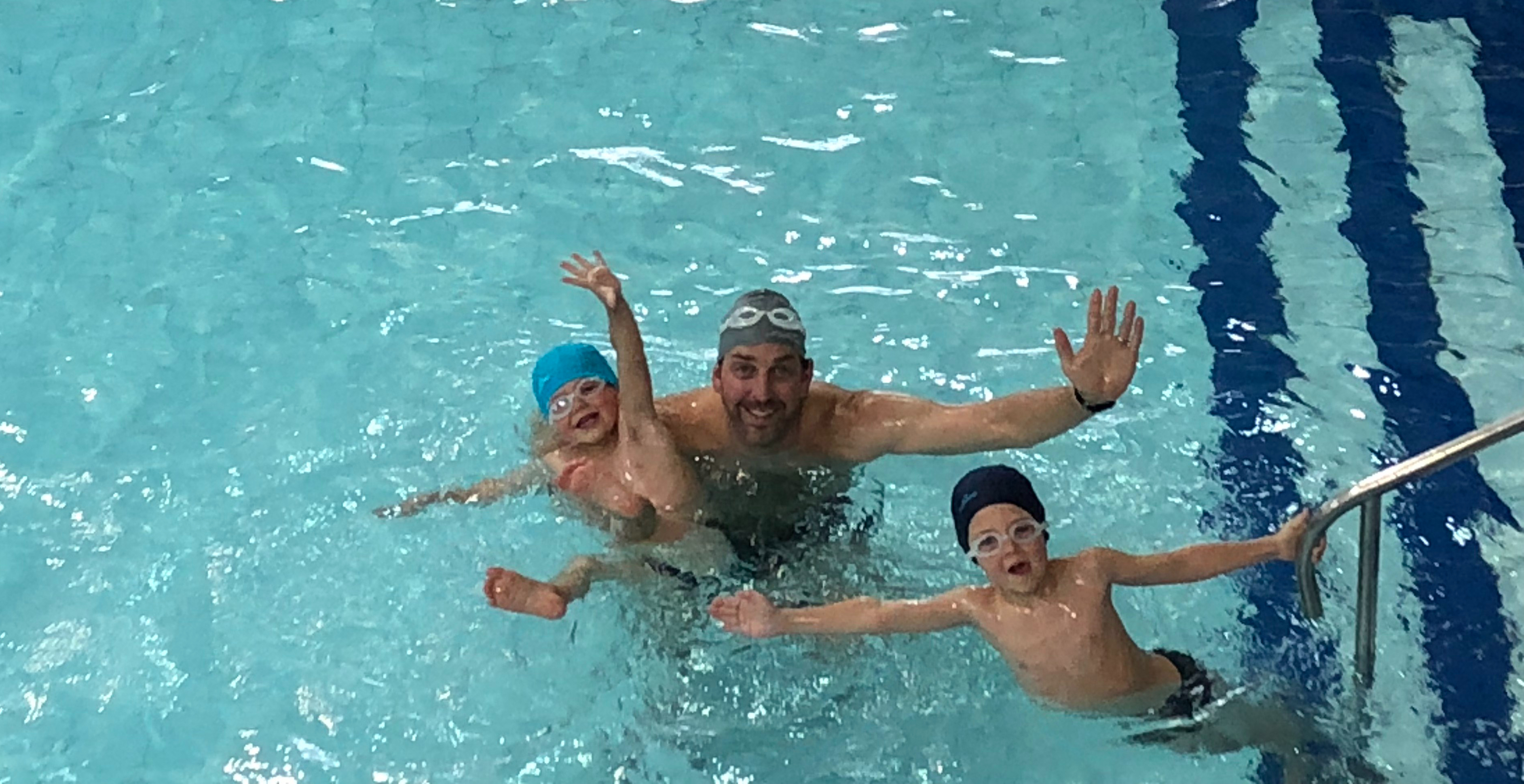
There is an indoor salt water swimming pool right on the beach a short walk from our apartment. This has been a great spot to get the kids some exercise on a rainy day. The swimming pool rules are a little different here though. You must wear a swim cap and only tight fitting speedos or boxer type suits are allowed. We went shopping, picked up some new suits and went with the flow.

img_2386.jpg

The first Sunday we were in Biarritz they had an event called Biarritz en Forme. There were booths setup along the waterfront promenade and casino advertising all the athletic clubs available including yoga, ultimate, surfing, surf rescue, tai chi, biking, zumba, karate, gymnastics, crossfit, golf, swimming and athletics. Most gave people the opportunity to try the activity out. The boys loved getting on some bikes and tried out the obstacle course. Katy got the chance to try out an electric bike and loved it. She could see how handy the little electric assist would be going uphill with Olivia in the chariot behind her. They also had a challenge to record how many steps the people of Biarritz did that day. The boys were given pedometers and Matt ran in circles all afternoon to increase his total. One booth had a bike powered blender to make smoothies with which was a lot of fun to try out.

It has been a great start in Biarritz despite the weather, but I’ll leave the rest of our adventures for another post. Au revoir!


Marrakech, Morocco!

We have arrived in Marrakech, Morocco where we have treated ourselves to a couple weeks at an all-inclusive resort. This is the first time we have ever done this as a family. We decided to go the resort route for a couple reasons. Firstly we liked the idea of a break from cooking and cleaning, but also the ability for the kids to join in the kids club. The kids club gives them the opportunity to interact with others their age, which is one of the main things they are missing having been taken out of school and pre-school. Nick especially had really settled well into kindergarten and is missing school and his friends. It has also given us all a little break from each other… None of us, kids included, is used to being together 24 hours a day like we have been for the last month. Katy and I have had a great time going to spinning classes and playing tennis for a couple hours each morning while Olivia naps in the stroller, before picking the boys up in time for lunch. We would have loved to have stayed in a traditional Riad, but a common courtyard didn’t seem like a good fit for three young kids – the other guests would not have loved us. We have heard since arriving that they are also quite cold this time of year so we are happy with our accommodation. Maybe we will try the Riad when Katy and I come back without the kids someday.

Our first day here was cold with quite a breeze so we thought we may be in for a repeat of unusually cold weather like we had in Seville, but luckily the sun is out and it is nice and hot. Most days seem to hit the mid to high 20s. This means on the very warm days the unheated pools are great, although we have been sticking to the heated pool most of the time. The kids pool has a fantastic water park but is a little cold most days.

We arrived in Marrakech to a beautiful new airport which we were told was entirely run on solar power.  Several planes showed up at the same time and it looked like we would have a real fun time with three kids waiting in the queue, but they saw us and put us in a separate line for families – a huge relief. Everywhere we have gone they have been very accommodating to kids here, they seem to really love children. The initial trip from the airport to our hotel was interesting. The first thing we found out when people heard that we were Canadian is that everyone seems to have family or friends in Montreal. After we found the car for the ride to the hotel we got to see the old city wall, the new city and a strange mix of old and new. Cars and buses shared the road with motorbikes, scooters and carts pulled by donkeys. The rules of the road also seemed to only be loosely followed. We saw a woman holding a baby in her arms sitting as the passenger on the back of a scooter.

Our first trip into the old city was quite an adventure. After being dropped off by the hotel shuttle, avoiding the first of the onslaught of offers for tourists, and finding diapers and formula for Olivia, we set off to find  Jemaa el Fnna square. The first landmark we found was the towering Koutoubia mosque. It looks taller than it is as we have been told the building restrictions say no other structure may be taller than the height of a palm tree, so it really sticks out. Just behind the mosque we found the square.

Jemaa el Fnna market square at mid day was an interesting sight. The combination of snake charmers, monkeys, and their aggressive handlers looking to place a monkey on your shoulder or snake around your neck followed by a demand for payment was a little intimidating. Add to this the musicians, people dressed up in traditional garb to take pictures with and aggressive sales people selling tourist trinkets, selfie sticks, sunglasses or water and it was a bit of a sensory overload. At one point a musician put his arm around Nick and was trying to take him off to play the drum with him. Luckily Katy had a tight grasp on Nick’s hand and saw it happening.  The aggressive sales tactics were a bit overwhelming for us meek Canadians. I don’t think I have ever said “Non merci!” so many times. We passed by the square (I took a noticeably wider birth around the snakes and especially the handlers trying to place them on tourists…) and escaped into the souks.

We randomly chose a road and checked out the shops along the way selling everything from leather goods, shoes, blankets, spices, tourist trinkets, raw meat, pastries, clothes, scarfs, metal lamps, to jewelry. This was not the relaxed shopping experience we were used to. High pressure sales is the norm, not to mention the haggling. Not knowing what a fair or reasonable price might be doesn’t help the process, but we had some fun trying our hand at it and probably overpaid for the clothes we bought for the kids but had fun and they were very excited by their new outfits.

When you were not on your toes dealing with the salespeople you also had to be vigilant to avoid the speedy motorbikes, bicycles, carts and donkeys navigating the same narrow alleyways. A three year old and a baby in a stroller don’t make this an easy task. At one point we almost ran into a donkey carrying a load of bricks to a job site.

We also got out for a ride on the camels. The boys had a blast and even Olivia was able to go. We weren’t quite aware of how large an animal a camel is, it was a long way up. We went for a short 30 minute ride. It wasn’t the most comfortable ride, so as romantic as the camel ride through the desert looks and sounds, the slow jolty rocking would undoubtedly leave you sore by the end of the day.

My travel read for Morocco was Lords of the Atlas by Gavin Maxwell. It was fascinating to read about the not so distant past with the French colonial history and that of the Moroccan warlords from the Atlas Mountains including the Glaoua. The fact that this all ended just 60 years ago was eye-opening. We really wanted to get out to the desert or Atlas Mountains for an overnight in the Bedouin tents, but the length of the bus trip out there just wasn’t conducive for the kids (talking to a few adults who did the trip they felt it was far too long on a bus, so it seems we made the right choice). Again another outing for the future trip sans enfants.

We managed to get back into the souks one more time before we left and felt more comfortable manoeuvring our way through. We decided on a route and stuck to it.  Matt had requested a toy cobra snake for his 4th birthday so Nick and Katy snuck away to buy him one (he was thrilled!).  On our way to the souks the second time, we happened upon the Artisans market.  This turned out to be great! We were able to see some traditional Marrakesh artists at work and we were also able to purchase some true Moroccan pieces. (The prices were listed and there was no haggling which was great, but did take away a bit from the traditional Moroccan shopping experience) We had been told earlier that most of what is found in the souk market is actually made in China.  We purchased a beautiful Moroccan wind instrument called a raita, which we have all attempted to play but so far only I seem to be able to make any sound!  The Arabic writing is beautiful, almost like an art itself.  We found a place that would write each of the kid’s names on a card in Arabic that we could buy as a souvenir.  The boys were engrossed watching for over 10 minutes as this man painted the phonetic sounds of their names on paper.

We enjoyed 12 days of blissful sunshine (and a small amount of r&r) in Marrakesh.  The hotel was great and the staff were awesome.  Olivia was a hit with ALL of the staff.  She was danced with most days and she charmed them all with her infectious smile.  The food was great (especially the tajines) and it was really nice to have planned daily activities like spinning and archery, (I even tried the trapeze!).  Matt loved the mini-disco and was found dancing nightly at 8:30pm (the same 6 choreographed dances every night, so he got to know them well). The pool, tennis and soccer were hits with Nick. We all enjoyed the small animal farm including the day old baby goat. Katy got an afternoon in the spa and Hammam and I even got away for a day of mountain biking in the Agafay desert. I took a guided trip with Pierre-Alain and Rasheed from Marrakesh Bike Action. It was a great experience and I would highly recommend them.

We left the hotel at 3:30am on Easter Sunday morning.  The children were woken very early and loaded into a taxi along with all of our belongings.  It was a VERY long day but we finally arrived in Biarritz to our new apartment 100meters from the beach at about 7pm that night.  And so the next phase of our adventure begins…